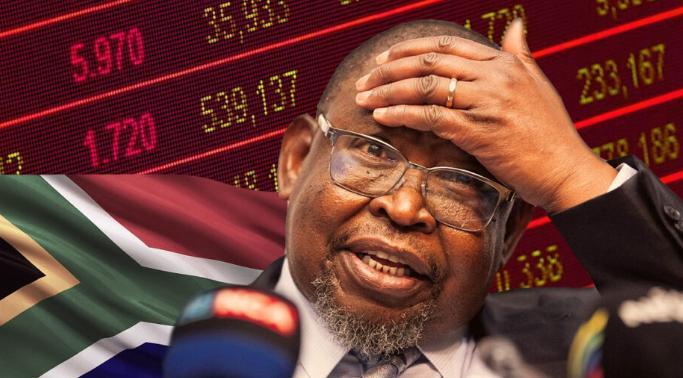
Africa-Press – South-Africa. South Africa’s debt crisis is worse than many may think, as combining municipal debt and national debt brings the country’s debt burden closer to 95% of GDP.
While much attention is given to South Africa’s national debt figures, which are projected to improve over the next few years, many ignore municipal debt figures
In addition, state-owned enterprises (SOEs) in South Africa remain heavily reliant on government support, weighing on the state’s balance sheet and adding to its contingent liabilities.
This is according to Efficient Group chief economist Dawie Roodt, who recently outlined South Africa’s debt crisis in an interview with Sakeliga.
Roodt explained that there are three “levels” of government in South Africa that are important to consider when looking at the country’s debt burden – local authorities, SOEs, and the national government.
He explained that, while most economists will refer to national debt levels, municipal debt has gone largely unnoticed, but is increasing rapidly.
He said municipal debt is not included in the headline national debt figures that the Finance Minister reports on in his Budget speeches.
“The local authorities, they can’t wash their own faces anymore. The majority of them, in fact, are getting a huge amount of money from the Minister of Finance, and their own debt has been increasing quite substantially recently,” Roodt said.
“In the meantime, they’re standing outside the door of the Minister of Finance and also want some more money.”
He said the same goes for SOEs, with many no longer able to “stand on their own feet financially” and have become reliant on government support.
South Africa’s government guarantees to SOEs have ballooned from R64.5 billion in 2008 to R707.8 billion in less than two decades.
Other public institutions, like the Road Accident Fund, also run at severe deficits that should, according to Roodt, be included when looking at the national government’s fiscal accounts.
Therefore, Roodt explained that discussions surrounding national debt need to include these liabilities to achieve a holistic view of the country’s debt burden.
“If you really want to be honest, you have to include the local authorities, and you have to include the state-owned enterprises, because they’ve become the problem of the Minister of Finance,” he said.
“And if you do that, then debt is actually well in excess of 90% or 95% of GDP.”
Taxpayers in trouble
Roodt’s comments come as South Africa’s national government is seemingly on a more positive fiscal trajectory.
The country is set to achieve a primary budget surplus and stabilise its debt in the 2025/26 financial year.
Roodt attributed these positive developments to Finance Minister Enoch Godongwana’s restraints on government spending and his implementation of fiscal consolidation.
However, he noted that the state has only achieved a primary budget surplus, which means that the government is still running at a significant deficit when factoring in debt service costs.
He said that this is deeply concerning, as it means South African taxpayers, likely for generations to come, will need to continue servicing the government’s debt.
“The tax burden is equal to state expenditure, because that deficit is nothing but postponed taxes – somebody’s going to pay for that, your kids are going to pay for that one day,” he said.
“And the more we postpone taxes, the bigger the tax burden will be on our kids eventually and on the economy going forward.”
At current debt levels, around 22% of the tax collected in South Africa goes solely towards servicing state debt. In other words, 22 cents of every R1 collected in tax is spent on paying the interest on the government’s debt.
Debt servicing costs crowd out government spending on more productive facets of the economy, like infrastructure, healthcare, education and police services.
This is the result of South Africa’s government running consecutive budget deficits for the past 15 years, which saw the state’s debt burden rise from around R627 billion in 2008 to over R5 trillion in 2025.
South Africa’s lacklustre economic growth has also played a significant role, as the economy has not grown fast enough to keep pace with government spending and the rise in state debt over the past few decades.
For More News And Analysis About South-Africa Follow Africa-Press