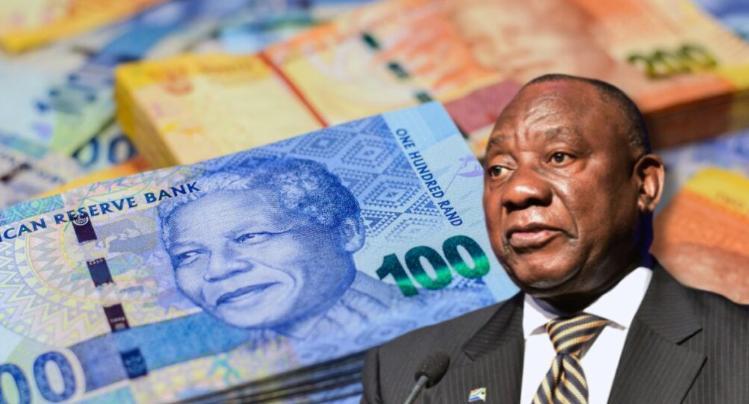
Africa-Press – South-Africa. South African corporates are sitting on over R1.8 trillion in cash deposits as they are hesitant to invest in expanding their operations in the local economy.
This is largely due to a lack of confidence in the South African economy, with business confidence not being in positive territory for one month over the past decade.
The lack of business confidence and thus investment has translated into poor economic growth in South Africa since 2015, with the local economy growing at an average annual rate of 0.8%.
While the state can make up for this by investing heavily in infrastructure and in expanding the operations of public companies, it has run out of road due to a surging debt burden at the national level and at state-owned enterprises.
“I think we have a long history where corporates in South Africa tend not to want to put any of their cash at risk. They regard cash as a necessity, a backstop they need to have in place from a comfort and security perspective,” Stanlib chief economist Kevin Lings said.
“And with a low level of confidence, corporates are watching their costs closely, keeping investments limited, and keeping cash handy to take advantage of opportunities when they arise.”
“The strange thing is that this level of cash has been building up over a long period of time, and so it is telling me that companies are not drawing down on that cash in any significant way.”
While companies have been investing, it has been largely limited to ‘subsistence investment’ to keep their doors open and not necessarily expand their operations.
This investment is primarily in backup water supply, alternative energy sources, and increased security, rather than expanding operations and employing more people.
“The current investment level is mainly maintenance capex and kind of treading water, with companies waiting for a better environment,” Lings said.
“Instead of deploying capital into growth or hiring, corporates are parking it in money market funds or call accounts.”
Lings has explained that this is largely a function of declining confidence from corporates in the South African economy.
“So generally it is a confidence thing. Confidence is a leading indicator of increased investment. Without it, funds do not flow into the local economy,” Lings said.
“We find around the world that in order to inspire more private sector investment, you must first get the confidence.”
“What we really need in South Africa is what we call expansion capex, and that tends to be a function of confidence,” Lings said.
“This type of capital is unlikely to suddenly and miraculously materialise overnight, despite trillions sitting in cash. You have to have policies in place that are going to lead to that outcome.”
Out of options
For Lings, the best way to get out of this malaise is to significantly ramp up public-private partnerships relating to infrastructure investment, in particular.
These partnerships have the ability to crowd-in private investment into infrastructure, which can ignite economic growth and improve confidence more generally.
“Once you start to get some investment, then you tend to get a virtuous cycle where others are willing to follow, and that begins to unlock substantial capex,” Lings said.
“The initiation of the process is the most important thing. Once you start investing, lift the growth rate, then there is a tendency for it to become self-reinforcing.”
Lings explained that this is the government’s last option, with its financial situation forcing it to deregulate sectors of the economy and turn to the private sector.
The alternative of turning to the World Bank or the International Monetary Fund is less palatable and is likely to worsen the state’s financial health further.
In other words, South Africa desperately needs capital to invest in productive assets, and that can either come from its own private sector or from multilateral institutions.
For Lings, turning to the local private sector is a far better option than multilateral institutions, as it is does not require the government to take on additional debt.
“Your only options are international agencies. Or, talk to the local private sector and ask them under what conditions they would begin to invest in local industry,” Lings said.
“That is happening. That discussion is happening, and it turns out that companies and asset managers are interested.”
To get this capital off the sidelines and invested in the economy, the government has to create an enabling environment for companies. This begins with deregulation.
“I would say that deregulation is your only option now. It is your only choice, and while you may not like it ideologically, it is your only option,” Lings said.
“You are out of options, and those options have been taken away because you took government debt from 26% to 76% of GDP. That increase meant you have taken away your option to use your own balance sheet.”
Lings said it would have been ideal for South Africa for the government to use its own balance sheet for infrastructure investment. However, this option is no longer available.
There is strong demand from asset managers, particularly retirement and pension fund administrators, to invest in these kinds of assets, such as infrastructure.
“But, they want to know that these pieces of infrastructure are financially viable and that they will get a return on investment for retirees,” Lings said.
“I am saying do that with a high degree of urgency, and then you will start to unlock that element of the economy.”
Once this is done, business confidence will rise significantly, and investment will naturally flow into these kinds of projects and South Africa more broadly.
“As companies see infrastructure being developed, their investment will increase and will naturally unlock their own balance sheet. They are not going to naturally just do it one day,” Lings said.
For More News And Analysis About South-Africa Follow Africa-Press