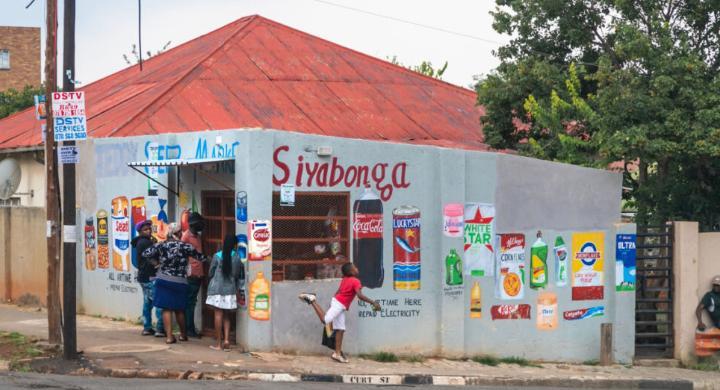
Africa-Press – South-Africa. South Africa’s informal township economy, valued at R900 billion, is dominated by businesses that are not registered for Value Added Tax (VAT) and largely operate outside of the formal regulatory framework.
These businesses are often small-scale, unregistered, and not incorporated, and they usually do not comply with formal labour regulations or tax obligations.
This means that these businesses do not contribute formally to the government’s tax revenue, but they play a massive role in absorbing South Africa’s large unemployed population and provide additional income for millions.
These businesses are also crucial in supplying basic goods to a large portion of South Africa’s population and contribute to the fiscus through purchasing products from formal suppliers and supplementing consumer spending.
This was revealed by Standard Bank’s Business and Commercial Banking unit, which recently released its first Township Informal Economy Report.
The bank said the informal economy is a vital engine of economic activity and resilience in South Africa, supplements income and employment.
Its study focused on businesses with an annual turnover between R100,000 and R50 million, located primarily in Gauteng, the Western Cape, KwaZulu-Natal, Limpopo, and the North West.
Recent estimates from Trade Intelligence point to the informal economy being valued at over R900 billion annually, with it employing millions of South Africans.
Standard Bank’s data indicates that 80% of the businesses in this economy are unregistered, limiting their access to formal banking products and funding.
This means that a significant portion of the businesses in this sector are not registered for VAT, with it not being levied on the sale of goods and services.
A potential reason for this is the immense administrative burden of becoming a registered business, which is often not worth it for informal traders operating at a very small scale.
Data showed that the vast majority of businesses in the informal economy fall below the VAT turnover threshold of R1 million, with 85% of traders reporting annual turnover below this threshold.
However, a quarter of these businesses reported turnover of between R500,000 and R750,000 annually, indicating that the informal economy is still highly lucrative.
The fact that the vast majority of these businesses are not registered for VAT does not mean they do not pay tax.
These businesses contribute significantly through the purchase of their goods, which often come from formal wholesale retailers.
Apart from that, they provide employment for millions of South Africans who would otherwise have no work and no income. In many cases, these businesses also supplement the income of formally employed individuals.
Banking the informal economy
Standard Bank explained that township businesses have a complex relationship with banks, often using personal accounts for business purposes.
This is because of the perception of high fees, inaccessibility to credit, and negative past experiences in dealing with banks.
Cash also remains the primary transaction method, driven by customer preference, no fees, immediacy, and limited digital literacy.
These SMEs also use mobile money platforms and retail money markets for convenience and accessibility. However, the use of formal banking services is often limited.
However, Standard Bank did note that as businesses increase in scale, there is a noticeable pickup in digital bank transfers.
There is also a clear distinction between South African SMEs, who tend to be traditional and reactive, and foreign-owned businesses, which are more agile and customer-centric.
As a result of the limited use of formal business banking products, many of the traders in the informal economy lack access to funding.
Most businesses are self-funded and lack formal accounting systems, with 61% using personal savings to launch their business.
A further 22% relied on family and friends for funding, with only 8.4% engaging with a traditional bank loan.
Most businesses started using personal funding, mostly because their operations were not formalised and could not qualify for funding from formal lending institutions.
The majority of businesses do not use any accounting system; they indicated that they do their accounting manually or have no accounting system/package.
Banks have a role but are not perceived as a key enabler to their day-to-day wins. Instead, they are a last resort when the support of family, connections or their own experience cannot unlock opportunities.
The graph below shows how businesses in the informal economy are funded, followed by their accounting preferences.
For More News And Analysis About South-Africa Follow Africa-Press