Africa-Press – South-Africa. By Premal Ranchod
MUCH has been written about environmental, social and corporate governance (ESG) funds outperforming during the pandemic, or the amount of capital flowing into themed investments, but is there more to ESG than the fickleness? A recurring theme is that ESG is awakened when a catalyst is present.
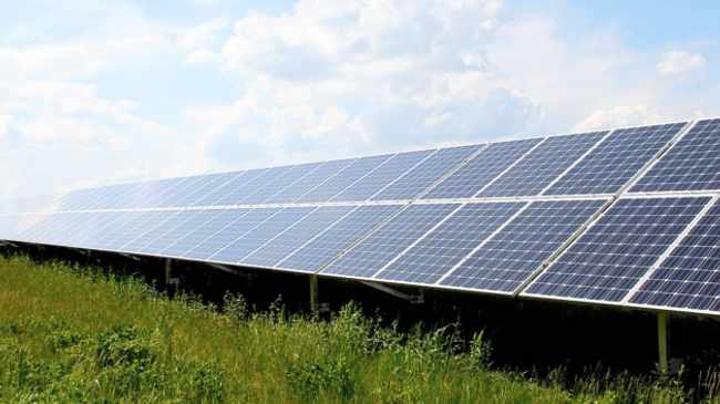
Locally, the twin catalysts of the pandemic and the national energy crisis have brought about an accelerated response to energy transition. The president’s announcement in June about increasing the threshold for self-generation power project licences to 100 megawatts is a welcome boon for a just energy transition.
Consider that the economy, society and the biosphere in which they function are all inextricably linked. Any decision to move away from fossil fuel-driven energy towards renewable energy involves environmental and social outcomes. It must be sensitive to improving climate outcomes and considerate of the social consequences of job losses or reskilling workers.
The transition of thinking
Let’s consider an example of company A looking to reduce the harmful effects of carbon emissions caused by using or producing coal. The company faces pressures in raising finance for its operations. In addition, it understands that the carbon tax will be a drag on its profits and it will face investor pressure for robust carbon reporting for the foreseeable future.
The option it faces is to divest from that line of business and reinvest capital towards cleaner energy. Selling off its carbon-intense division in the unlisted market only transfers the problem elsewhere where there is less public scrutiny or disclosure. The outcome appears as though a listed company has reduced its carbon footprint, but at a country ecosystem level, it is a futile outcome.
For the national government, financing coal-fired power stations that are on a path of being decommissioned requires a deep think. It requires reskilling redundant workers for re-employment either elsewhere in the economy or in the renewable energy integrated plan.
The South African National Development Plan: Vision 2030 states that a green economy is “a system of economic activities related to the production, distribution and consumption of goods and services that result in improved human well-being over the long term, while not exposing future generations to significant environmental risks and ecological scarcities.”
According to the World Resources Institute, as of 2019, up to 200 000 workers were employed in South Africa’s coal mines, coal power plants and coal transport. This was equivalent to roughly 1 percent of formal employment last year. Another study by PwC suggests that, together with the multiplier effects, the total impact to the workforce is closer to 452 000 jobs.
The role of stewards
It is worth reflecting whether South Africa is caught up in a global narrative in addressing climate risks when it has its own challenges. Astute investors and capital allocators separate fashionable topics from long-term systemic shifts. Long-term investors, such as asset owners who manage retirement money, flag risks and seek opportunities, while keeping abreast of regulatory developments. Rather than react to changes, it allows them to respond in a measured manner.
Here are 11 signals supporting energy transition of which investors should take note:
Nationally
Companies
Premal Ranchod is the head of ESG research at Alexander Forbes Investments.
*The views expressed here are not necessarily those of IOL or of title sites.
BUSINESS REPORT