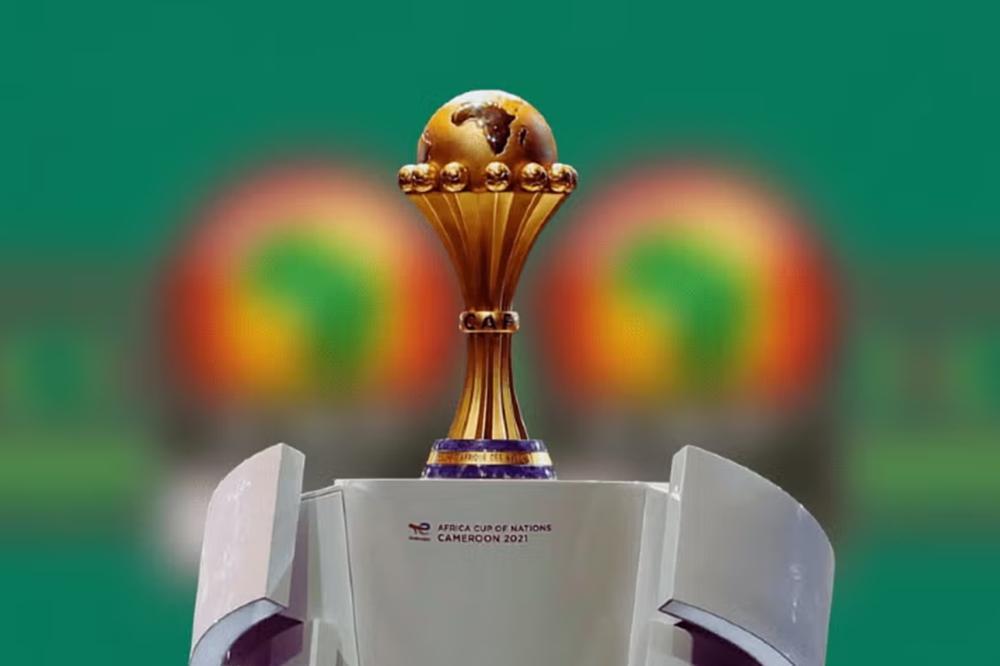
Africa-Press – South-Africa. Africa Cup of Nations (AFCON) 2025 is around the corner, with teams soon expected to start arriving in Morocco for the biennial tournament scheduled for December 21 to January 18, 2026.
This will be the first time since 1988 that the North African nation hosts the continent’s biggest football competition.
Morocco is gearing up to deliver a world-class celebration of African football, and with 24 teams, six host cities, and nine stadiums, AFCON 2025 promises to be one of the most demanding editions in recent years — both competitively and logistically.
Here are key things you need to know about the tournament:
Context, origin and history of AFCON
Originally scheduled for June and July 2025, AFCON 2025 was postponed to the winter period due to the expanded FIFA Club World Cup taking place in the United States from June 15 to July 13. As a result, the tournament will, for the first time in history, be staged during the Christmas and New Year season.
Since its inaugural edition in 1957, the Africa Cup of Nations has grown into one of the world’s most vibrant, passionate, and unpredictable football tournaments.
Over the decades, AFCON has delivered unforgettable stories, dramatic finals, and legendary players whose impact has extended far beyond the continent.
Egypt is the most successful nation in the history of the tournament with a record 7 trophies. They are followed by Cameroon with five title while Nigeria and Ghana have four each, with Cote d’Ivoire completing the Top 5 list with three trophies.
What makes the 2025 edition special
The 2025 AFCON promises to be one of the most thrilling editions in recent years. The timing is unique, the level of competition is exceptionally high, and the tournament feels more open than ever—with at least five or six nations considered genuine title contenders.
Several heavyweight clashes already stand out, such as, Cameroon vs Côte d’Ivoire, a classic African rivalry. Egypt vs South Africa stands out as the one match with contrasting styles and philosophies; Nigeria vs Tunisia is another match between two teams known for tactical discipline play.
Senegal vs DR Congo is already regarded as a test between champions and ambitious challengers while Gabon and Cameroon will square off in a fiery Central Africa Derby.
Fans can look forward to a vibrant mix of emerging young talents, tactical innovation, high-intensity football, and electrifying atmospheres. Stadiums are expected to overflow with drums, chants, colour, and passion—capturing the essence of African football at its finest.
What is the format of the tournament?
AFCON 2025 will follow the standard 24-team format, with six groups of four teams each.
The top two teams in every group automatically qualify for the Round of 16.
They will be joined by the four best third-placed teams, completing the knockout bracket.
From there, the competition proceeds through the Round of 16, quarterfinals, semifinals, the third-place playoff, and finally the grand final.
In total, 52 matches will be played. They include 36 matches in the group stage and 16 matches across the knockout rounds.
The Groups
The AFCON 2025 will begin with the group stage. Teams were divided in six group of four teams.
The draw is as follows:
Group A: Morocco, Mali, Zambie and Comoros
Group B: Egypt, South Africa, Angola and Zimbabwe
Group C: Nigeria, Tunisia, Uganda and Tanzania
Group D: Senegal, DR Congo, Benin and Botswana
Group E: Algeria, Burkina Faso, Equatorial Guinea and Sudan
Group F: Ivory Coast, Cameroon, Gabon and Mozambique.
Host cities and stadiums
Morocco has invested heavily to host this edition. The matches will take place across nine stadiums in Rabat, Casablanca, Tanger, Agadir, Marrakech, and Fès. Each venue has been modernised to deliver a top level AFCON experience.
The opening match will take place between hosts Morocco and the Comoros on December 21 at the Prince Moulay Abdellah Complex in Rabat.
For More News And Analysis About South-Africa Follow Africa-Press