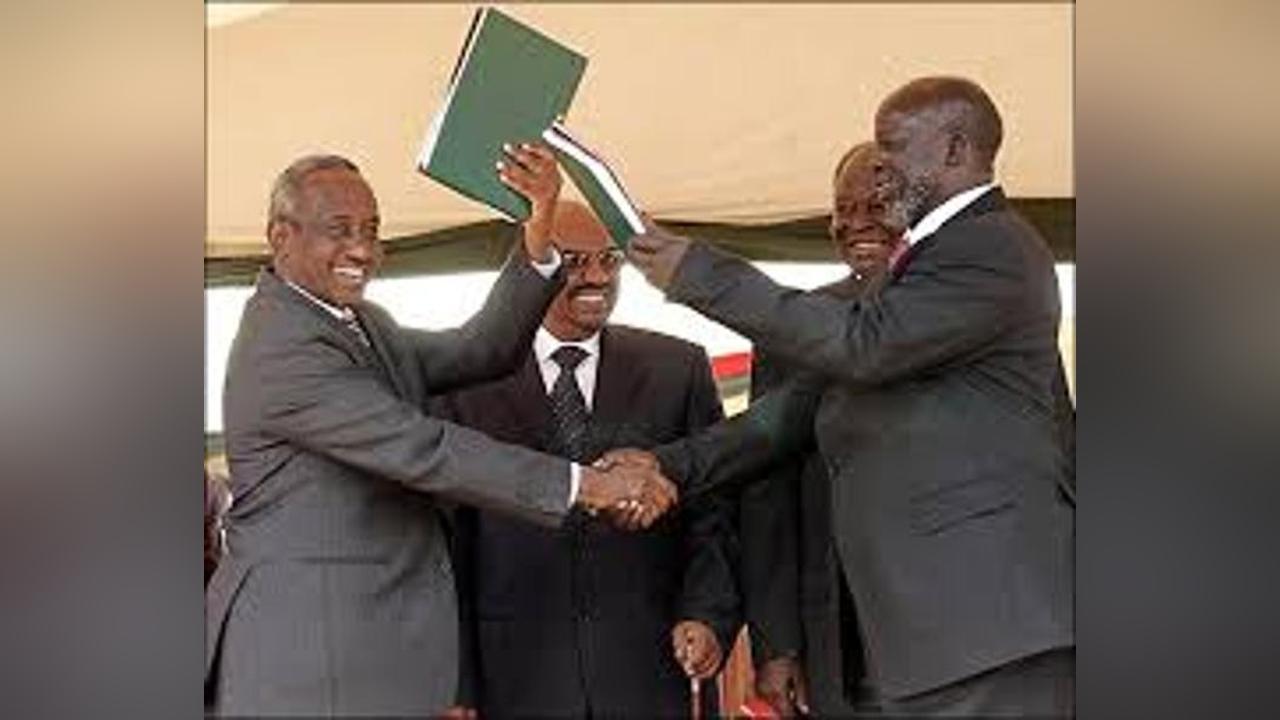
Africa-Press – South-Sudan. What was originally designed as a short-term legal framework for the CPA period has, two decades later, become the core document governing the world’s youngest nation. The constitution emerged from the Comprehensive Peace Agreement, which ended one of Africa’s longest civil wars and granted Southern Sudan autonomy.
It was meant to guide the region only until the 2011 referendum, yet it continues to serve as the supreme law long after independence. The document restructured Southern Sudan’s political and legal institutions in unprecedented ways.
Human rights advocate Deng John Deng describes it as revolutionary for its time, stating that it was the first in Sudanese history to introduce a full Bill of Rights that recognized dignity, freedoms, and equality.
“It was the first constitution to enshrine a complete Bill of Rights, recognizing human dignity, freedoms, and equality in ways earlier constitutions failed to do.”
The 208-article charter created the Ministry of Justice, the Council of Ministers, and the National Legislative Assembly; it also paved the way for the adoption of state constitutions and established the Judiciary, whose first Chief Justice and senior judges were appointed on 9 December 2005.
According to Deng, these institutions formed the backbone that made the 2011 independence process possible.
“It was the first constitution in Sudanese history to include a comprehensive Bill of Rights. It recognized human dignity, equality, and freedoms in ways previous constitutions never did,” he said.
Yet the document was never intended to govern an independent state. It centralized substantial power in the presidency, left judicial independence vulnerable, and created ambiguity in the division of authority between the national and state levels.
In early 2011, a Technical Committee chaired by Minister John Luk Jok was formed to review and adapt the constitution for an independent South Sudan, supported by prominent legal experts such as Ambrose Riny Thiik, Prof. Akolda Man Tier, Justice Bullen Panchol Awal, and Justice John Gatwech Lul.
However, the eruption of violence in December 2013, and again in 2016, derailed the entire process and shifted the country’s priorities toward peace negotiations.
Since independence, the transitional constitution has been amended twelve times, largely in response to political agreements rather than long-term institutional reform. Changes have often catered to power-sharing arrangements, the restructuring or multiplication of states, the integration of rival armed groups, and repeated extensions of the transitional period.
Deng argues that these frequent amendments have weakened the constitution, turning it into an instrument of political compromise rather than a stable legal foundation.
Delays in drafting a permanent constitution have left the country grappling with major unresolved questions: the form of government most suitable for South Sudan, the distribution of powers between the center and the states, the method for appointing the Chief Justice, and whether constitutional amendments should be subject to judicial review.
Civil society organizations increasingly call for direct elections for governors and mayors, stronger legislative oversight, and greater decentralization.
The most recent constitutional amendment, passed in 2024, extended the transitional period to February 2027. This means elections are expected by late 2026, leaving limited time to complete the permanent constitution.
Deng believes this period is still manageable if the National Constitutional Review Commission is reconstituted, properly funded, and shielded from political interference. He maintains that a constitution should reflect the collective will of the people, not shifting political deals.
“The Constitution must not be the result of political deals. It must be the will of the people,” he said.
Advocate Monyluak Aguer Rou also reflects on this 20-year anniversary, stated that the 2005 transitional charter laid the groundwork for essential laws including the Evidence Act of 2006, the Civil Procedure Act of 2007, and the Penal Code of 2008.
Ahead of independence, the 2011 Transitional Constitution required the establishment of a National Constitutional Review Commission. Although the commission was formed, its work was interrupted by political instability and the conflicts that followed.
Why a Permanent Constitution Matters Now—More Than Ever
The 2018 Revitalized Peace Agreement renewed the commitment to develop a permanent constitution anchored in federalism, democracy, the rule of law, peace, and national unity. This led to the enactment of the 2022 Constitutional Review Law, which established a new commission responsible for civic education, public consultations, and drafting.
The commission has now begun gathering opinions across the states from women, youth, civil society, persons with disabilities, political parties, and other groups.
Advocate Monyluak stresses that broad participation and transparency are essential if the constitution is to be credible.
After consultations, the draft will move to the Council of Ministers and then Parliament, before being presented to a National Constitutional Conference for final approval.
The permanent constitution is expected to address federalism, devolved governance, free and fair elections, inclusive participation, and an empowered judiciary capable of safeguarding rights.
Monyluak underscores the central role of the judiciary as the guardian of the constitution and the rights it protects.
He believes the review process is now at an advanced stage and anticipates that the country may soon have a final constitution that reflects the aspirations of its people.
NB: This story is reported with a grant from Journalists for Human Rights under the ‘Tackling Mis/Disinformation Project,’ funded by the Peace and Stabilization Program of the Government of Canada.”
For More News And Analysis About South-Sudan Follow Africa-Press