Africa-Press – South-Sudan. South Sudan has secured $50 million from the Green Climate Fund (GCF) to support a new climate adaptation project in the country’s flood-prone regions, the Ministry of Environment and Forestry announced on Wednesday.
The funding package also includes an additional $2.5 million in co-financing from the Government of Japan. The project, titled “Enhancing Climate Resilience in Flood-prone Areas in Northeastern South Sudan,” will be implemented by the World Food Programme (WFP), UNHCR, and the Ministry of Environment, with activities set to begin in early 2026.
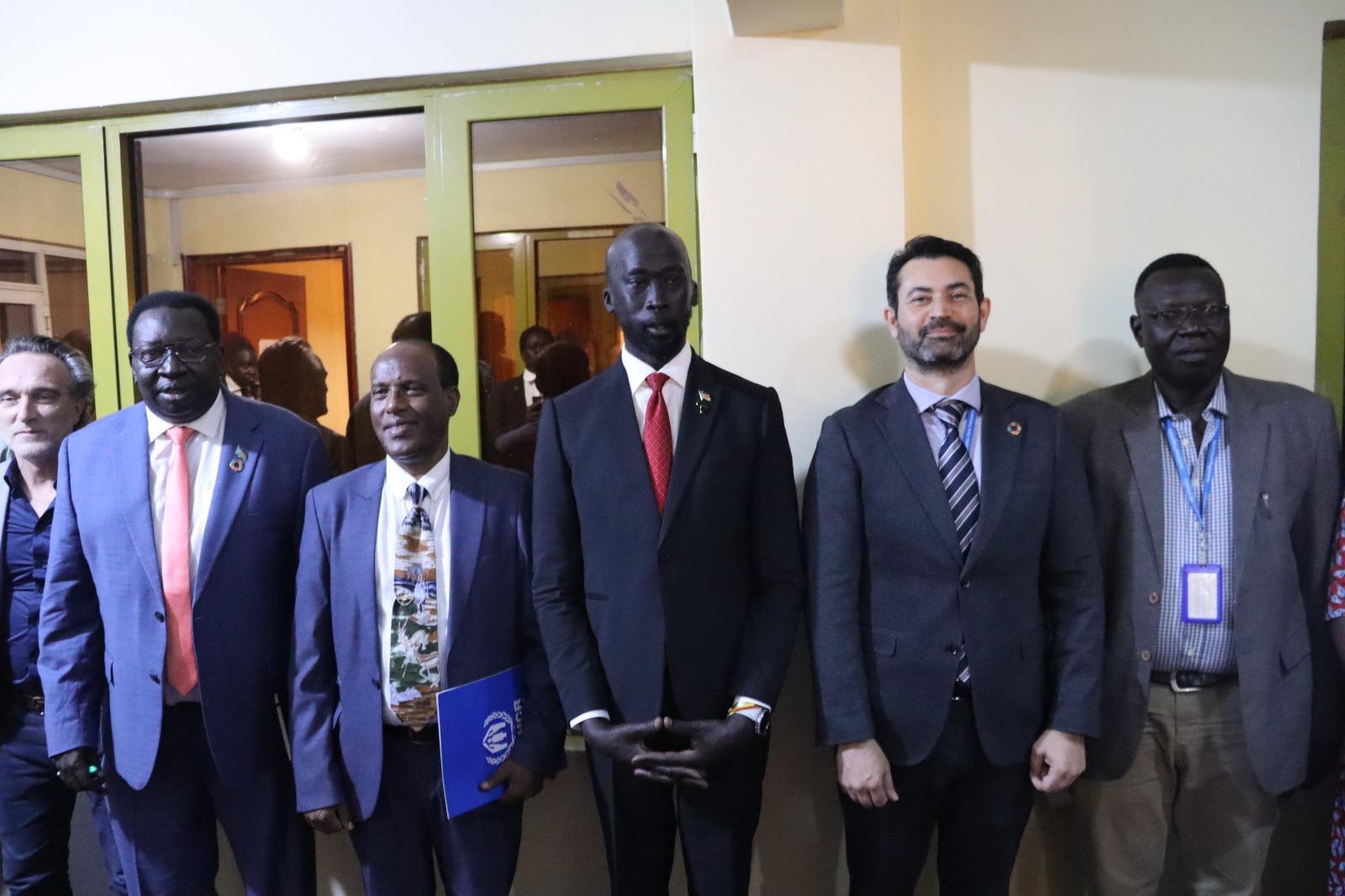
“This is a major milestone for South Sudan,” said Minister Mabior Garang.
“The government of South Sudan, through the Ministry of Environment and Forestry, as the national designated authority to the Green Climate Fund, is proud to announce the approval of a new climate adaptation investment worth $50 million from the Green Climate Fund, complemented by $2.5 million U.S. dollars co-financing from the Government of Japan. The project will be jointly implemented by WFP, UNHCR, and the Ministry, with implementation expected to commence in early 2026.”
The initiative targets vulnerable communities in Northern Bahr el Ghazal and Warrap states, focusing on improved water management, sustainable agriculture, and stronger disaster-risk systems. It also prioritizes support for displaced people and host communities affected by flooding.
Minister Garang said the approval is the result of nearly a decade of collaboration between South Sudan and the Green Climate Fund since the country joined the Paris Agreement.
“South Sudan has gradually increased its access to global climate financing, starting with a $300,000 readiness grant in 2018,” he explained.
He added that the visit of GCF Executive Director Mafalda Duarte to Juba in March 2025 played a key role in paving the way for the new project.
According to the minister, the investment will support climate-smart infrastructure, improved water and land management, and diversified livelihoods in the affected states, helping communities better respond to climate shocks and build long-term resilience.
Adham Effendi, Deputy Director for Operations and Programmes at the World Food Programme, similary described the project as a major milestone for South Sudan’s climate adaptation efforts.
“We extend our sincere appreciation to the Government of Japan for co-financing the Green Climate Fund project to ensure the project addresses the inclusion of displacement, affected communities, and population,” Effendi said.
“In the target areas of Northern Bahr el Ghazal and Warrap states, we are committed not only to making this project impactful but also supporting the Ministry of Environment and Forestry to strengthen its track record in managing climate finance, achieve a whole-of-government approach to climate adaptation and resilience building, and pave the way for future climate and development investments.”
He added that WFP will support the Ministry in strengthening national systems, promoting community-level action, and expanding climate-resilient livelihoods.
The project is expected to directly support more than half a million people in Northern Bahr el Ghazal and Warrap and indirectly benefit over a million people over the next five years.
Mesfin Degefu Gubay, Deputy Representative of UNHCR, said the investment comes at a critical time for communities repeatedly affected by annual flooding.
“This is an important moment for the people of South Sudan, especially for the families who have been living through years of devastating floods,” Mesfin said.
“The Green Climate Fund has just approved a $50 million investment to help communities in Northern Bahr el Ghazal and Warrap adapt to flooding and build stronger, more resilient livelihoods.
“This is a major step forward for the country and I want to congratulate the Government of South Sudan and the Ministry on this important achievement. UNHCR is particularly pleased to participate in this initiative, which will enable the implementation of effective flood prevention and management systems. With this project, UNHCR will focus especially on supporting refugees and refugee-hosting areas.”
Planned interventions include early-warning systems, semi-permanent climate-resilient shelters, rehabilitated water points, climate-smart agriculture, and the planting of 100,000 fruit and medicinal trees.
Both WFP and UNHCR expressed gratitude to the Government of Japan for its co-financing and reaffirmed their commitment to working with the Ministry of Environment and host communities to strengthen flood resilience.
Minister Garang emphasized that the project aligns with South Sudan’s national adaptation plan and long-term climate commitments, adding that the approval builds on years of cooperation with the Green Climate Fund since the country joined the Paris Agreement.
For More News And Analysis About South-Sudan Follow Africa-Press