By Atem Simon Mbiour
Africa-Press – South-Sudan. On July 9, 2011, the flag of South Sudan was raised for the first time in the skies of Juba, announcing the birth of the “newest country” in the world after decades of war led by southern rebel movements against the mother country, Sudan. That day was not merely an announcement of a new state but the culmination of a long journey of struggle and a dream held by millions of southerners that separation would mark the beginning of an era of peace, stability, and development.
Fifteen years later, that day is laden with questions that go beyond the celebratory atmosphere. Has South Sudan succeeded in transforming its political gains into a state project that fulfills the aspirations of its citizens? Or have internal wars, economic crises, and institutional building failures hindered the promises that accompanied the declaration of statehood?
The Outcome of Statehood Experience
The fifteenth anniversary of the declaration of statehood comes at a time when the country is preparing for its first general elections, while still facing challenges related to implementing the peace agreement between the government and the opposition, completing security arrangements, deteriorating economic conditions, rising poverty rates, and millions of residents relying on humanitarian aid.
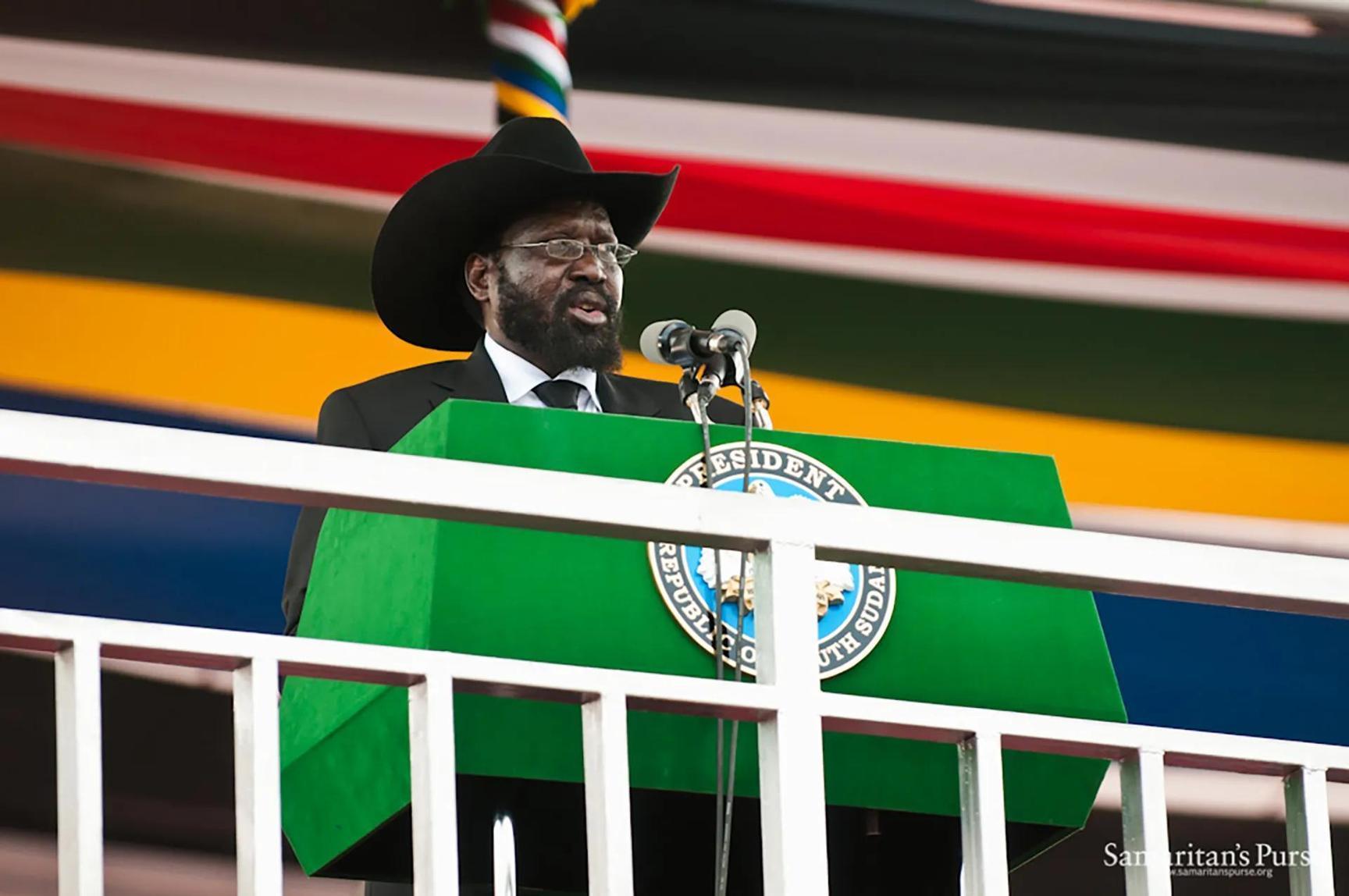
In his first speech as the head of the new state on that date, Salva Kiir Mayardit stated, “From today, we will have no excuses, and we will not find anyone to blame for our failures.” This statement seems more relevant than ever, as it has transformed from a promise made at the moment of establishment into a standard by which many southerners measure the outcome of the state experience.
For the majority of southerners, the declaration of statehood was not merely a change in political borders but the culmination of decades of war and struggles over power, identity, and wealth sharing.
The referendum represented for millions of voters a desire to transition from a phase of demanding rights to a phase of building a state that provides security, services, and justice, allowing its citizens a more stable life.
A New Spiral
However, priorities quickly shifted after separation. Instead of focusing on development and reconstruction, the country found itself facing escalating political and security challenges that culminated in the outbreak of civil war in late 2013, plunging the nascent state into a new spiral of conflict, displacement, and economic contraction.
A researcher at the Peace Studies Center at the University of Juba, Ajak Deng, stated in an interview that the overwhelming vote by southerners in favor of separation came after decades of wars, suffering, and marginalization, hoping to build a state that responds to their aspirations for peace, justice, and development.
He added, “Many southerners still prefer to describe July 9 as Independence Day rather than Separation Day because they view the period before 2011 as a phase of political and cultural marginalization, and they see the establishment of the state as an expression of their right to self-determination and to build a homeland that reflects their identity and diversity.”
Despite the crises the country has faced, South Sudan has succeeded in establishing itself as a sovereign state, joining the United Nations, the African Union, and the Intergovernmental Authority on Development (IGAD), and establishing governance and administrative institutions. However, these political achievements have not been reflected to the same extent in the lives of citizens, amid ongoing conflicts and stalled economic and institutional reforms.
The Minister of Culture, Museums, and National Heritage, Sara Nyantach, stated in an interview that the fifteenth anniversary of South Sudan’s separation “should not be limited to official celebrations but should be a national occasion that reaches every home and community in South Sudan.” She added that July 9 represents “the most important milestone in the country’s history” as it embodies the will of southerners to establish their state, emphasizing that the values of peace, unity, and democracy upon which the state was founded should remain the foundation guiding the nation-building process.
Humanitarian Crisis
However, the outcome of fifteen years cannot be measured by political speeches alone but by the conditions of the citizens. South Sudan, which began its journey as the newest country in the world, still faces one of the largest humanitarian crises in Africa.
World Bank estimates from March indicate that about 87% of the population lives in extreme poverty, while data from the Integrated Food Security Phase Classification indicates that 7.8 million people face high levels of food insecurity, including about 73,000 people in a state of “catastrophe.” Additionally, over 2.2 million children require treatment for acute malnutrition, while nearly 10 million people rely on humanitarian aid.
These indicators reflect the extent of the transformation the country has undergone since separation. While southerners fought before 2011 to end the war and gain their right to self-determination, their aspirations after statehood have shifted to improving living standards, providing essential services, creating job opportunities, and managing oil wealth in a way that impacts their daily lives. However, the civil war and subsequent political and economic crises have weakened the state’s ability to achieve many of those aspirations.
A Rentier Model
An economics professor at the Catholic University in South Sudan, Angelo Martin, stated in an interview that “independence has not reflected on the lives of citizens as they had hoped, as promises of prosperity have turned into a sharp decline in living standards after billions of dollars in oil revenues were drained in conflicts and mismanagement.”
He added that this has led to a decrease in per capita GDP compared to 2011, while today about 92% of the population lives below the poverty line, and nearly two-thirds of the population suffers from food insecurity.
Martin continued, “The economic crisis has exacerbated inflation rates, eroded citizens’ purchasing power, and decreased the value of the national currency, while the war in Sudan has increased pressures on the economy after oil exports through Sudanese territory were disrupted, which has impacted public revenues and weakened the government’s ability to meet its obligations, including the regular payment of salaries to employees.”
He concluded by saying, “The economy remains a hostage to a rentier model that relies almost entirely on oil, without succeeding in building a productive base capable of achieving sustainable development.”
Security Challenges
Challenges are not limited to the economic aspect, as the implementation of the peace agreement signed in 2018 still faces obstacles related to completing security arrangements and unifying forces, while the upcoming elections represent a test of the political forces’ ability to transition from managing conflicts through arms to competing through the ballot boxes.
While supporters of separation believe that the greatest achievement has been the establishment of a sovereign state after decades of struggle, others argue that the real test began after the flag was raised, when the responsibility shifted from the battle for statehood to the battle for building it.
The question that preoccupied southerners before 2011—how do we obtain a state?—has transformed into the pressing question today: how do we build a state that fulfills the aspirations of its citizens? This encapsulates South Sudan’s journey over fifteen years, a journey still open to significant challenges but also carrying the opportunity to realign the course if political elites succeed in turning peace into reality and wealth into development that citizens can feel in their daily lives.