Africa-Press – South-Sudan. An Aweil community leader has sharply criticised South Sudan’s top leadership, accusing the country’s five vice presidents of remaining silent in the wake of the deadly killings at Jebel Iraq in Central Equatoria State.
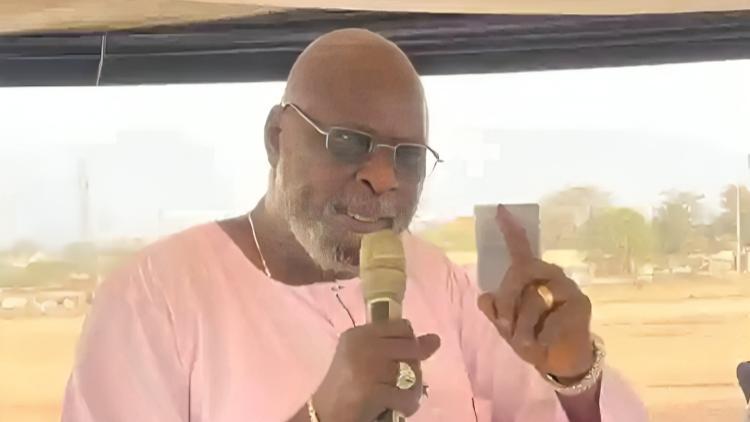
Ambassador Garang Deng Aguer, who represents the Aweil East community, made the remarks during a visit on March 28 to Kor-Kaltan, the site of a mass burial for dozens of victims killed in the recent violence.
The victims, many of them young men and women from Northern Bahr el Ghazal and other states, had travelled to the area in search of livelihoods in informal mining sites.
Addressing mourners at the gravesite, Aguer openly questioned the lack of a clear and coordinated response from the country’s senior leadership, particularly the vice presidents, at a time when families across the country are grieving.
“There are five vice presidents in this country, yet we have not seen or heard what action they have taken,” he said. “In any nation where people are mourning, a vice president is expected to stand and represent the head of state when the president is away. Why are they silent?”
His criticism comes amid growing public frustration over what many perceive as a weak official response to the killings, which reportedly left more than 70 civilians dead. The attack has raised fresh concerns over insecurity in mining areas around Juba, where armed actors and local tensions often intersect with unregulated economic activity.
Aguer also warned that unchecked tribal rhetoric and misinformation could further inflame tensions, calling on leaders from all communities to take responsibility in addressing divisions that may have contributed to the violence.
“You can see how painful it is to bury young people who were only trying to fend for themselves,” he said. “It is time for leaders across all tribes to act and stop the hatred. Accountability and national healing must come first in times like this.”
Meanwhile, authorities in Northern Bahr el Ghazal have begun receiving the remains of some victims. Governor Charles Madut Akol on Wednesday received three bodies in Aweil town before they were transported to Aweil North County for burial.
State Information Minister Gabriel Deng Yel urged residents to remain calm, saying the national government is expected to investigate those behind the killings.
However, uncertainty persists over whether those responsible will be identified and held accountable, particularly as armed groups linked to political factions continue to deny involvement. Observers say the continued fragmentation of forces and incomplete security arrangements under the peace deal have made it difficult to establish responsibility for such attacks.
The Jebel Iraq killings underscore the fragile security situation in parts of South Sudan, where economic hardship, communal tensions, and weak state presence continue to expose civilians to deadly violence.
For More News And Analysis About South-Sudan Follow Africa-Press