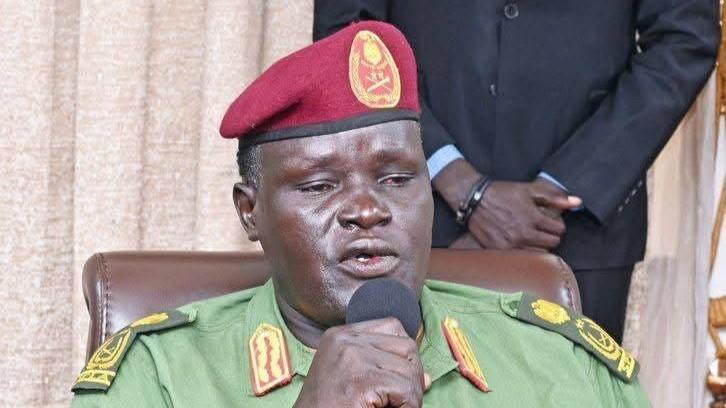
Africa-Press – South-Sudan. The South Sudan People’s Defence Forces (SSPDF) Deputy Chief of Defence Forces for Mobilization and Disarmament, Gen. Johnson Olony Thabo, has been reported to the United Nations Security Council following his order to the government forces to kill every living thing in the build-up to clashes with the Sudan People’s Liberation Army in Opposition and allied militias in Northern Jonglei Stae in late January.
The United Nations raised alarm over the inflammatory remarks attributed to Mr Olony, with Under-Secretary-General for Peace Operations Jean-Pierre Lacroix informing the Council that rhetoric by the senior army commander risks fuelling further violence in an already fragile security environment.
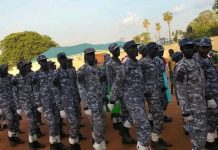
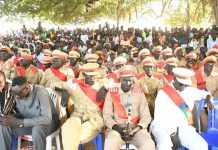
On January 24, Mr Olony told assembled troops that: “We are tired of the problems in Greater Upper Nile… Every year there is a coup. Every year there is a problem,” referring to the cyclical violence between the Chollo, Dinka, and Nuer communities.
“But this time… this will mark the end of [the crisis in] Upper Nile,” he said. “When we arrive there, I don’t want you to spare an elderly person, or a chicken, or even a house… so that they don’t disturb us every year.”
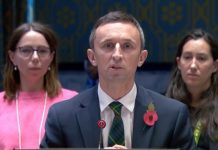
Addressing the Council on 10 February 2026 during a briefing on the situation in South Sudan, Lacroix warned that while the Government later clarified that the remarks do not reflect official policy, such language could inflame tensions at a time of heightened instability.
“Such rhetoric only inflames an already volatile situation and underscores the need for restraint and the protection of civilians,” Lacroix told the Security Council in a statement obtained by Sudans Post.
The briefing comes amid renewed clashes between government and opposition forces, particularly in Jonglei State, where violence has sharply escalated in recent weeks. According to the UN, both sides claim to be acting in self-defence while simultaneously preparing for the possibility of wider hostilities.
Lacroix said the political deadlock among key signatories to the Revitalized Agreement on the Resolution of the Conflict in South Sudan continues to drive tensions across the country. The peace deal, signed in 2018, remains the primary framework for ending years of civil war and guiding South Sudan’s fragile transition.
The situation in Jonglei, Lacroix noted, remains particularly alarming. The UN has received reports of aerial bombardments, mass displacement, and severe restrictions on humanitarian access.
Government sources cited by the UN body indicate that more than 280,000 people have been displaced by fighting in the state alone. Communities that endured the devastating violence of 2013 and 2016 are once again fleeing their homes.
On 25 January, government forces reportedly instructed the temporary relocation of civilians, as well as UN and humanitarian personnel, from several counties in Jonglei, including areas near the UNMISS base in Akobo, citing an anticipated military operation. However, two days later, a government spokesperson denied issuing such a directive while reaffirming cooperation with humanitarian partners.
Lacroix noted that regional bodies, including the African Union Peace and Security Council and the Intergovernmental Authority on Development (IGAD), have expressed serious concern over the escalating hostilities. Both institutions have reiterated that there is no military solution to the conflict and stressed that the 2018 peace agreement remains the only viable path to stability.
As tensions mount, the UN is urging all parties to exercise maximum restraint, refrain from inflammatory rhetoric, and prioritise the protection of civilians to prevent a relapse into full-scale conflict.
For More News And Analysis About South-Sudan Follow Africa-Press