Africa-Press – South-Sudan. South Sudan joined the East African Community (EAC) league in 2016, hitting a commendable breakthrough that triggered hope for development. However, the membership experience has turned out to be a difficult affair.
In recent years, South Sudan lawmakers have continuously been embarrassed during sessions amid their long overdue arrears to the community.
According to the South Sudan Members of the East African Legislative Assembly (EALA), accumulated arrears of about $39.27 million is currently being demanded from the country, though the government admits it only recognises about $31 million as its current credit to the EAC, not to mention this year’s financial commitment.
Lukewarm compliance has consistently shaken the country at the EALA level as MPs deliberate on the EAC state affairs in Arusha, Tanzania.
South Sudanese MP at EALA, Mukulia Kennedy Ayason, admitted that failure to promptly pay the fees had presented a serious setback to the country’s grip on the bloc.
“We already have a due of $39.27 million accumulated arrears for the period we have been there up to, so this is one of the few challenges,” he explained to City Review in an exclusive interview on Friday last week.
In 2019, East African Legislative Assembly (EALA) lawmakers threatened to kick South Sudan out of the Bloc if the arrears were not cleared in time.
Lawmaker Ayason argues it has not been easy for South Sudanese MPs to push the country’s agenda at the EAC level, given the nonconformity.
“I just need to be honest that this is an international embarrassment. When you subscribe to an international organisation and you don’t pay; then it is an embarrassment to ourselves and we feel bad about it, but of course, we live with it,” he narrated.
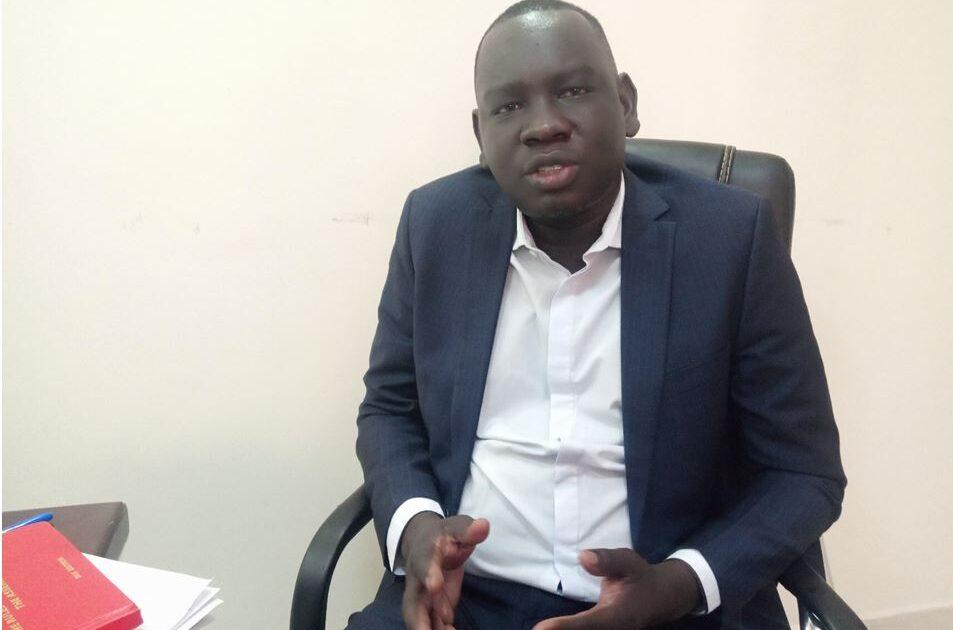
David Ayuel Machar, a youth activist who is a Country Director for Young Global Leaders Network South Sudan, said it was premature for the country to have joined the EAC in 2016.
“It was absolutely inappropriate. Firstly, there are legal requirements a nation intending to join any bloc must meet. So, did South Sudan evaluate these requirements?’’ he asked.
“One of those requirements is the financial obligation and the commitment to pay a membership fee on a continuous basis, which is now being defied,” Machar said.
The youth leader argues that though the reprisal is now a shame to the country, the government is still holding onto clarifications.
Government Pushback
Andrea Aguer Ariik, the Undersecretary for the Ministry of East African Affairs, attributed noncompliance to the economic crisis and a lack of priorities within the financial wing of the government.
“The complications are only two; one is the economic crisis we have, instigated by the crisis we have been undergoing,” he says. “The second one is lack of priorities within the Ministry of Finance and Planning,” he added.
According to Mr Ariik, the finance docket does not see the country’s contribution to the EAC as a priority.
“Our President is 100 per cent a supporter of our membership in EAC, and that’s a political will, but the Ministry of Finance has issues to do with prioritisation,” the Undersecretary reiterated.
Most citizens claim the country has got the capacity to pay all its arrears, but due to corruption, it has not been possible to customise on the needful.
Related incidences
South Sudan has not only defaulted on adhering to the membership obligations of obligation at the EAC, but other memberships in the region seem to be shaky as well.
Currently, South Sudan has got payment issues with IGAD, as well as the AU, among others.
Assist. Prof. Dr Abraham Kuol Nyuon, Dean of the School of Social and Economic Studies at the University of Juba and member of the South Sudan Economic Crisis Management Committee, questioned whether the government was aware that joining regional organisations carries obligations when it joined the EAC in 2016.
“Otherwise, it is meaningless for the country to be a member of a bloc, and they are not meeting financial obligations,” he said.
“It is like somebody who is a tenant but continues pleading to enjoy privileges without paying for rent. So, as a result, any suspension becomes like an eviction later,” he added.
Dr Nyuon affirms that the burden would probably lead to the isolation of South Sudan as a result of having not met its requirements within the regional bloc.
“For example, where leaders are sanctioned by the big powers like the US; the regional organisations won’t be able to lobby for sanctions to be lifted because of this defiance, so this might be a consequence,” he said.
Solutions:
Dr. Kuol appealed to the leadership to design strategies and plans of action to handle the financial obligations it owes to the regional blocs, adding that it would enable the country to bail itself out of the debts.
According to Dr. Nyuon, a five-year plan committing to the payment at instalment credit or agreed schedules would also signal a spirit of compliance, as the rest are paid later.
He called on the Council of Ministers and the national parliament to push the executives in a to make sure that such obligations are fulfilled.
The East African Community (EAC) is a Regional Bloc for the six countries. These include Uganda, Kenya, Tanzania, Rwanda, Burundi and South Sudan.
For More News And Analysis About South-Sudan Follow Africa-Press