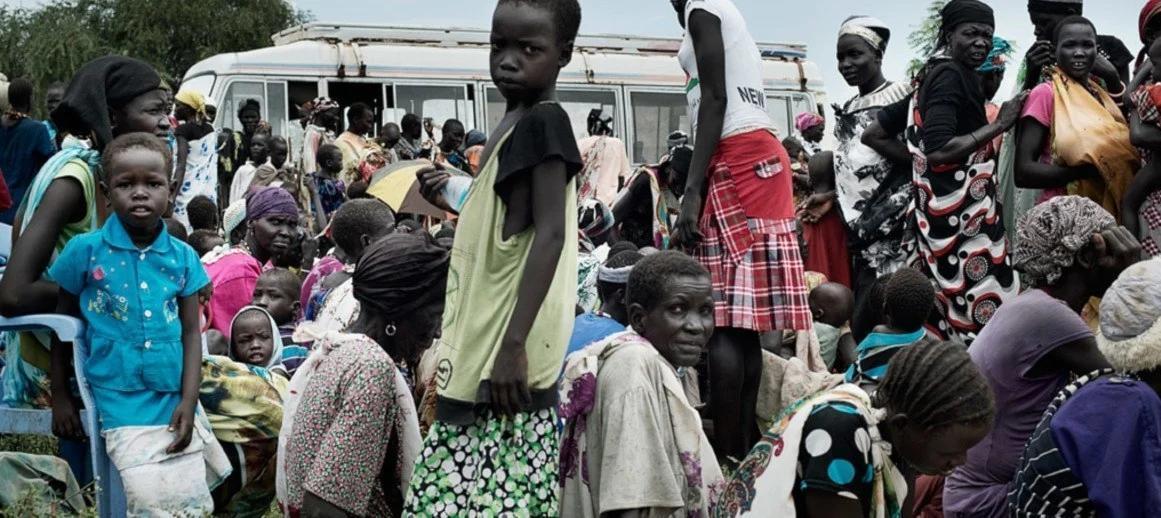
Africa-Press – South-Sudan. Save the Children has warned that parts of South Sudan are on the brink of famine, as violence and displacement escalate and humanitarian conditions deteriorate. This situation has forced thousands of families to rely on tree leaves, water lilies, and seeds meant for planting as their primary food source for survival.
The organization stated that the increase in armed confrontations since March has led to the suspension of humanitarian relief operations in several areas of the state and the evacuation of humanitarian workers, leaving thousands of civilians without essential services or life-saving assistance, and driving large numbers of people to flee.
The organization explained that it had to suspend its operations in Eastern Akobo County, which serves as a refuge for those fleeing violence in Jonglei, due to the worsening security situation. It had previously suspended activities in the Walgak area following an attack by armed groups that resulted in the looting of the organization’s office, the destruction of a health center, and the seizure of its vehicles.
According to reports from the organization’s field teams, mothers spend long hours in swamps and floodplains searching for any plants or food materials to feed their children, while tree leaves and water lilies have become a primary food source in some areas. The organization also reported that thousands of children have dropped out of school, while others have been forced to work or marry early due to their families’ deteriorating economic conditions. Even in areas where schools are still operational, some children have stopped attending due to severe weakness caused by hunger and malnutrition.
These developments come after the latest analysis from the Integrated Food Security Phase Classification (IPC) indicated that four counties in South Sudan, including Akobo and Nyirol in Jonglei State, are at risk of slipping into famine if the current situation continues.
The report states that over 7.8 million people, approximately 60% of the country’s population, are facing severe food insecurity, while around 2.2 million children under five need treatment for acute malnutrition, an increase of about 90,000 children compared to the previous assessment. Additionally, nearly 700,000 children are suffering from severe acute malnutrition, the most dangerous form of malnutrition that requires urgent medical intervention, along with an early and unusual rise in the number of children affected by acute malnutrition.
The country director for Save the Children in South Sudan, Chris Nyamandi, emphasized that the current hunger crisis cannot be separated from the political and security situation, stressing that addressing the root causes of conflict and expanding social protection programs are essential to prevent the crisis from escalating into widespread famine. He warned that ongoing cuts to international humanitarian funding increase the vulnerability of the most at-risk populations in one of the world’s most aid-dependent countries.
The organization called on all parties to the conflict to protect civilians and ensure that humanitarian assistance reaches those in need safely and without obstacles. It also urged international donors to increase funding for humanitarian response and provide greater support to local communities and national organizations working in affected areas.
It is noted that South Sudan is experiencing complex humanitarian conditions due to the interplay of local armed conflicts, recurrent flooding, declining agricultural production, and weak infrastructure. Concerns are growing about the worsening hunger crisis in vast areas of the country as the rainy season approaches, while the United Nations classifies South Sudan as one of the most severe food insecurity hotspots in the world.