Elvince Joshua
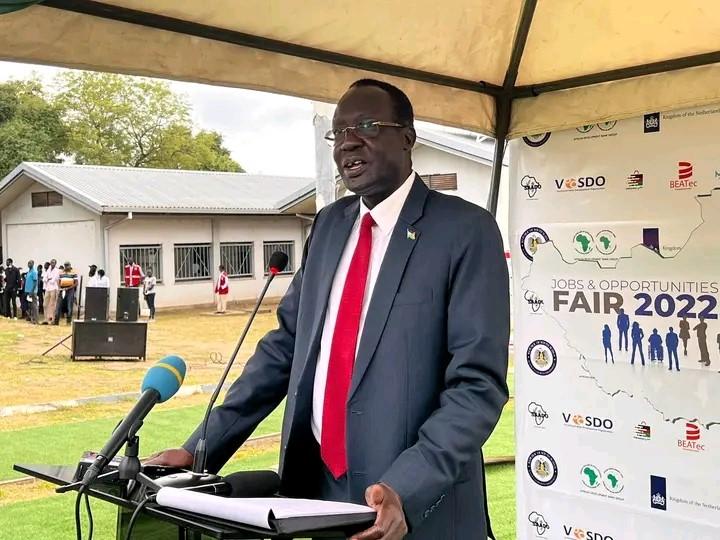
Africa-Press – South-Sudan. The National Minister of Labour, James Hoth Mai admits much work needs to be done at the ministry even though he claims that positive steps in reforming has been made in the labour sector .
Addressing the sixth governors’ forum, Mai said that the non-governmental organisations (NGOs) have so far employed 30,000 nationals and met the threshold required by the labour laws.
“We have about 35,000 employees in the NGO sector only, and 30,000 are South Sudanese; it is even more than the 80 per cent [threshold],” he said,.
“We are now working to identify certain jobs [occupied by] foreigners, but it is a process…you know it is politics.”
He said the ministry would negotiate with employers so that “we give them only some jobs and we take the rest, especially the senior managerial positions.”
According to him, the ministry of labour had divided NGO jobs into four categories as per the recruitment act developed in 2019. Such individuals included community mobilisers, drivers, guards, and cleaners.
But despite this, Mai said there are challenges that face the gains made in the job sector.
He claimed that most South Sudanese misinterpreted the Labour Act’s 80 percent job threshold for nationals in the private sector as implying opportunities for locals.
Mai clarified that any professional South Sudanese has the right to be employed in any part of the country regardless of their social background, and the four categories of recruitment described in the labour act give priority to the people.
“We said 80 per cent should be nationals. But the word “national” has not gone down well with our people, they think national means local and this is what happened with us in Torit,” he said as he referred to an incident where Torit youth attacked workers who were contracted in private sector arguing that they were taking their jobs.
He said the ministry of labour is planning to establish a recruitment agency that will take up the responsibility of recruiting for NGOs and other institutions. But he said there was still a problem with solving grievances within the walls of the United Nations agencies.
“We have problems with the UN agencies. We have something called the SOPA post-agreement status.It is problematic, they don’t want to listen to us even in the labour disputes we have within their organisations, we don’t access them because they tell us SOPA doesn’t say that.”
“We have employees who are really suffering within the UN agencies, and we cannot hear their case. “Sometimes they will refer you back to Geneva because they are working with Geneva,” he added.
For More News And Analysis About South-Sudan Follow Africa-Press