
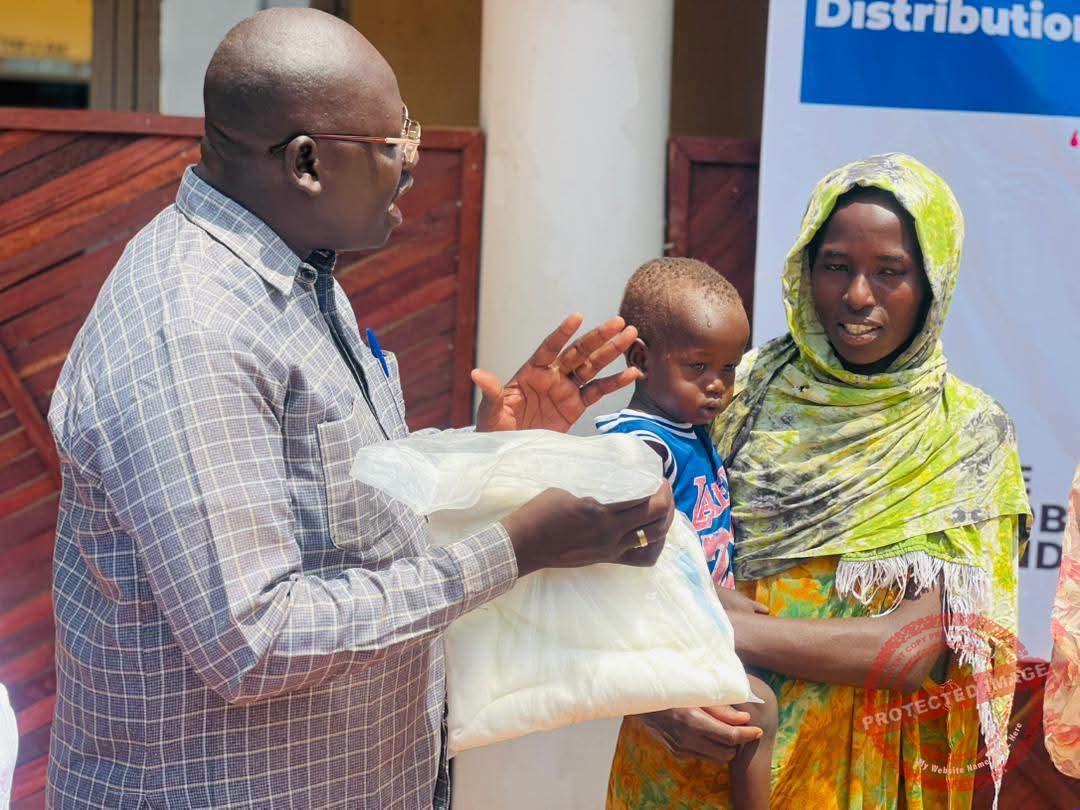
The Government of Northern Bahr el Ghazal State on Saturday launched the distribution of over 800,000 insecticide-treated mosquito nets as part of efforts to curb malaria infections during the rainy season.
The campaign, supported by the Ministry of Health, the national government, and humanitarian partners, will use a digitalized registration system and deploy more than 1,500 trained community volunteers to ensure households receive the nets efficiently.
Speaking during the launch, the representative of the state governor, Dominic Kang Deng Kang, said the initiative is aimed at protecting communities from malaria, which remains a major public health concern in South Sudan.
“Today, the government of Northern Bahr el Ghazal State has started mass distribution of mosquito nets to all citizens of the state. The theme is to stop malaria and also to protect yourself and sleep under mosquito nets because now malaria has become an issue within the Republic of South Sudan,” Kang said.
He thanked the International Rescue Committee (IRC), the Ministry of Health and the national government for supporting the campaign, noting that the timing was appropriate as the rainy season had already begun.
Kang urged residents to use the mosquito nets strictly for their intended purpose and warned against practices such as fishing or using them to shelter livestock.
“We have sensitized all the people and told them to follow the rules and instructions made by the Ministry of Health and the state government, just to keep these mosquito nets only for sleeping and not for other purposes,” he said.
He added that state authorities had instructed security personnel to monitor markets and take action against anyone found misusing or selling the nets.
The State Malaria Program Manager, Victoria Angok, said this year’s distribution exercise introduces digital registration to improve data management and accountability.
“For data management, that’s why this year we decided to do digitalization,” Angok said. “We have more than 1,500 volunteers selected at the community level. They are being trained so that they can register households and distribute mosquito nets at the same time.”
According to Reece, the new approach eliminates the need for separate registration and distribution phases, allowing volunteers to register beneficiaries and issue nets during a single household visit.
She dismissed reports that some residents were being asked to pay registration fees to receive mosquito nets.
“There is no registration fee. Our nets are free and our nets are very special because they have insecticide which can kill mosquitoes,” she said.
Reece noted that the current campaign comes three years after the last mass distribution exercise, explaining that resource constraints had sometimes delayed distributions beyond the recommended interval.
She also advised beneficiaries to take proper care of the mosquito nets to ensure they remain effective throughout their lifespan.
Health officials hope the campaign will increase the use of insecticide-treated nets across Northern Bahr el Ghazal and contribute to a reduction in malaria cases, particularly during the peak transmission season