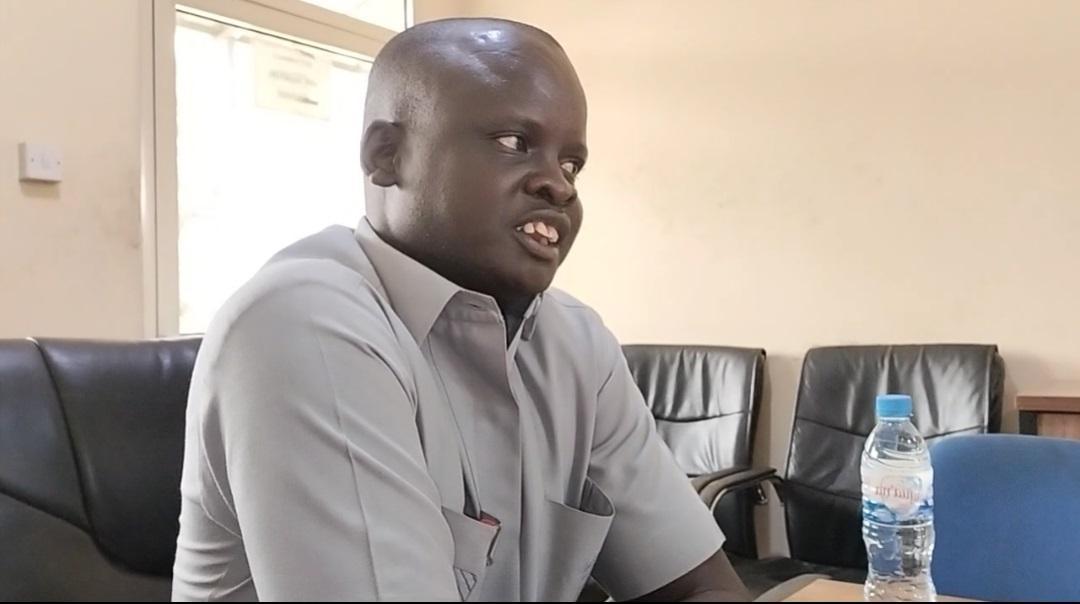
Juol Nhomngek Daniel
Africa-Press – South-Sudan. South Sudan’s State House, popularly known as J1 (Juba 1), was conceived as the nerve centre of executive authority, national unity, and sovereign continuity. Historically rooted in the colonial designation for the principal government residence, J1 is the official presidential palace and command hub in Juba, housing the Office of the President and its specialised units.
In law and design, it is meant to coordinate policy, safeguard national symbols, direct security and diplomacy, and ensure orderly governance. In practice, however, J1 has become the focal point of a deepening crisis that is political, social, economic, and profoundly personal.
At the heart of the turmoil is a conflict within the presidential family and the Office of the President itself, a struggle that has spilled beyond institutional walls into communities, most visibly among sections of the Awan community in Gogrial, Warrap State, and into the digital, spiritual, and diaspora arenas.
These battles are fought through social media campaigns, proxy lobbying abroad, and the instrumentalization of belief and identity. Security organs have been drawn into factional contests, with reports of arbitrary arrests and indefinite detentions used to neutralise perceived rivals. The contestation over the status of the First Lady has paralysed presidential operations, while public appointments increasingly reflect the leverage of dominant factions rather than merit or law.
This internal fragmentation has reduced the presidency to a ceremonial shell, with presidential authority diluted by competing groups that reportedly bargain over access, appointments, and even the President’s signature. J1 has drifted from being a policy engine to a community-style lobby arena, where mega pressure groups stage threat-laced competitions and national decisions emerge from conspiracies rather than transparent, institutional processes. The result is an executive detached from globally recognised standards of statecraft and accountability.
The dysfunction is stark when measured against what J1 is meant to be. The State House should act as the executive office of the President; coordinate security and defence as Commander-in-Chief; implement presidential directives; uphold anti-corruption through the State House Anti-Corruption Unit; protect investors; advise on economic stability; manage protocol and diplomacy; promote local content; and serve as the lawful residence and administrative centre for the First Family. It should symbolise sovereignty, hosting the flag, coat of arms, anthem, and motto, and foster unity in diversity. Instead, institutional capture has hollowed out these functions.
Governance failure has fed an entrenched, militarised kleptocratic order, marked by off-budget financing, opaque military payrolls, informal revenue collection, and financial capture. Major initiatives have bypassed ministries, while oil revenue shocks, such as the 2024 pipeline disruption, exposed an economy dependent on consumption rather than stewardship. As executive oversight faltered, basic services were effectively outsourced to donors, accelerating humanitarian distress and eroding public trust.
The crisis is also a succession struggle, aggravating the paralysis of the 2018 peace framework and intensifying insecurity. Purges, appointment secrecy, election delays, renewed fighting, foreign troop deployments, and sanctions pressures have compounded a sense that J1 no longer anchors stability but amplifies volatility. Even private family disputes, amplified by public quarrels and allegations, have acquired constitutional weight, underscoring how blurred boundaries between family, faction, and state now shape national outcomes.
In sum, South Sudan’s State House has drifted from a unifying institution into a contested marketplace of power. Until J1 is re-institutionalised, restoring legality, transparency, civilian control of security, and clear separation between family matters and state authority, the presidency will remain captive to internal rivalries, and the country’s fragile peace will continue to hang in the balance.
Source: Sudans Post
For More News And Analysis About South-Sudan Follow Africa-Press