Africa-Press – South-Sudan. It is a great plan by the Ministry of General Education and Instruction and its partners to support volunteer teachers to boost their commitment to providing knowledge to children.
On Monday, the ministry said at least 7,450 public primary school teachers in hard-to-reach areas are expected to receive their monthly cash incentives for the next 24 months through the OUTREACH programme.
The project funded by the European Union will be implemented by the United Nations Children’s Agency (UNICEF) in collaboration with national and state ministries of general education and instruction.
The beneficiaries, who include 1,950 qualified teachers and 5,500 volunteers, will receive the monthly financial incentive as a training allowance under the Continuous Professional Development (CPD) programme.
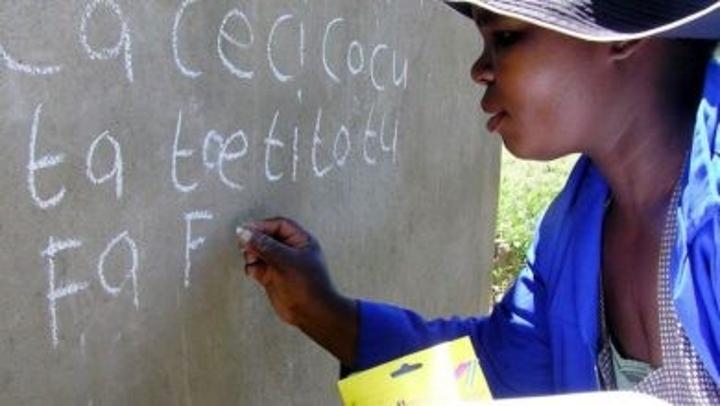
This is a great move that would motivate the teachers, given the fact that they have been teaching for a long time without proper earnings, as their names do not exist on the government payroll. Without those volunteer teachers in the rural areas, our children could not have been able to access education. Although most of them are untrained teachers, they have been able to provide some basic knowledge of formal education to the children.
This good initiative, however, should not die on the lips; it must become a reality in order to improve the living conditions of those poor volunteer teachers who have been working for a long time without pay despite their enormous contributions.
According to the 2015 report released by UNESCO, 59.9 per cent of primary school teachers in South Sudan’s rural areas are untrained. Another 39.5 per cent of secondary school teachers are untrained. Likewise, 49.6 per cent of Alternative Education System (AES) teachers are untrained. South Sudan is estimated to have 30,000 teachers, and out of this number about 70 per cent of these teachers are untrained and close to 46 per cent are primary school dropouts themselves.
This means there is a need to support those volunteers, whose majority is comprised of untrained teachers. However, apart from looking after their welfare, the ministry of education and its partners also need to develop a long-term plan to build the capacity of those volunteers. They need to be trained to become professional teachers because there is no way we can provide sustainable education to our children if there are no qualified teachers.
This initiative of supporting volunteer teachers in rural areas needs to be kept up to its dream. It should end or die off just like the initiative to provide formal education to all children at cattle camps. The Global Partnership for Education in 2015 launched a programme that was aimed at providing education to children in cattle camps. A good number of cattle camps were selected as a pilot project, with a possibility of extending it to other areas after five years of the project. But today, ordinary people do not know where this project had ended.
For More News And Analysis About South-Sudan Follow Africa-Press