Sheila Ponnie
Africa-Press – South-Sudan. The scorecard of the government in the implementation of the revitalised peace agreement elicited mixed views from the stakeholders as the country entered its fifth year of transition.
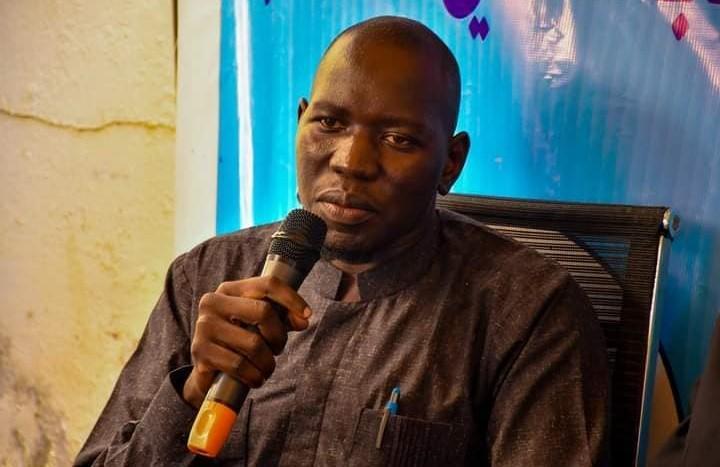
Paulino Obede, the leader of the United South Sudan Party, and a Chief Whip of Other Political Parties in the Council of States said the government had performed averagely when it comes to the implementation of the deal despite guzzling half-decade of the time. Obede argued that the government was yet to get right with the set of structures in the transitional government.
“To my own observation, less than 50 per cent has been implemented. When we start with the issue of the transitional government of national unity, which is chapter one of the agreement, the establishment of the government…the government has not been fully established as we speak of today,” he observed.
He said that currently there is a need to establish independent commissions at the national level to ensure the country has a constitution and can proceed to the election.
“Among them is the National Constitutional Review Commission that is supposed to be tasked to implement the provision of the agreement, especially the chapter six, which is the permanent constitutional making process,” he said.
He added, “Then we have the Political Parties Council, which is supposed to be reconstituted for the registration of the political parties that emerge after the signing of this peace agreement.”
He warned that with no properly reconstituted electoral body, the dream to have a free, fair and credible election will just remain elusive.
“The National Election Commission, which is a body to regulate the coming election, and the agreement, is saying we are supposed to have free, fair, transparent and credible elections; we will only have that when the commission is reconstituted.”
According to Obede, the effective implementation of chapter one of the revitalised peace agreement was to ensure the establishment of legislative councils and institutions of councillors. But up to now, only Central Equatoria State can boast of such a structure although ineffective.
Edmund Yakani, Executive Director of Community Empowerment Progress Organization (CEPO), expressed a similar view, arguing that the fifth anniversary of the R-ARCSS comes with fewer gains owing to the “high deficit in trust and confidence among the members of the presidency.”
“The R-ARCSS’s fifth anniversary should provide an opportunity for the presidency to renew their political commitment to the timely and genuine completion of the R-ARCSS’s outstanding tasks,” Yakani noted.
“It is critical that the signatories to the A-ARCSS honour the reports of RJMEC recommendations for improved performance in the implementation of the A-RCSS’s outstanding tasks,” he added.
The Reconstituted Joint Monitoring and Evaluation Commission (RJMEC) read a similar script of lethargy largely in its recap of the five years.
In his opinion sent to the newsrooms on Monday, the commission’s interim chairperson, Maj Gen (rtd) Charles Gituai, stated that “implementation of the agreement had been beset by challenges but the parties to the R-ARCSS have stayed the course of peace.”
Gituai, however, noted that some progress has been made in the implementation of the R-ARCSS since September 2018. Such includes ironing the disagreements over the number of states and their boundaries.
“The R-ARCSS was incorporated into the Transitional Constitution of the Republic of South Sudan, 2011 (as amended); the structures of the executive and legislative arms of the unity government have been established at all levels of government and have been functioning since February 2020,” he stated.
He added that, “legal, judicial, security, institutional, economic, and financial management reforms have begun and are ongoing.”
“Two transitional justice mechanisms have been drafted, and the one governing the creation of the permanent constitution has been enacted. Furthermore, the Permanent Ceasefire has been in effect since the signing of the peace agreement, and more than half of the Necessary Unified Forces (NUF) have graduated,” he further stated.
In September 2018, the revitalised peace agreement for South Sudan was signed in order to end the country’s bloody civil war, which had claimed hundreds of thousands of lives and created a massive refugee and humanitarian crisis.
The revitalised peace deal had the loyalty of the parties to the agreement who signed it, among them ITGONO, the SPLM-IO, SSOA, and the OPP, Former detainees as well as eminent personalities including the guarantors and the international community, civil society, faith-based groups, and other stakeholders.
The agreement was divided into eight chapters, all of which are critical to economic recovery, peaceful resolution of political disputes, and transitional justice.
Source: The City Review South Sudan
For More News And Analysis About South-Sudan Follow Africa-Press