
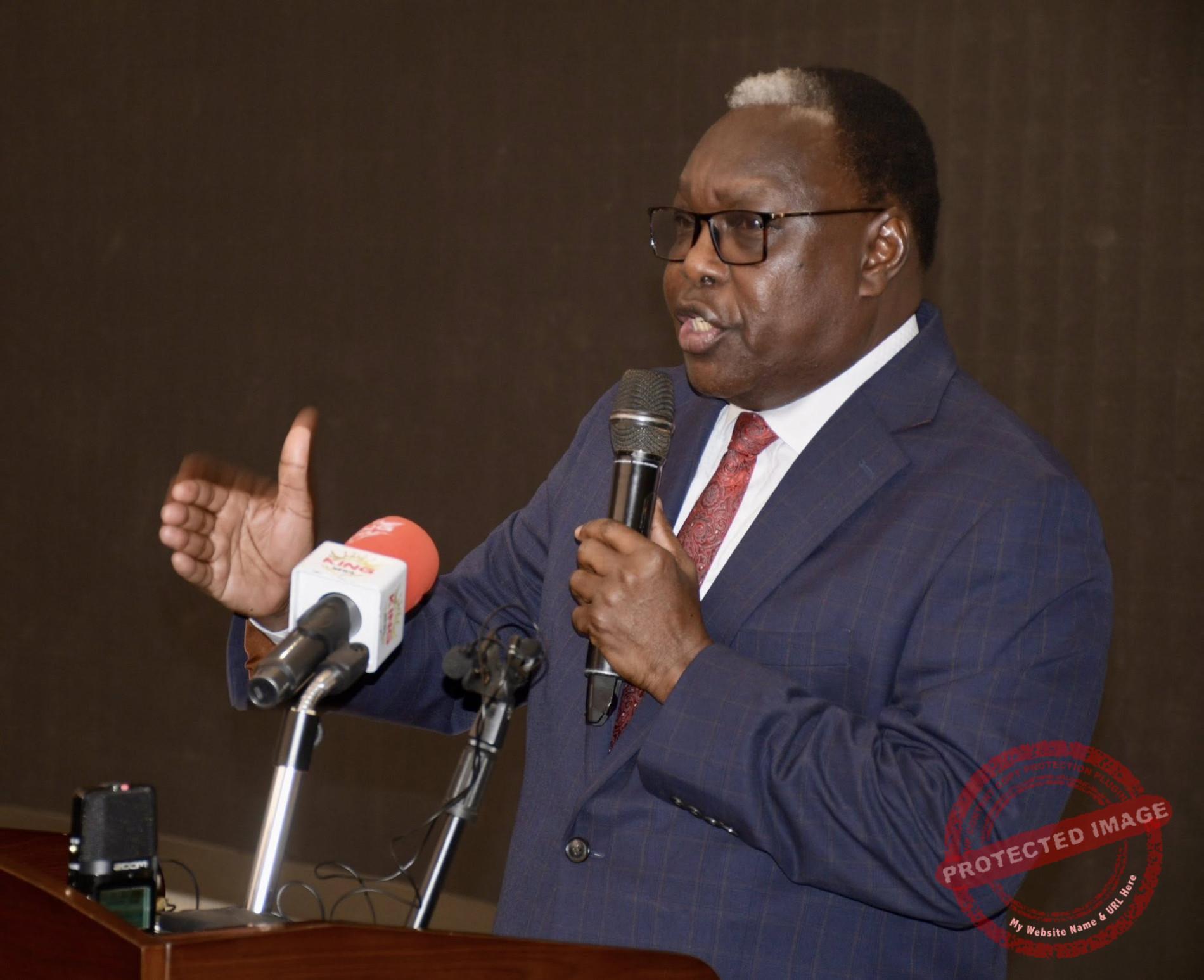
The Minister of Cabinet Affairs, Dr. Martin Elia Lomuro, says the government has decided to bypass the Reconstituted Joint Monitoring and Evaluation Commission (RJMEC), accusing the body of delaying the implementation of the 2018 peace agreement ahead of the planned December 2026 elections.
Speaking on Tuesday, Dr. Elia said President Salva Kiir had directed parties to the peace agreement to engage in dialogue and agree on the way forward toward elections.
According to him, the government is determined to proceed with the electoral process and is prepared to defend its decision to sideline the peace monitoring mechanism.
“We have very clear directives by the president that the parties to the agreement should dialogue and agree to move forward for elections and this is the way we want to do it,” Dr. Elia said.
He said the government’s move marks the beginning of a new approach toward the electoral process.
“This is the beginning of it by bypassing our Reconstituted Joint Monitoring and Evaluation Commission (RJMEC) and holding RJMEC responsible for the reasons for which the South Sudan government has decided to bypass it,” he stated.
Dr. Elia insisted the government has the sovereign authority to make decisions it believes are in the country’s best interest.
“We are ready to confront anybody who wants to doubt our decision. We have the reason, we have the sovereignty to protect our country and to move forward for elections,” he added.
He further accused RJMEC of contributing to delays in the implementation of the peace agreement, saying the government could no longer wait as preparations for the polls continue.
His remarks come as the Transitional National Legislative Assembly debates controversial amendments to the 2018 Revitalized Peace Agreement and the Transitional Constitution of 2011 aimed at paving the way for general elections scheduled for December 22, 2026.
The proposed amendments, approved by the Council of Ministers in April, seek to remove provisions requiring the completion of a permanent constitution-making process and a national population census before elections can take place.
Lawmakers are also considering proposals to conduct the census after the elections, while allowing the National Elections Commission to use the 2010 geographical constituency boundaries during the polls.
Other proposed changes include reducing the size of the national legislature to 204 elected seats, divided equally between geographical constituencies and proportional representation.
The draft amendments would also shorten the deadline for publishing the voters’ register from six months to three months before election day and remove the “supremacy clause” that gives the 2018 peace agreement precedence over other national laws.
Government officials argue the amendments are necessary to ensure elections proceed as scheduled, while critics warn the changes could undermine key provisions of the peace agreement and weaken the transitional process.