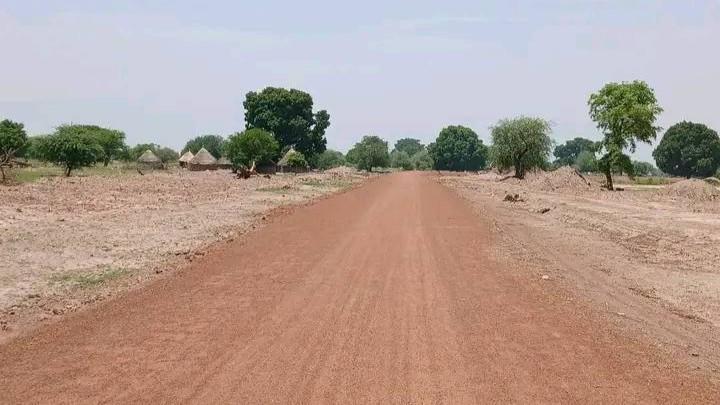
Africa-Press – South-Sudan. The United Nations World Food Programme (WFP) and the European Union on Thursday officially handed over the 26-kilometre Marialbai-Chelkou and Pantit-Anyuopjang feeder road to the state government of Northern Bahr el Ghazal.
The roads link more than 150,000 people and will enhance local trade, boost commerce, and improve community accessibility, particularly during the rainy season in Aweil West County.
The two roads form part of a broader infrastructure initiative funded by the European Union under the Global Gateway Strategy and implemented by the WFP over five years, which has rehabilitated nearly 70km of feeder roads across the state.
“Today’s handover here in Aweil is an important milestone for the people of South Sudan. The European Union is proud to support infrastructure that improves people’s lives and strengthens the country’s economic resilience,” said Pelle Enarsson, the European Union’s Ambassador to the Republic of South Sudan.
Enarson said these feeder roads will improve connectivity, unlock agricultural potential, boost trade and enhance security.
“For many communities, they are a lifeline, providing better access to markets, schools and health facilities throughout the year,” he said.
“As we hand over these roads to the authorities, it is crucial that they take full ownership through proper management and regular maintenance, so that these roads continue to benefit communities for many years to come.”
Dr Tong Lual Ayat, the Deputy Governor of Northern Bahr el Ghazal, applauded the infrastructure development projects supported by the European Union and its partner, WFP.
“These durable investments are already making a tangible difference in people’s daily lives. While infrastructure development remains a core responsibility of government, we value the continued partnership of the European Union in helping to address critical gaps,” he said.
He said he was pleased to note that the security situation in the state remains stable, providing an enabling environment for further development, including the expansion of essential services such as healthcare and education.
“This road is more than mere infrastructure; it is a vital lifeline,” says Adham Effendi, WFP’s Acting Country Director.
“It reduces isolation, particularly during the rainy season, lowers transport costs for users, and enhances access to markets, health facilities, and schools. Such roads will not only improve food security and drive economic transformation but also contribute significantly to social cohesion and peaceful coexistence.”
South Sudan, despite its vast territory, has a very limited road network, with just over 20,000 kilometres of roads, only a small portion of which are paved. During the rainy season, many roads, particularly in rural areas, become inaccessible.
More than three-quarters of the country’s 12.4 million population resides outside urban centres, making the country’s limited infrastructure a major constraint for development and sustainable growth.
With resources from the European Union and other partners, WFP is constructing and upgrading vital public infrastructure, including roads in parts of the country.
The rehabilitation of these two feeder roads is part of the ‘Feeder Roads to Strengthen Livelihoods and Resilience of Rural Communities’ project, funded by the European Union with EUR 22.1 million and implemented by WFP in four states and nine counties.
The project aims to improve the living conditions and resilience of rural communities by enhancing connectivity, strengthening livelihoods, increasing food system efficiency and fostering social cohesion.
For More News And Analysis About South-Sudan Follow Africa-Press