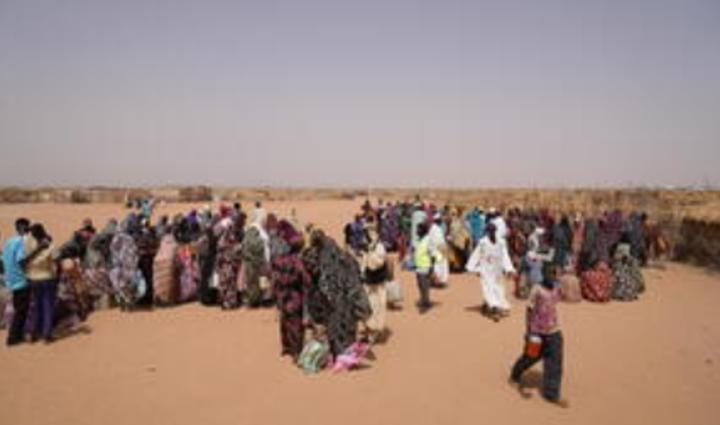
Africa-Press – South-Sudan. On the eve of three years of devastating war, the Sudanese people are still being left to cope with intense fighting and widespread suffering, with conflict killing and injuring countless civilians, and leaving millions without access to food, shelter, or sanitation, the United Nations World Food Programme (WFP) warned on Tuesday.
Carl Skau, WFP’s Deputy Executive Director, who just returned from Darfur, said the international community has failed to prevent and end this conflict and to protect the Sudanese people from atrocities.
“The people I met in camps have been through hell. They have fled their homes, leaving everything behind, and now live in appalling conditions,” he said. “They deserve so much better. We need to make sure they are not let down again and provide the basic support they need.”
A press release extended to this publication said that more than 19 million people still face acute hunger in Sudan, and famine continues to haunt parts of the country as violence, displacement, and economic collapse grind on.
“Communities have been cut off from food, markets, and aid, and children have been forced to miss three years of education, with their future hanging in the balance. Sudan remains the world’s largest humanitarian crisis, with almost two‐thirds of the population now in urgent need of assistance to survive,” the statement reads in part. “Sudan’s hunger crisis now risks being compounded by the escalation of the conflict in the Middle East. Disruptions in the Red Sea are delaying critical imports, driving up the cost of food, fuel, and fertilizer. Fuel prices in Sudan have increased by over 24 percent, driving up food prices and leaving millions unable to afford the most basic staples.”
According to WFP, these same disruptions are also directly impacting humanitarian operations, with delayed shipments and higher transport costs. The combined impact could push families across the country deeper into food insecurity.
“The women I spoke to across Sudan told me they don’t have enough to feed their children and have no access to the most basic services,” warned Skau. “WFP and the humanitarian community have the experience and capacity to step up our support. But to do so, we need humanitarian aid to be allowed to move freely, safely, and at scale – and we need far more funding.”
WFP said it is hyper‐prioritizing famine zones and hard‐to‐reach areas, reaching 3.5 million people each month with emergency food, cash, and nutrition assistance. Two‐thirds of those WFP assists are in Darfur and Kordofan, where famine is confirmed and where fighting is heaviest. More than two million children under five and more than 500,000 pregnant and breastfeeding women and girls benefited from nutrition assistance last year.
WFP is also sustaining livelihoods and local food systems: During the last harvest season, WFP-supported farmers produced nearly one-fifth of the country’s wheat, strengthening the local economy and reducing food insecurity.
“We need to continue investing in the future of the Sudanese people,” said Skau. “We can help communities rebuild their lives by expanding our support for farmers to grow their own food again and by providing school meals to help enable children to return to school. But we need the funding to do it.”
WFP food assistance has dropped by 14 percent since January, as compared to last year, due to a lack of resources; the agency urgently requires more than USD 600 million to sustain life-saving operations in Sudan for the next six months.
For More News And Analysis About South-Sudan Follow Africa-Press