
What You Need to Know
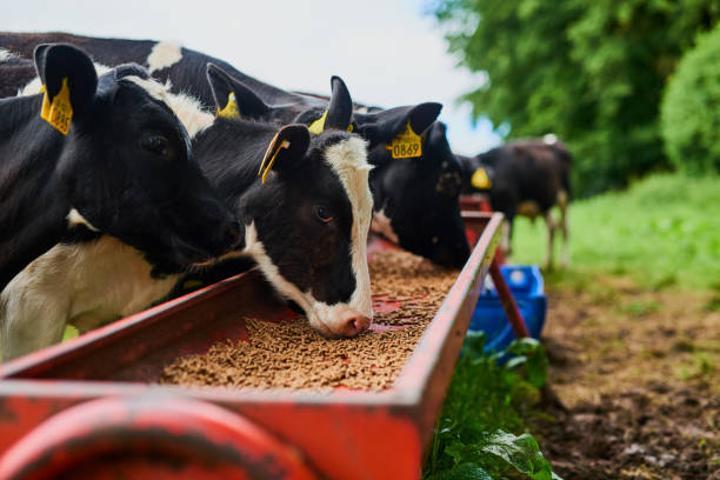
Minister for Livestock and Fisheries Dr. Bashiru Ally has urged dairy investors in Tanzania to focus on high-quality animal feed production to boost milk and meat outputs. During a visit to Kagera Region, he emphasized the region’s potential for livestock growth and the need for modern farming practices to meet rising domestic and international demand.
Africa-Press – Tanzania. BUKOBA: MINISTER for Livestock and Fisheries Dr Bashiru Ally has called on dairy investors to prioritise the production of high-quality animal feed to enhance both milk and meat production.
He emphasised the growing demand for these products in both domestic and international markets, stressing that meeting this demand requires a focused effort on improving feed resources.
Dr Ally made the call on Friday during a visit to a Farmers’ Field School (FFS) in Muleba District, Kagera Region, as part of his working tour.
He said Kagera has strong potential to increase revenue from the livestock sector due to favourable climatic conditions, availability of pasture and water and its strategic location within the Great Lakes region, which provides access to regional markets.
The region supports both traditional livestock such as cattle and goats, as well as exotic breeds.
The minister stressed that improving productivity through technology, infrastructure and modern farming practices is key to unlocking the sector’s full potential beyond smallholder limitations.
“Kagera has a good climate suitable for quality beef production and ranching. Commercial beef ranches already exist and investors can enter into public– private partnerships to optimise these facilities,” he said.
He advised livestock keepers to move away from keeping large herds of unproductive animals and instead adopt modern dairy farming, which is more productive and economically viable.
Dr Ally noted that although Tanzania has a large livestock population, opportunities in the dairy sector remain underutilised.
He said the government has prioritised dairy as a driver of industrialisation, food and nutrition security and income generation.
Currently, the dairy sector contributes about 30 per cent of domestic livestock production and around 1.2 per cent of national Gross Domestic Product (GDP).
He further highlighted that Tanzania’s per capita meat consumption is expected to triple by 2030, driven by population growth, urbanisation and rising incomes across Africa.
However, current livestock supply will not meet future demand.
ALSO READ: Tanzania dairy sector thrives as players inject over 3tri/-
“There is a need for largescale investment to provide technical skills and capital for ranches, feedlots, abattoirs, meat processors and tanneries. Demand for quality livestock products is high locally and internationally and Tanzania’s livestock exports have increased significantly,” he said.
In 2024, Tanzania exported 14,000 metric tonnes of meat against a target of 50,000 tonnes.
Assistant Secretary (Economy and Productivity) at the Kagera Regional Secretariat, Mr Isaya Tendega, said the region has set aside 66,215.7 hectares for dairy industry development under the Mwisa II Project, inviting both local and foreign investors to establish milk and beef processing factories.
He added that the region has allocated 255,741.2 hectares for pasture, with 179,067 hectares under the National Ranching Company (NARCO).
Kagera hosts five NARCO ranches Kitengule, Missenyi, Mabale, Kagoma and Kikulula leased to 87 block owners.
The region currently has over 714,000 indigenous cattle, more than 20,000 dairy cows producing 46 million litres of milk annually and beef production of about 5,000 tonnes per year. Despite its potential, the livestock sector contributes only 7.6 per cent to GDP.
Authorities were urged to work closely with the private sector to support investment, industrialisation and economic growth
Tanzania’s livestock sector has significant potential due to its favorable climate and strategic location within the Great Lakes region. Despite having a large livestock population, the dairy sector remains underutilized, contributing only a small percentage to the national GDP. The government is prioritizing dairy as a key driver for industrialization and food security, aiming to enhance productivity and meet future demand.
The Kagera region, in particular, has been identified for its capacity to support both traditional and exotic livestock breeds. With initiatives like the Mwisa II Project, the region is inviting investments to develop dairy and beef processing facilities, which could be