

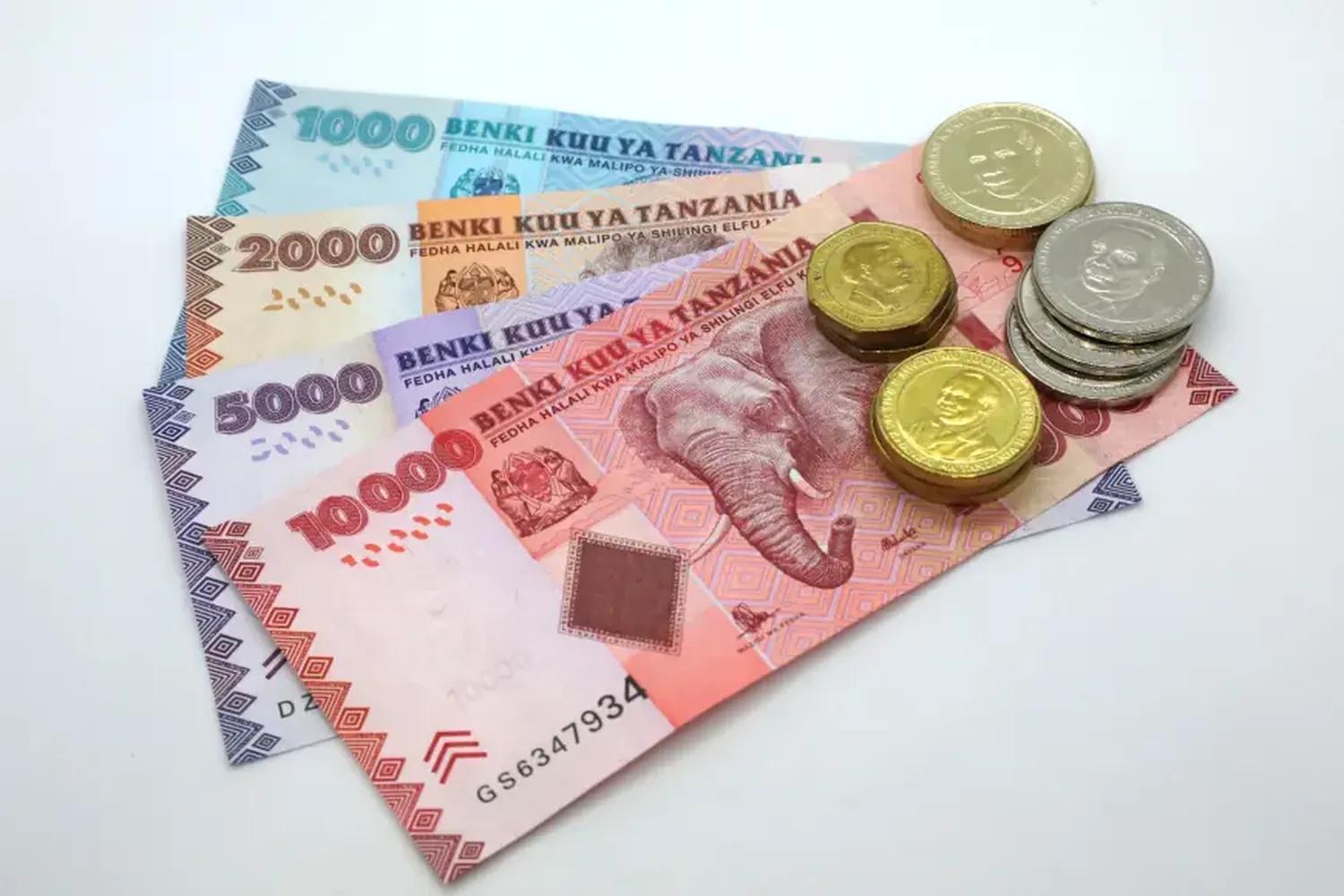
Africa-Press – Tanzania. THE Bank of Tanzania (BoT) recently highlighted that the Tanzanian shilling is under pressure, particularly in early 2026, attributing this trend primarily to seasonal forex shortages rather than structural economic decay.
According to central bank data, the shilling depreciated from an average of about 2,450/- per US dollar in early January 2026 to roughly 2,534/- by early February 2026.
BoT Governor, Emmanuel Tutuba, explained this weakening as driven by the seasonal decline in foreign-currency earnings from key sectors such as agriculture, mining, and tourism between January and May, alongside continued strong demand for dollars by importers, particularly ahead of events such as the Chinese New Year.
This context is crucial for evaluating the currency’s performance, but it is important to expect that a strategic monetary policy be developed to benefit Tanzania and strengthen the local currency.
I would expect Tanzanians to be given an explanation of how to further strengthen their shilling in a situation like this, rather than perpetually seeking excuses and blaming factors beyond our control.
President of the world’s largest economy, Mr Donald Trump, understands the significance of currency devaluation against the dollar, among other things.
I believe, as an economist, that when these issues arise and explanations are inadequate or biased, it creates an opportunity for individuals with ill intentions to exploit them to either mislead the public or assign unfounded blame.
It is widely recognised that Tanzania’s economy is heavily reliant on imports, with the majority of manufactured goods, machinery, fuel and other essentials priced in US dollars. During temporary tightening in the foreign exchange market, importers compete for scarce dollars, driving up the price of foreign currency in terms of shillings and weakening the shilling.
These seasonal forex shortages are not novel. In the past, comparable patterns were observed when export revenues fluctuated as a result of changes in agricultural output or tourism cycles. For instance, the supplyand-demand equilibrium in the foreign exchange market and seasonal variability are the sources of foreign exchange pressures, as indicated by BoT’s own communications from previous years.
Despite this, the public often assumes that any depreciation of the shilling signals a weakening economy. This perception holds that a stronger local currency inherently indicates economic strength, while a weaker one is synonymous with economic trouble. This simplistic association obscures more complex economic realities and opportunities.
I will briefly explain the benefits to non-economists to show that currency losing value isn’t automatically harmful to the economy and does not require extensive justification. In fact, a softer shilling can make Tanzanian exports cheaper and more competitive in global markets.
For producers of raw materials and semi-processed goods—from agricultural commodities to minerals such as gold—a weaker local currency often yields higher foreigncurrency earnings when selling abroad.
For instance, Tanzania’s gold export revenues have been significant; by mid-2025, the country earned over 4 billion US dollars from gold exports, up sharply from previous years. An exchange rate that favours exporters improves export revenue in local currency terms, boosting domestic income and potentially stimulating local production.
Similarly, foreign investors interested in shillingdenominated assets may identify opportunities during periods of depreciation. When the shilling is weaker, foreign capital may find it more affordable to invest in real assets, such as manufacturing infrastructure, tourism facilities, or agricultural processing plants for value addition.
This, in my view, could attract long-term capital flows. Investors optimistic about Tanzania’s economic fundamentals may regard these periods as strategic entry points.
However, in a more strategic sense, exchangerate flexibility helps a nation adapt to external disruptions. Tanzania avoids imposing a policy-induced imbalance (such as the rapid depletion of reserves from defending a fixed rate) by allowing the currency to depreciate in response to a reduced forex supply. The BoT can mitigate volatility when necessary and allow the market to achieve equilibrium over time by maintaining sufficient reserves.
Of course, despite the few potential opportunities I have highlighted above, losing value can be politically and socially sensitive, with repercussions for the everyday cost of living and for the interpretation of economic signals, thereby creating defensive responses to global factors rather than acknowledging domestic structural issues such as forex shortage cycles. While external forces matter, overattributing global effects can obscure domestic policy levers that could also be adjusted.
Many individuals fail to recognise that the decline of the TZS against the dollar can also present an economic opportunity, contingent on how it is capitalised on. As the shilling weakens, the value of foreign-currency export revenues increases when converted into local currency.
This can boost the profitability of local producers, particularly in sectors in which Tanzania has a comparative advantage, such as mining (particularly gold), agriculture (cashews, coffee, and tea), and tourism services. These sectors can generate more local-currency revenue, thereby bolstering overall economic activity and providing opportunity for formal job creation. A more balanced trade position could be achieved by offsetting the initial foreign exchange shortage and enhancing export competitiveness, thereby increasing export volumes.
A weaker shilling raises the relative price of imported products, making domestically produced alternatives more appealing. This dynamic can bolster the domestic manufacturing and agricultural processing sectors, which compete with foreign imports. Such substitution can promote value-added production, increased productivity, and more employment when implemented alongside suitable industrial policies and investment incentives.
It is crucial to note that foreign investors may be attracted to local assets during periods of currency depreciation, as this reduces the cost of investing in foreign currency terms. This is purely economic in nature. A weaker shilling can serve as an incentive rather than a deterrent for foreign investors who are optimistic about Tanzania’s longterm prospects, which include political stability, regulatory reforms, and development drivers. It effectively reduces the cost of capital investment in the country’s productive base.
In practice, the BoT can utilise its forex reserves more effectively by allowing the currency to adjust to market conditions. The managed float policy enables the central bank to intervene intelligently, selling foreign currency to ease shortages during periods of stress and refraining when the market is balanced, rather than defending an artificial exchange rate that could deplete reserves. This strategy is evident in the recent interventions of substantial volumes in the forex market, which are intended to mitigate shocks rather than rigidly fix the rate.
The manner in which exchange rate trends are communicated is crucial. The public and markets may misinterpret volatility as a crisis, even when fundamentals remain stable, when reports emphasise that the shilling is under pressure without formatting it within a broader economic narrative.
Tanzania’s authorities, including the BoT and the Ministry of Finance, have previously addressed misleading narratives regarding the shilling by emphasising that the country’s broader macroeconomic indicators, including stable inflation, a narrowing current account deficit, and robust development prospects, are still robust.
I suggest that, in order to mitigate negative perceptions, it is necessary to enhance public communication about seasonal forex cycles, educate the public about the nature of exchange-rate flexibility, and help the public understand that currency movements are market signals rather than necessarily indicators of impending collapse. Ultimately, emphasising structural strengths—such as robust gold exports, pragmatic monetary policy, and tourism inflows—contextualises the fact that temporary pressures are not catastrophic.
In my opinion, the Bank of Tanzania’s most recent report on the shilling’s seasonal pressures indicates a temporary market adjustment consistent with a broader trend observed in exportdependent economies.
Although a depreciating shilling presents some immediate challenges, such as increased import prices and public anxiety, it should not be interpreted as a solely negative indicator of economic decline. Instead, it is imperative to make a concerted effort to defend the apparent economic trend.
Conversely, Tanzania may capitalise on the potential to enhance export competitiveness, encourage domestic value chains, attract foreign direct investment, and promote import substitution through the strategic management of exchange rate losses against other currencies. The critical factor is the distinction between seasonal and structural pressures, as well as the manner in which policymakers and communicators present these episodes to the public.
The public requires a strategic monetary policy that benefits Tanzania by stimulating the local economy, rather than attributing labour-market outcomes to well-known and common external factors. When such a trend occurs, there is no need to jump to the conclusion that the economy is declining or to enter defensive mode, attributing it to global issues or seasonal effects.
I believe the economy is fundamentally sound, despite the transitory foreign-exchange scarcity that is exerting downward pressure on the shilling, and that the broader macroeconomic context—stable growth, controlled inflation, and proactive central-banking interventions—supports this view.
Tanzania can turn what the media often portrays as a problem into a gateway for future economic gains by understanding the dynamics at play and communicating them effectively.