

What You Need to Know
Vice President Emmanuel Nchimbi emphasized the importance of ongoing education reforms in Tanzania, aimed at equipping graduates with practical skills for global competitiveness. During the launch of an international conference, he noted that these reforms are crucial for sustainable development and self-reliance in the job market, with a new curriculum already being implemented.
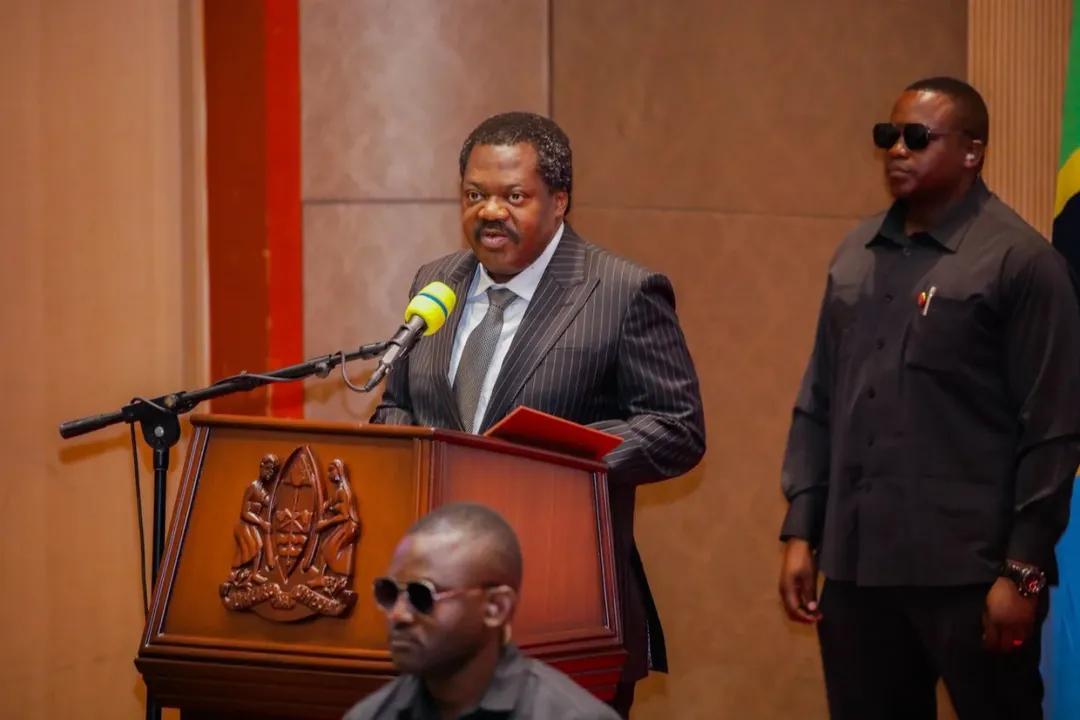
Africa-Press – Tanzania. THE Vice President, Emmanuel Nchimbi, has said that the country’s ongoing education reforms are geared towards equipping graduates with practical skills and global competitiveness.
The VP made the statement today, March 25, 2026, during the launch of the International Conference on Policy and Curriculum Reforms in Dar es Salaam, noting that education remains the backbone of sustainable development and human prosperity.
Additionally, the Vice President said that the government is implementing transformative changes aimed at enabling graduates to be self-reliant and competitive in the global job market, describing the current phase as a “major shift” in the country’s education system.
He further said that President Samia Suluhu Hassan is encouraged by the progress made, particularly the role played by the Ministry of Education, Science and Technology in driving reforms in collaboration with key stakeholders.
Speaking earlier, the minister for Education, Science and Technology, Prof Adolf Mkenda, said that Tanzania’s sweeping education reforms have entered a critical phase, with the government rolling out a new curriculum designed to equip learners with skills for both current and future demands.
According to the minister, the reform agenda is a top national priority that cannot be delayed.
He said the transition is being implemented in phases, with the new curriculum already introduced from pre-primary to Standard Three, while upper primary classes continue using the previous system.
Elaborating, he said that the first cohort under the new curriculum, currently in Standard Three, will complete primary education in 2027, resulting in two groups finishing primary school in the same year.
Furthermore, the minister underscored the need for strong stakeholder collaboration to ensure successful implementation, noting that the government has already issued directives to expand access to secondary education.
Tanzania has been undergoing significant education reforms aimed at improving the quality and relevance of its educational system. These reforms are designed to align educational outcomes with the demands of the global job market, ensuring that graduates possess the necessary skills to thrive. The government has prioritized these changes, recognizing education as a vital component of national development and economic growth. The introduction of a new curriculum marks a pivotal shift in the approach to education, focusing on practical skills and stakeholder collaboration to enhance learning outcomes.