
What You Need to Know
The U.S. has inaugurated upgraded facilities at the Marine Police College in Mwanza, Tanzania, aimed at enhancing maritime security on Lake Victoria. This initiative, part of a two-year project, focuses on improving training and operational capacity to combat transnational threats, ensuring safer waterways for local communities and regional stability.
Africa-Press – Tanzania. THE saying “a friend in need is a friend indeed” expresses a clear moral principle: the true value of friendship is tested not in moments of comfort, but in times of vulnerability. It distinguishes between relationships sustained by convenience and those defined by meaningful support during hardship. In this sense, friendship is not merely a social label, but an action-based commitment demonstrated through timely assistance, shared resources and solidarity.
In international relations, this principle translates into strategic partnerships. Nations prove their reliability not through rhetoric, but through tangible support when security or development challenges arise. This framework is evident in recent developments in Mwanza Region, where the United States has reaffirmed its commitment to strengthening maritime security in Tanzania through infrastructural and institutional support.
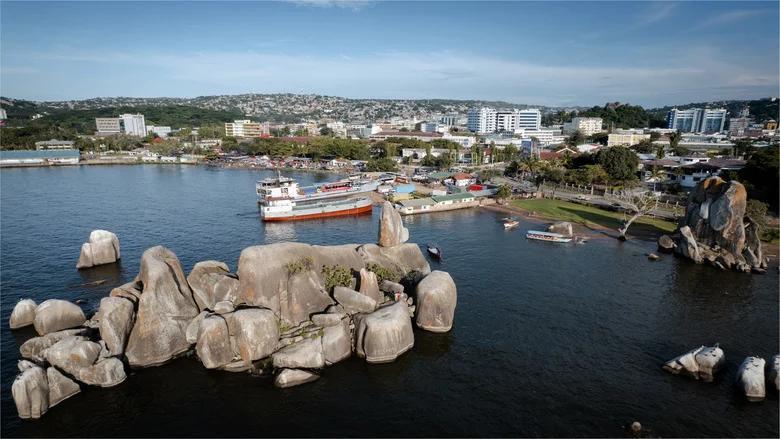
The inauguration of upgraded facilities at the Marine Police College in Mwanza, including a renovated female dormitory and a new boat shed, represents more than routine cooperation. It signals targeted assistance at a time when the country faces growing transnational threats on Lake Victoria. The improvements are expected to enhance the college’s role in training officers, strengthening surveillance and improving law enforcement across Tanzania’s inland waters, particularly Lake Victoria, a critical economic and transport corridor.
The collaborative project, funded by the U.S. government and implemented in partnership with the United Nations Office on Drugs and Crime (UNODC), is designed to strengthen the operational capacity of marine law enforcement agencies. It forms part of a broader regional initiative aimed at addressing maritime insecurity in East Africa.
Speaking during the inauguration, the U.S. Embassy’s Charge d’Affaires, Mr Andrew Lentz, described the event as the culmination of a two-year initiative to support Tanzania’s efforts in securing its waterways. He emphasized that the occasion was more than ceremonial, reflecting a shared commitment to regional stability.
“Today’s ceremony caps a two-year U.S. governmentfunded initiative supporting your efforts and the important work you are doing to secure the Lake Victoria region and Tanzania’s coast and waterways,” he said.
Mr Lentz noted that the upgraded infrastructure would improve training standards and operational readiness, positioning the Marine Police College as a strategic hub for maritime security. He stressed that the work carried out by marine police officers is not only vital for Tanzania, but also for the wider East African region and international partners.
He highlighted Lake Victoria and the broader Great Lakes region as critical economic zones that sustain thousands of livelihoods. However, he warned that these waters are increasingly targeted by criminal networks.
“We know that traffickers use the lake to move drugs, people and weapons,” he said, adding that fishermen are often attacked and robbed of their catch. He also pointed to the presence of terrorist networks in neighbouring regions, noting that insecurity in the wider area poses a shared threat.
“These challenges affect all of us, Tanzania, the United States and the entire East African region,” he said. “Our goal is to deny, disrupt and dismantle criminal and terrorist networks before they can threaten our people, our trade and our way of life.”
He further described the initiative as a demonstration of enduring bilateral cooperation, noting that such partnerships are built on practical support rather than symbolic gestures. On behalf of the Inspector General of Police, Commissioner for Operations and Training Mr Awadhi Haji described the handover as a significant milestone in strengthening Tanzania’s maritime law enforcement capacity. He reaffirmed the Tanzania Police Force’s commitment to improving security on inland waters and acknowledged the importance of international cooperation.
“On behalf of the Tanzania Police Force, I sincerely thank the Government of the United States of America, through the U.S. Embassy, for funding these projects, and UNODC for their coordination support,” he said. “This partnership continues to play a vital role in strengthening our operational and training capabilities.”
Mr Haji explained that the upgraded infrastructure would support institutional reforms, particularly in promoting gender inclusion and improving training standards. The renovated female dormitory provides safe and conducive accommodation for female officers, while the new boat shed, equipped with a workshop and computer laboratory, will enhance training, maintenance and the integration of technology in marine policing.
He added that continued support through training programmes and the provision of equipment, including ICT tools and boat spare parts, has already improved the effectiveness of the college.
“We accept these facilities with great appreciation and a strong sense of responsibility,” he said, confirming that the Police Force would ensure proper use and maintenance of the infrastructure.
Despite the progress, Mr Haji noted that further investment is needed to fully realise the college’s potential. He cited the need for additional accommodation, staff housing and expanded training facilities to support growing demand.
The UNODC Associate Programme Officer, Ms Jolien Abrams, said the project is part of a broader regional initiative under the Global Maritime Crime Programme. The effort focuses on strengthening training institutions, enhancing regional cooperation and addressing vulnerabilities linked to organised crime in key water bodies such as Lake Victoria.
“The aim is to build resilient institutions capable of responding effectively to evolving maritime threats,” she said. The upgraded Marine Police College is expected to serve as a regional centre of excellence in marine law enforcement, facilitating cooperation among countries and contributing to the protection of livelihoods for communities that depend on Lake Victoria. The Commandant of the college, Mr Ndagile Makubi, noted that the institution has benefited from an investment of over 400 million Tanzanian shillings from the U.S. Embassy. This support has enabled the acquisition of modern training equipment and improvements in infrastructure, significantly enhancing the quality of training provided.
“This investment will benefit not only marine police officers but also personnel from other institutions who come here for training,” he said.
The project also included the installation of modern communication equipment to improve training and operational efficiency, reflecting the increasing role of technology in maritime security.
As Tanzania continues to strengthen its security systems, the developments in Mwanza highlight the importance of partnerships grounded in practical support. They reflect a shared understanding that safeguarding key resources such as Lake Victoria requires coordinated action, sustained investment and strong institutions.
Ultimately, the initiative embodies the principle that meaningful partnerships are defined not by words, but by action. In a region facing complex and evolving security challenges, such cooperation offers a pathway toward stability, resilience and shared progress.
Lake Victoria is a vital resource for the East African region, supporting millions of livelihoods through fishing and trade. However, it faces increasing threats from organized crime, including drug trafficking and terrorism. The U.S. has recognized the need for enhanced maritime security, leading to collaborative efforts with Tanzania to strengthen law enforcement capabilities and safeguard this critical economic zone. Recent investments in infrastructure and training aim to bolster the operational readiness of marine police, reflecting a commitment to regional stability and security.