

What You Need to Know
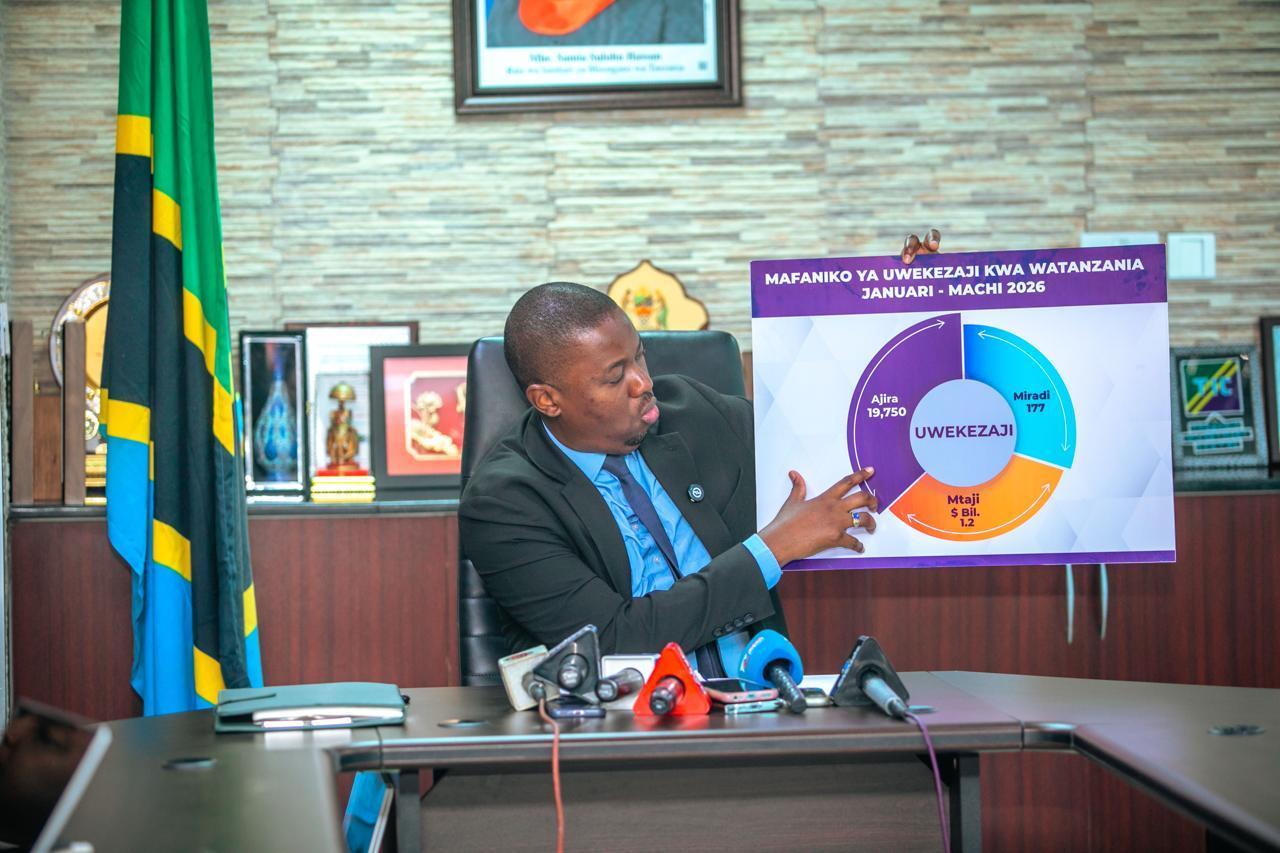
Tanzania has reported a substantial increase in investment, with 177 projects valued at $1.12 billion registered in the January-March quarter of 2025/2026. This growth is expected to create over 19,750 jobs, primarily in the manufacturing sector. The government’s efforts to improve the business environment have played a crucial role in attracting both domestic and foreign investments, particularly
Africa-Press – Tanzania. TANZANIA has continued to record remarkable progress in attracting investment, with 177 projects worth 1,122.09 million US dollars registered in the January–March quarter of the 2025/2026 financial year, expected to create more than 19,750 new jobs.
This was revealed yesterday by the Tanzania Investment and Special Economic Zones Authority (TISEZA) Director General, Mr Gilead Teri, during a press briefing on the investment performance report for the January–March 2026 period, held in Dar es Salaam.
Mr Teri attributed this achievement to improvements in the business environment spearheaded by the government under President Samia Suluhu Hassan.
“The investment climate in the country continues to improve due to a better business environment, improved infrastructure, and political stability, all of which are attracting both domestic and foreign investment,” he said.
According to Mr Teri, the manufacturing sector led in project registration at 51 per cent, job creation at 63 per cent, and capital investment at 47 per cent during this period.
“The top five sectors attracting investment in the country are manufacturing, tourism, commercial buildings/construction, economic infrastructure, and agriculture. These are strategic sectors that contribute significantly to national development by generating foreign exchange, contributing to GDP, and creating more employment opportunities,” he added.
Mr Teri further noted that Asian countries are leading investors in Tanzania, with China topping the list, accounting for 39 per cent of total investment and 60 per cent of job creation compared to other countries.
Regionally, Dar es Salaam led with 60 projects, followed by the Coast Region with 33 projects and Mtwara with 5 projects.
“TISEZA will continue to create a favourable investment environment, especially in peripheral regions, by offering special tax and non-tax incentives to attract investors to those areas,” he said.
Regarding project registration under the EPZ/SEZ program during the same period, Mr Teri said a total of seven projects were registered, compared to nine projects registered during the same period in 2025.
He also said that as of April 1 this year, the authority had received 86 applications from investors expressing interest in investing in Special Economic Zones, including Buzwagi, Nala, Kwala, Bagamoyo EcoMaritime City, and Benjamin William Mkapa, following TISEZA’s investment promotion campaign.
“The breakdown of applications is as follows: Bagamoyo (48), Kwala (20), Nala (16), and Buzwagi (2),” he said As a result of efforts to promote SEZ areas both locally and internationally, Mr Teri said TISEZA has successfully signed land agreements with 27 companies, equivalent to 31 per cent of all applications.
Of these agreements, 16 are located in Bagamoyo Eco-Maritime City, Nala, Kwala, and Benjamin William Mkapa SEZs.
The remaining 11 are in SEZs located in Mtwara, Mkulazi (Morogoro), Kimandolu (Arusha), Bunda, Shinyanga, Mbeya, Lindi, and Tanga.
He said these companies will invest in various sectors, particularly manufacturing, including food-grade packaging, textile production, iron and ferro-alloy products, pharmaceutical manufacturing, electric tricycle production, and vehicle assembly plants.
According to Mr Teri, these projects are expected to invest more than 797.75bn/-, creating over 20,460 direct and indirect jobs.
On investment ownership, Mr Teri said Tanzanians continue to own the majority share at 57.06 per cent (35 per cent fully local and 21.47 per cent joint ventures), compared to 42.94 per cent owned by foreign investors.
“This is a positive sign that Tanzanians are increasingly recognizing the importance of investing,” he said.
Tanzania has been focusing on improving its investment climate over the past few years, aiming to attract both local and foreign investors. The government has implemented various reforms to enhance infrastructure, political stability, and the overall business environment. These efforts have resulted in increased foreign direct investment, particularly from Asian countries, which has significantly contributed to the country’s economic growth and job creation.
The manufacturing sector has emerged as a key player in this investment surge, accounting for a large percentage of project registrations and job creation. The government’s strategic focus on sectors such as tourism, agriculture, and a