

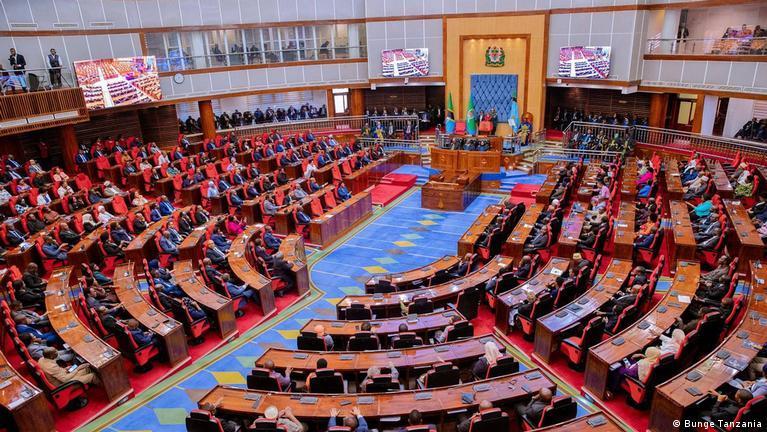
Africa-Press – Tanzania. THE government has intensified efforts to curb destructive elephant raids by expanding rapid-response centres in wildlife-prone regions, Prime Minister Mwigulu Nchemba told Parliament yesterday, while ruling out proposals to kill elephants as a populationcontrol measure.
Dr Nchemba was responding during the Prime Minister’s Questions session to a query from Nachingwea MP Fadhili Liwaka (CCM), who said crop destruction and fatalities caused by elephants remain severe in several districts despite ongoing mitigation efforts.
Mr Liwaka asked whether the government would consider traditional methods, including controlled killings, to reduce elephant numbers without violating international conservation laws, noting that measures such as tracking collars, public education and animal relocation had not yielded sufficient results.
The Prime Minister, however, said Tanzania cannot adopt any approach that contravenes global wildlife protection commitments.
“Tanzania is a signatory to several international conventions that classify elephants among endangered species. These agreements strictly prohibit killing or trading products from such animals except under very specific legal arrangements,” he said.
He added that adopting elephant culling as a population-control strategy would breach the country’s international obligations.
Dr Nchemba said the Ministry of Natural Resources and Tourism has expanded wildlife response posts in hotspot areas to ensure faster intervention when elephants leave protected zones and enter villages or farms.
In addition, the government has introduced new technologies to deter elephant movements before damage occurs.
“One of the strategies being used is deploying drones to detect and drive elephants away before they reach residential or farming areas,” he said.
He also said the government is increasing the number of wildlife rangers, particularly in districts that have long faced shortages.
“In previous years, much of our national focus was directed toward fighting poaching. We are now equally focusing on preventing wildlife from entering human settlements and destroying livelihoods,” he said.
Dr Nchemba acknowledged public concerns that priority had previously leaned more towards wildlife protection than safeguarding communities, noting that the government has taken the feedback seriously.
“That concern was widely raised, and we have responded by expanding ranger numbers and establishing more control stations to prevent such incidents,” he said.