
What You Need to Know
In Tanzania, women are at the forefront of climate adaptation efforts, yet their contributions often go unnoticed. The Green Frame initiative aims to highlight these invisible leaders by creating participatory documentaries that showcase their work and perspectives. By empowering women to tell their own stories, the project seeks to shift perceptions and foster community dialogue around gender and
Africa-Press – Tanzania. In many coastal communities of Dar es Salaam, the frontlines of climate adaptation are not found in conference halls or policy documents, but in the everyday lives of women. They are the ones recycling waste, restoring degraded environments, managing scarce resources, and quietly sustaining their communities against the growing pressures of climate change.
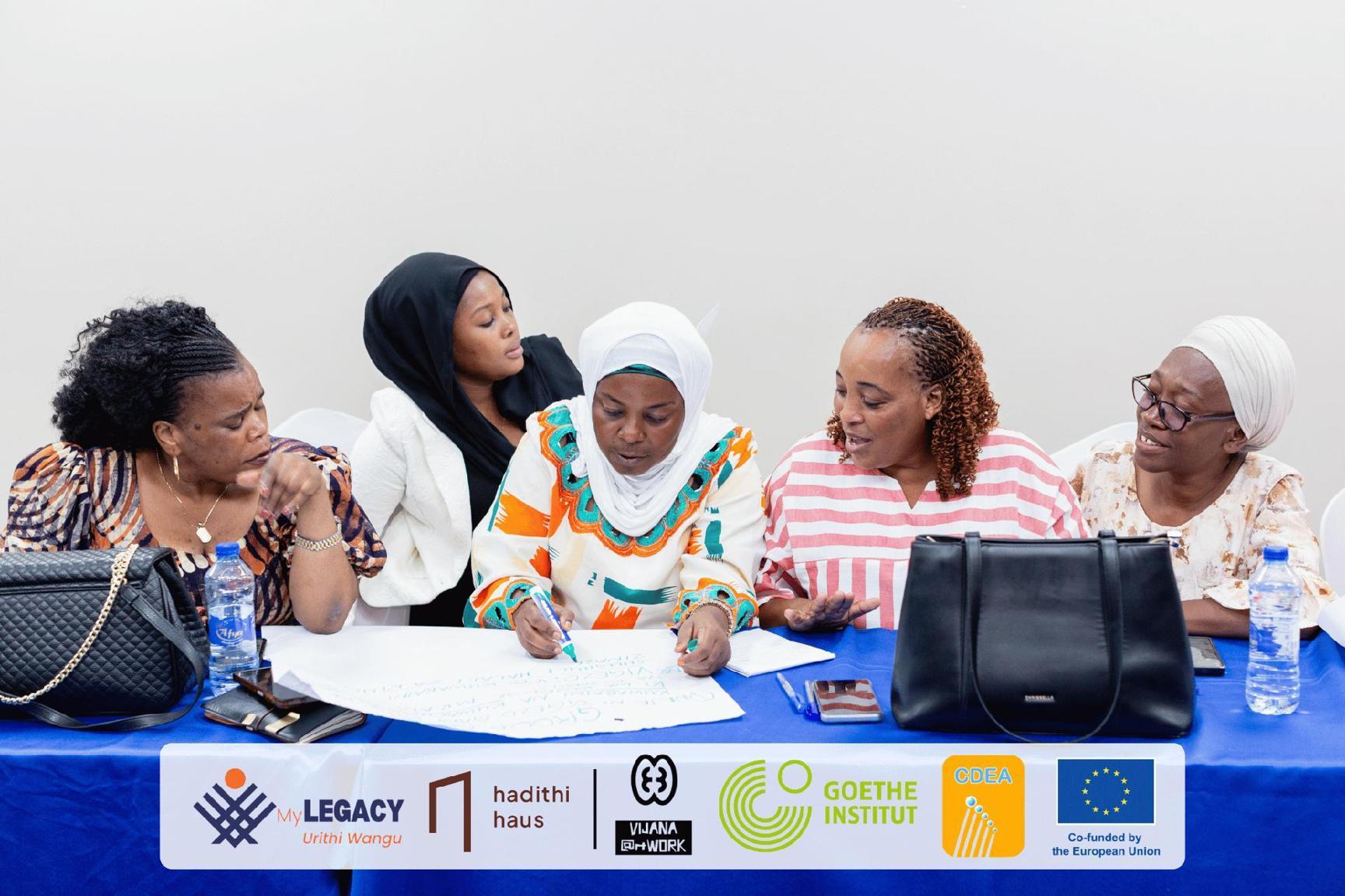
Yet, despite their critical role, their contributions remain largely invisible, undocumented, undervalued, and excluded from mainstream climate discourse. It is this disconnect that has inspired MyLEGACY to launch an innovative initiative known as Green Frame, a participatory documentary project that seeks to bring women’s climate work into the spotlight.
Developed in collaboration with Hadithi Haus, the project uses film not merely as a storytelling medium, but as a
cultural and dialogical tool for social transformation.
Speaking during the project’s introduction in Dar es Salaam, MyLEGACY’s Executive Director, Fortunata Temu, explained that the initiative is grounded in a simple but urgent reality: women are already leading climate adaptation efforts, but their voices are missing from the narratives that shape policy, funding, and public
awareness.
“The goal is to amplify women’s lived experiences,” she said, “and to foster community reflection on gender equality, resilience, and social cohesion.” At its core, Green Frame is designed to identify and engage women who are already contributing to small-scale environmental care within their communities.
These are women whose work often goes unnoticed those managing household waste, protecting natural ecosystems, or innovating practical solutions to climate-related challenges. Through a participatory process, they will co-create a series of short documentary films, each lasting between five and ten minutes, visually
capturing their work, perspectives, and aspirations.
But Green Frame is not just about producing films. It is about shifting power. For too long, climate conversations have been dominated by top-down approaches, often shaped by technical experts and policy elites.
In many cases, these spaces remain male-dominated, leaving little room for grassroots voices, especially those
of women whose experiences are deeply embedded in local realities. The result is a persistent gap between lived experience and formal decision-making.
Green Frame seeks to bridge that gap by placing storytelling tools directly in the hands of women. Through participatory filmmaking, they are not just subjects of the story, but become its authors. They speak in their own languages, frame their own challenges, and present their own solutions. In doing so, they reclaim agency
over narratives that have long excluded them.
This approach also challenges entrenched gender norms that continue to limit women’s visibility and leadership. In many communities, social expectations restrict women’s participation in public discourse and economic activities.
Their work, particularly in environmental care, is often seen as an extension of domestic responsibility rather than a form of leadership or expertise. By documenting and publicly showcasing these contributions, Green Frame
repositions women as knowledge holders and community leaders. It transforms what has long been considered “invisible labor” into recognized and respected work.
Equally important is the project’s emphasis on dialogue. After the films are produced, MyLEGACY will facilitate community screenings, bringing together residents, youth, and local leaders to engage with the stories.
These sessions are designed to spark reflection and conversation—not only about climate change, but
also about gender roles, shared responsibility, and collective action. In these spaces, perspectives begin to shift. Men and community leaders are invited to see women’s contributions in a new light. Young people are exposed to relatable, locally grounded examples of climate action.
And women themselves gain confidence as their voices are heard and validated. The impact extends beyond social recognition. Visibility can also open doors to economic empowerment. Many women engaged in environmental activities such as recycling or sustainable resource management struggle with limited access to markets, networks, and financial support. Their work, while valuable, often remains informal and under-
resourced.
By showcasing their efforts through film and digital platforms, Green Frame creates opportunities for these women to connect with partners, attract support, and expand their livelihoods.
A woman who collects and repurposes plastic waste, for instance, may find new buyers or collaborators after her story is shared. A group involved in ecosystem restoration may gain access to training or funding opportunities. In this way, recognition becomes a pathway to income.
According to MyLEGACY Programme Coordinator, Amina Alliy, digital dissemination is a key component of the project. By sharing the films through online platforms, youth networks, and public showcases, the stories can reach audiences far beyond their communities.
“These stories will travel,” she noted, “and with them, the credibility and visibility of the women behind them.”
This broader reach is critical in addressing another persistent gap the disconnect between climate action and everyday life. For many people, climate change is perceived as an abstract or distant issue, discussed in global forums but disconnected from local realities. Green Frame counters this by presenting tangible, human-centered stories that demonstrate how climate adaptation is already happening at the grassroots level.
The use of film also addresses the limitations of traditional awareness approaches. While workshops and trainings remain important, they often fail to engage wider audiences or evoke emotional connection. Film, by contrast, combines visual storytelling with personal narrative, making complex issues accessible, relatable, and compelling.
Through Green Frame, storytelling becomes a catalyst for both learning and action. Communities are not only informed but inspired, encouraged to replicate ideas, support local initiatives, and work together toward shared goals.
At a deeper level, the project reflects MyLEGACY’s commitment to community- driven development. Rather than imposing external solutions, it builds on existing knowledge and practices within communities. Women are not treated as passive beneficiaries but as active co-creators of change.
This shift in approach is crucial. Too often, development interventions overlook local expertise, leading to solutions that are misaligned with community needs. By contrast, Green Frame ensures that the voices shaping the narrative are the same ones shaping the solutions.
Ultimately, the project is about more than film. It is about redefining who is seen, who is heard, and who is valued in the fight against climate change. The underlying insight is both simple and profound: women are already solving climate challenges, but their solutions are not being recognized, amplified, or scaled. Green Frame seeks to change that by combining storytelling, dialogue, and digital outreach into a single, integrated approach.
As the films begin to circulate and conversations take root, the hope is that these stories will do more than inform. They will transform perceptions, influence decisions, and create pathways for women to strengthen both their voice and their livelihoods.
In doing so, Green Frame offers a powerful reminder that the most effective solutions to global challenges often begin at the local level with the people who are already living them.
Historically, women have played a crucial role in environmental stewardship, particularly in developing countries where they manage resources and care for their communities. However, their contributions have often been overlooked in formal climate discussions and decision-making processes. Initiatives like Green Frame aim to rectify this by elevating women’s voices and experiences, ensuring they are recognized as key players in climate action and community resilience. This shift not only empowers women but also enriches the broader climate narrative by incorporating diverse perspectives.