
Africa-Press – Tanzania. MEMBERS of Parliament (MPs) have advised the Ministry of Health, Social Development, Gender, Elderly and Children to provide more support to areas with high prevalence of Tuberculosis (TB) to completely eradicate the disease in the country.
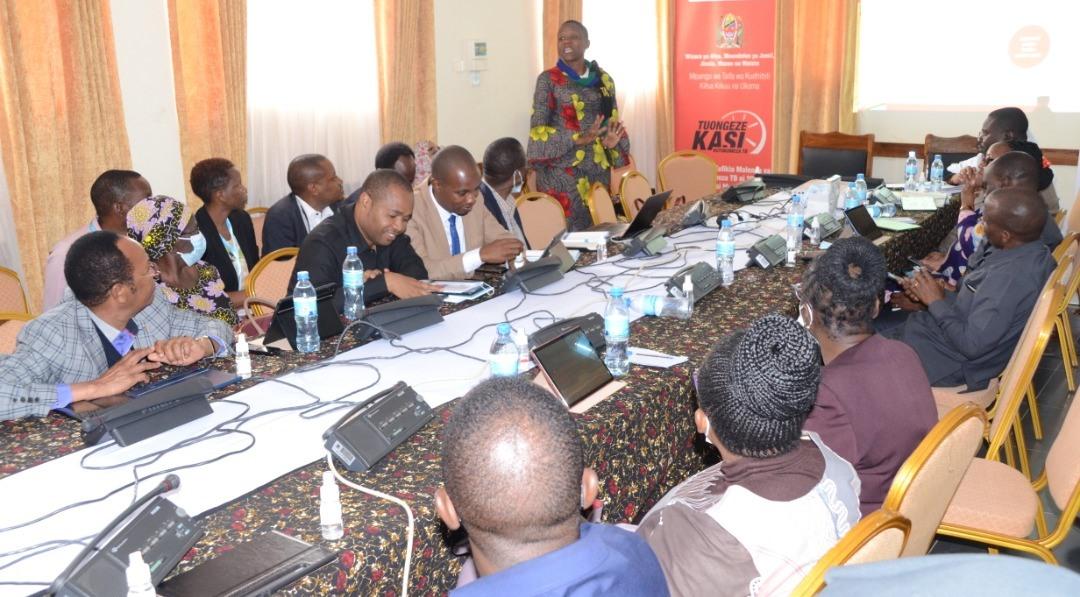
The advice was given by legislators when contributing to a topic presented by the acting Manager of the National TB and Leprosy Control Programme, Dr Liberate Mleoh, at a training organised by the ministry in collaboration with the National Council of People Living with HIV in Tanzania (NACOPHA).
The two-day training is aimed at empowering members of the Parliamentary Committee on AIDS, Tuberculosis and Drugs, under the funding from Stop TB Partnership Tanzania to raise awareness on the disease and coordinate efforts for eradication of these diseases in the country.
At different times, the MPs, including Dr Pius Chaya (Manyoni East-CCM), JacklineNgonyani (Special Seat- CCM), Juliana Shonza (Special seat-CCM) and Grace Tendega (Special Seat-Chadema), among others, explained that concerted efforts must be taken to eradicate the diseases.
They appealed to the government, through the relevant ministry, to increase the scope of providing education to the community by using different methods as was in 1970s, especially in areas or groups that are at risk of contracting TB, about the effects of the disease and how to protect themselves.
Presenting the motion during the training session, Dr Mleoh mentioned some of the risk groups such as people with immunodeficiency, including people with chronic diseases such as Diabetes and Cancer, people living with TB patients and people with malnutrition, HIV and people who smoke cigarettes.
Other groups are miners, slum dwellers and fishermen’s camps, health care providers, boarding schools and prisons as well as children. He said that the estimated number of deaths from Tuberculosis alone per day was 55 and 88 people including mixed infections (TB / HIV).
He noted that TB has remained a global health problem since the World Health Organization (WHO) declared it a global disaster in 1993 and approved by the African Union (AU) through the Maputo Declaration in 2005.
The Acting Manager pointed out that TB was the 9th leading cause of death in the world and was the only infectious disease to be followed by HIV.
“Tuberculosis is the most deadly disease of all. More than two billion people in the world, which is equivalent to 30 percent are infected with TB. In this country, it is estimated that more than 18 million people are infected with TB,” he said.
He cited several statistics showing that TB was the leading cause of deaths, with one billion people dying from TB, followed by Small Pox, Malaria and Plague, Influenza, Cholera and Aids.
Dr Mleoh said that for the past five years regions of Dar es Salaam, Const Region, Manyara, Arusha and Njombe have had high rate of patient identification, with Kigoma, Rukwa, Songwe, Simiyu, Katavi, Kagera and Zanzibar islands having low rate of patient visibility.
“Temeke District Council has the highest proportion of 297 patients per 100,000 people and Unguja has the lowest proportion of 39 patients per 100,000 people,” he said.
Regarding the impact on health and the environment, Dr Mleoh said that TB is a disease related to poverty and that 95 percent of TB deaths come from developing countries, where in Tanzania 137,000 people suffer from TB each year and cause 32,000 deaths, equivalent to 88 deaths each day. He said that of those deaths, 33 were HIV patients .
According to the Acting manager, as with other diseases, the resistance to TB drugs was increasing due to weak discovery methods and patients interrupting treatment.
Dr Mleoh said that results of various studies show that the cost of treating TB is a huge burden on patients and their households and their lives becomes difficult even after recovering from the disease.
He explained that the cost of medical care for one TB patient is about 100,000/- and for those with chronic TB it is 3,500,000/-.
According to the Acting Manager, the government aims to eradicate TB by having less than 10 patients per 100,000 people and in the case of Leprosy having less than 10 patients per 1,000,000 people.
When closing the training session, the Ministry’s Deputy Minister, Dr Godwin Mollel, emphasized on the need for MPs to closely work with his ministry in eradicating the disease.
He called on members of the committee to lead and manage political accountability and lead the fight against TB from the highest levels of leadership to the lower levels and that TB should be a permanent agenda in political and social meetings.