

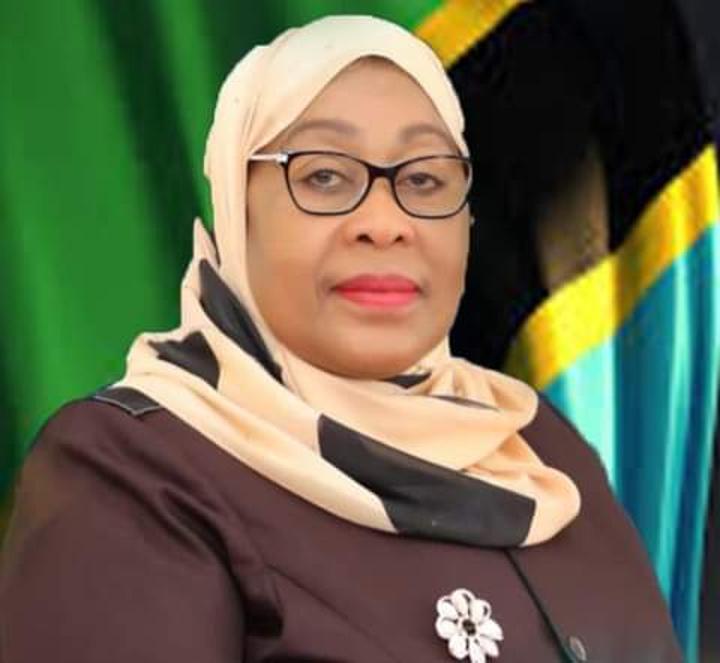
Africa-Press – Tanzania. PRESIDENT Samia Suluhu Hassan yesterday counselled new judges of the Court of Appeal and High Court to fight the temptation of soliciting bribes or risk being disqualified.
The Head of State told the newly sworn-in seven judges of the Court of Appeal and 21 others of the High Court that since their main task would be delivering justice; taking bribe would compromise their responsibility.
“My appeal to you is that you should go to work whilst adhering to humanity, faithfulness and with a kind heart,” President Samia emphasized as she swore in the new judges at the State House in Dar es Salaam.
The president congratulated the new judges for their promotions, saying the process was long and difficult.
President Samia expressed the government’s keenness to address case delays, especially in the Court of Appeal and the High Court by appointing more judges whenever resources are available.
With the newly sworn-in judges the number of judges of the Court of Appeal would now be 24 up from 17 and while the High Court judges have increased to 86 from the previous 71.
“With this increase it is expected that the speed in the hearing and conclusion of cases will increase, therefore authorities responsible for an investigation like the office of the Director of Public Prosecution (DPP) and the police should speed up investigation to enable smooth case proceedings in courts,” she instructed.
On the part of the women-men ratio in the judiciary, Ms Samia noted that out of newly-sworn in seven judges of the Court of Appeal, three of them are women and 10 out of total 21 new judges of the High Court are women.
“This shows my real intention to increase the number of women in the decision making bodies such as the judiciary, but I appoint them on merits,” she said. President Samia asked the female judges to go and prove their ability while at the courts by working hard and do a good job.
The newly sworn-in justices of Court of Appeal are Ms Patricia Fikirini, who was Judge in Charge of the High Court’s Commercial Division and Mr Penterine Kente, who served as Judge in Charge of the High Court, Iringa Zone.
In the same boat are Dr Paul Faustine Kihwelo, who was Principal of the Institute of Judicial Administration (IJA) Lushoto in Tanga Region, Ms Lucia Gamuya Kairo, who before the appointment was Judge in Charge of the High Court, Bukoba Zone.
The rest are Ms Lilian Mashaka, who was Judge in Charge of the High Court’s Corruption and Economic Crime Division in Dar es Salaam, Mr Issa Maige, who was the Judge in Charge of High Court’s Land Division (Dar es Salaam) and Mr Abraham Mwampashia, who was Zanzibar High Court Judge. The judges of the High Court of Tanzania with their previous posts in the brackets are Ms Katarina Revocati (Njombe Regional Administrative Secretary) and Mr Biswalo Mganga (Director of Public Prosecutions). Others are Ms Zahra Maruma (Deputy Registrar of Court of Appeal also Head of Judiciary Delivery Unit (JDU) and Ms Devotha Kamuzora (Deputy Registrar of Tax Revenue Appeals Tribunal, Dar es Salaam).
The rest include Mr Chaba John (Deputy Registrar in Charge of High Court, Main Registry in Dar es Salaam), Ms Lilian Itemba (Senior State Attorney in the National Prosecutions Office) and Mr Awamu Mbagwa (Senior State Attorney from the same office in Dodoma).
Others are Mr Ayoub Mwenda (Deputy Director in the National Prosecutions Office), Ms Nyigulile Mwaseba (Deputy Registrar of High Court, Dar es Salaam) and Mr John Nkwabia (Deputy Registrar of the High Court at Arusha).
Ms Safina Simfukwe (Deputy Registrar of High Court’s Land Division) and Mr David Nguyale (Deputy Registrar of Corruption and Economic Crime Division of the High Court), Mr Frank Mahimbali (Deputy Registrar in Charge of High Court at Mwanza), Mr James Commission is tasked with advising the president on the appointment of judges to the High Court. Prof Juma said that in order to get the judges of the High Court, in September 2021, the Commission instructed its chairman, who is also the Chief Justice, to ask various stakeholders in the legal sector to submit names of Tanzanians with constitutional qualifications for appointment as judges.
“Stakeholders submitted to the commission 232 names including 141 men and 91 women. There were 87 names from the Judiciary, 30 State Attorneys, 36 from Ministries and other public institutions, 22 from universities, 53 advocates from the Tanganyika Law Society and four from Land Tribunals,” he said. According to him, another way used was to look into the judiciary’s data and review the list of senior judicial officers.
He said that the subcommittee of the commission for persons thereafter, lined them up for interview after also probing and assessing their constitutional qualifications.
“The criteria used by the subcommittee to get the names are integrity, experience of legal work in the judiciary, and time remaining for retirement which is 60 years for a judge, the ability to express themselves verbally and in writing and understanding the activities of the judiciary,” said the Chief Justice.
He said that after the analysis, the committee retained 84 names, of which seven were already Presidential nominees, so they did not need to be interviewed. Prof Juma pointed out that three people who were asked to be interviewed said they were not ready to work as judges, thus those who were called for the interview narrowed to 74.
He further said six were called for interview, but did not appear and that dropped the number to 68, who were interviewed based on the commission’s instructions, including the committee subjecting them to written and spoken interviews.
The Chief Justice said that the process of face-to-face interviews in writing provided the Commission with an opportunity to get to know the nominees.
He said that the committee submitted a total of 46 names before the commission for discussion and recommendation to the President. “Therefore, none of you who have been sworn in today applied for this position, but you were nominated by legal entities.
So it is your turn now after being sworn to show your faith and display the trust you have to the President and the Judicial Service Commission,” he told the new judges. Equally, the Chief Justice, thanked the President for the appointment, saying that before being sworn in, the Court of Appeal had 17 justices, but the number has now increased to 24, although it is only 23 who perform day to day duties of hearing appeals, as one has special assignment.
At the High Court level, he said, there were 70 judges as well as six others, including the Principal Judge, who had special assignment-a situation in which the court remained with only 64, who were performing daily judicial adjudication duties. Therefore, he said, the number has increased to 86 following the swearing of the new 21 judges.
He also revealed that the appointment of the new justices of the Court of Appeal and judges of the High Court will bring a great impact on conduct of cases. Before the swearing of the new Justices, Prof Juma said that the Court of Appeal had five panels of three justices, where each panel was handling between 28 and 36 appeals per session. In a year, one panel, the Court of Appeal, conducts nine sessions.
Therefore, he said, the capacity of each panel to hear appeals in a year was between 252 and 324 cases, thus five panels could determine appeals ranging from 1260 to 1620 each year.
“Following the increase of the justices, the number of panels would increase from five to seven, which could determine appeals ranging from 1764 to 2268, a difference of 1260 to 1220 appeals and the workload will decrease from 959 to 685 appeals,” Prof. Juma said.
Likewise, the Chief Justice explained that there would also be a positive impact on part of the High Court following the swearing in of the new judge. With the increase of 21 new judges, such a situation would help to determine more cases and reduce the piling up of cases and appeals and ultimately reduce the workload of each judge.
Before the swearing of the new judges, the workload at the Court of Appeal in 16 registries and four divisions was 21,861, of which each of 64 judges handling 342 cases. Therefore, the increase in the number of the judges would enable each judge to determine an average of 257 cases.