

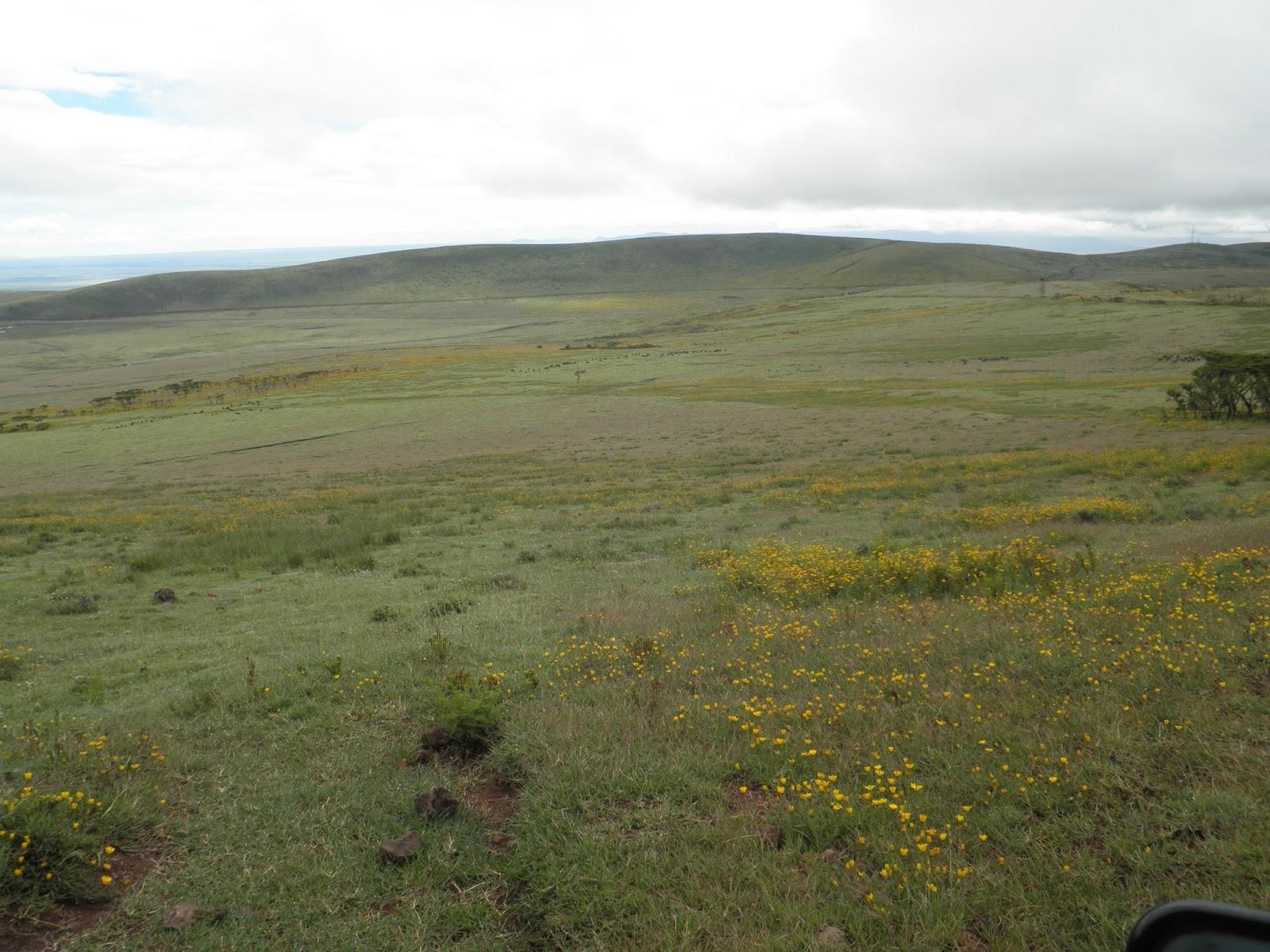
Africa-Press – Tanzania. NGORONGORO Conservation Area Authority (NCAA) has embarked on a special operation to eradicate invasive weeds that cover almost 5,000 acres.
The operation was initiated and launched by NCAA Conservation Commissioner (CC), Dr Freddy Manongi at the Crater, saying the operation will take more than two weeks as a means to safeguard wild animals that from day to day find their grazing land get reduced.
The operation is being carried out by NCAA staff and people from other institutions, such as College of African Wildlife Management (CAWM) that has offered more than 320 students for the exercise. Tools used in the operation include tractors as well as swords.
Dr Manongi said that they have sought to deal with the challenge during this rainy season because it is easier than during dry season.
The invasive species are dangerous to animals. Time and resources will be spared on each financial year for the task until the weeds are eradicated.
Dr Manongi said that outside the Crater there are some other areas that the invasive weeds are growing and that the said areas are also targeted by the NCAA.
The wild animals do not stay in areas with invasive species such as parthenium hysterophorus.
They are species of flowering plant in the aster family and Gutenbergia Cordifolia, an unpalatable invasive plant, posing serious threat to the survival of the flora and fauna of the area that is also a global Man-Biosphere Reserve.
“We are in a special campaign to reduce the invasive species in Ngorongoro; we have started with 5,000 acres within the Crater itself during the rainy season because it is easier as compared with the dry season.
We stay here for two weeks running and we will do this every financial year until we complete the task,” said Dr Manongi who was taking part in the work.
Researchers are also worried that the killer weed by reducing the biodiversity of grazing land, will decrease the ability of the land to support livestock and wild animals that depend on native grasses for grazing.
NCAA Acting Senior Assistant Commissioner (Wildlife Management and Grazing Lands), Victoria Shayo noted that the invasive weeds cover almost 22 percent of the Crater and that they do not have the needed nutrients for animals that live in there.
He said another threat of the weeds is that they are tall – about one or one and half metres high , a factor that undermines short grass that are edible for wild animals – meaning that they cannot grow.
CAWM Lecturer, Dr Emmanuel Martin, who is accompanied by 320 students, said the students are studying wildlife ecology and wildlife habitat so the work they are doing in Ngorongoro apart from eradicating the invasive weeds, is part of practical training.
He called on other organizations to join hands with the NCAA to eliminate the weeds for environmental conservation.
Ngorongoro Pastoralists Council Chairman, Mr Edward Mwaura, said the weeds are a threat not only to wild animals but also to cattle and humans that is why they were working together with NCAA for the cause.
Established in 1959 as a multiple land use area, with wildlife coexisting with seminomadic Maasai pastoralists practicing traditional livestock grazing, it includes the spectacular Ngorongoro Crater, the world’s largest and unbroken caldera.
The world heritage site has global importance for biodiversity conservation due to the presence of globally threatened species, the density of wildlife inhabiting the area, and the annual migration of wildebeest, zebra, gazelles and other animals into the northern plains.
Extensive archaeological research has also yielded a long sequence of evidence of human evolution and human- environment dynamics, including early hominid footprints dating back 3.6 million years.