

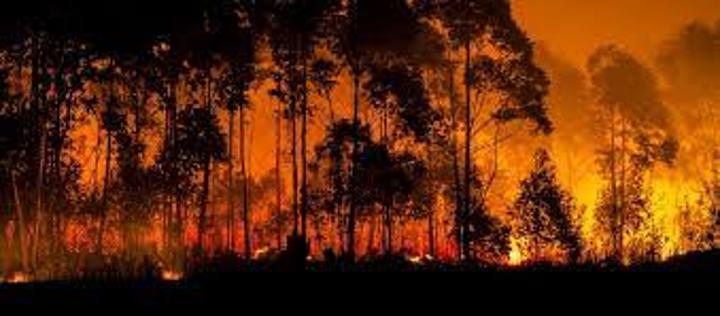
Africa-Press – Tanzania. Natural Resources and Tourism Minister Damas Ndumbaro has challenged the Forestry Training Institute (FTI) Olmotonyi to find ways of averting disasters that may be caused by wild fires.
Dr Ndumbaro, who was speaking shortly after touring the 84 year-old facility, observed that wildfires had become all too common in the country, hence the need of containing them.
“Much as you directly deal with forests in Tanzania, I urge you to prepare special trainings to communities surrounding forests on how to protect these natural resources,” he said.
Wildfires are a global challenge but Africa leads in terms of number, frequency and area burned each year, according to the Food and Agriculture Organization of the United Nations (FAO).
The UN agency also notes that most wildfires in Africa aren’t reported.
The prevalence of fire in Africa is driven by various factors including high reliance on fire-dependent land-use practices, weak enforcement of fire legislation and regulations, traditions and culture that use fire, a vast area of flammable grasslands area, drier climate and shortage of resources for implementing suppression-oriented fire management strategies.
Last year, fire swept up the slopes of Mount Kilimanjaro, Africa’s highest mountain, with hundreds of volunteers from local villages joined firefighters racing to stop a blaze threatening to ravage one of the world’s richest and most diverse ecosystems.
Meanwhile, Dr Ndumbaro challenged staff at FTI Olmotonyi to get out of their comfort zones and reach out to the public as they strive to promote the center.
“Do not wait for students to come to Olmotonyi, follow them where they area,” he added.
Since its establishment and particularly from the 1980s the Institute has grown in both size and quality.
Its services have reached many countries in Eastern, Western, Central and Southern Africa.
The Institute currently offers Basic Certificate (NTA 4) in Forestry, Technician Certificate (NTA 5) in Forestry and Ordinary Diploma (NTA 6) in Forestry as well as short courses and consultancies in all environmental related fields including beekeeping and climate change.