

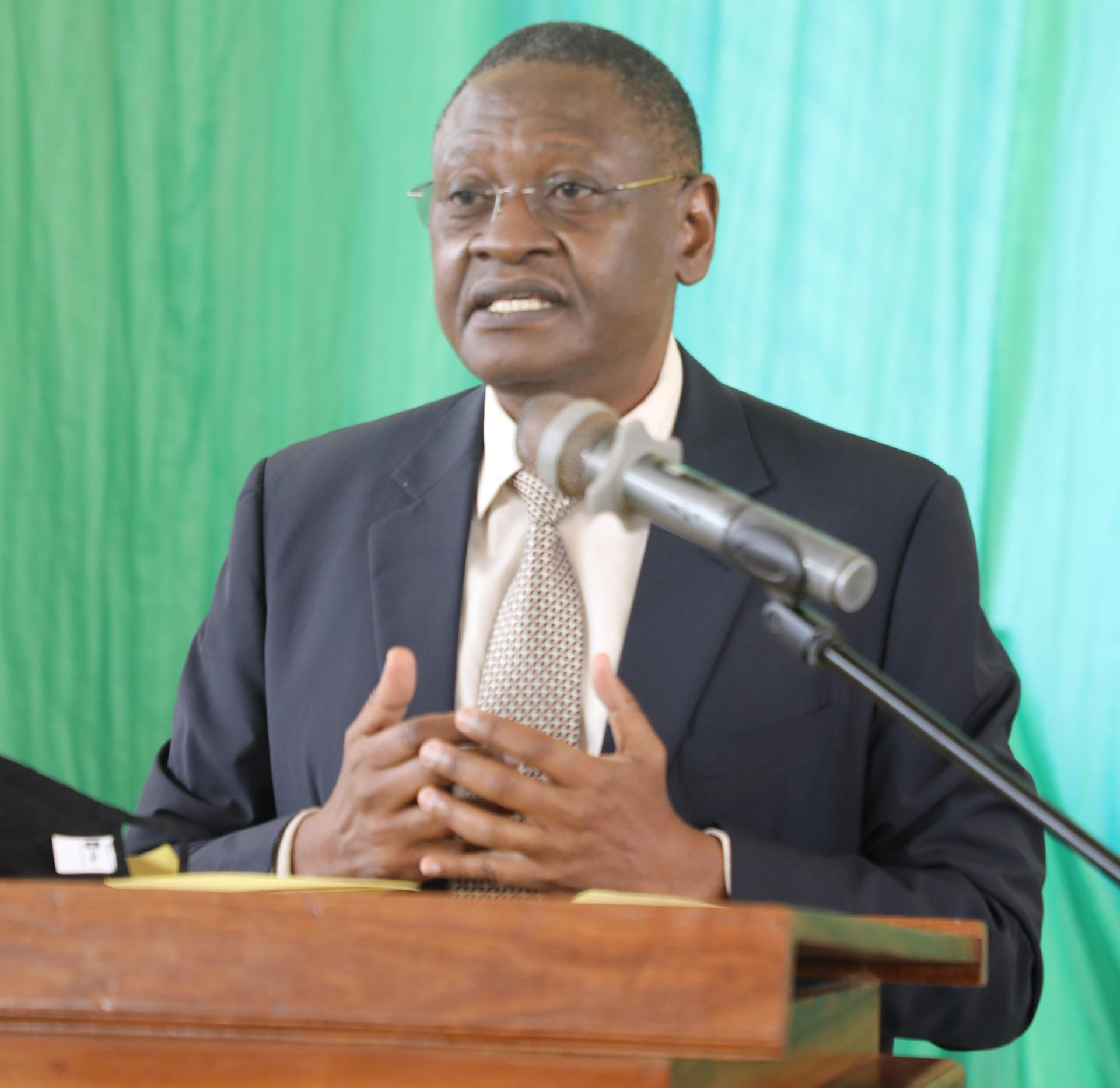
Africa-Press – Tanzania. THE Chief Justice, Prof Ibrahim Juma, has called on stakeholders of the Judiciary of Tanzania to co-operate with each other in carrying out their core responsibilities which touch access to justice issues for the people.
Prof Juma made an appeal over the weekend, while addressing members of ethics committees of court officials from district and regional authorities during the visit of Judicial Service Commission in Njombe Region.
The Chief Justice, who is also the Chairman of the Commission, pointed out that stakeholders must cooperate with the Judiciary as the challenges facing the third pillar of state concern all its stakeholders.
“Every stakeholder of the Judiciary plays a key role in the justice system, so we must work together to ensure the people get justice in time,” he said in a statement released yesterday by the Judiciary’s Information and Communication Unit.
On his part, the Principal Judge of the High Court of Tanzania, Dr Eliezer Feleshi, urged all magistrates in the country to be careful when registering cases and ensure those admitted must meet the required criteria in order to reduce the backlog of cases in courts.
In addition, Judge Feleshi called on the investigative agencies to expedite the investigation of cases and take to court only those with merits. He was quick to add that a prolonged investigation could lead to weakening of the evidence.
Dr Feleshi noted that the judiciary’s expectation from stakeholders was to ensure that the investigations are carried out using scientific methods, including the use of genetic testing, that is DNA, to expedite the investigation and obtain accurate results that would help justice to be attained.
The Principal Judge also advised the Prevention and Combating of Corruption Bureau (PCCB) to investigate bribery related complaints effectively, so that when they are brought to court could be disposed of in a timely manner.
In addition, Dr Feleshi called on the Office of the Chief Government Chemist to expedite laboratory investigations so that cases do not stay in court for long.
Speaking at the same occasion, the Acting Njombe Regional Commissioner, who is also the District Commissioner of Wanging’ombe, Mr Lautery Kanoni, asked the Judiciary of Tanzania to consider the region to have High Court services due to the increased number of murder related cases.
Members of the Commission continue with their visits to Mbeya and Songwe Regions with the aim of publicizing it and educating members of the Regional and District Ethics Committees as well as Judicial stakeholders.
The Judicial Service Commission is established in accordance with Article 112 (1) of the Constitution of the United Republic of Tanzania of 1977 read together with the Judiciary Administration Act No. 4 of 2011. It was established for the purpose of overseeing the key issues pertaining to the Judiciary.
Some of the functions of the Commission include advising the President of the United Republic of Tanzania on the appointment of High Court Judges, disciplinary matters, salaries and interests of Judges, advising on the employment of magistrates and overseeing their discipline.
The members of the Commission include the Chief Justice of Tanzania (Chairman), the Attorney General, one Judge of the Court of Appeal appointed by the President, the Principal Judge of the High Court of Tanzania and two other members appointed by the President.