
Africa-Press – Tanzania. VICE-PRESIDENT Dr Philip Mpango has said the partnership with Singapore in increasing efficiency of Tanzania’s mainland and Zanzibar ports will expedite the country’s aim to become a major trading hub as articulated in the national Five-Year Development Plan (FYDP).
He said Tanzania would engage with the Port of Singapore to teach port workers from Tanzania as well as bring port professionals from Singapore to the country to collaborate on swift improvements, particularly at the Dar es Salaam Port, he said.
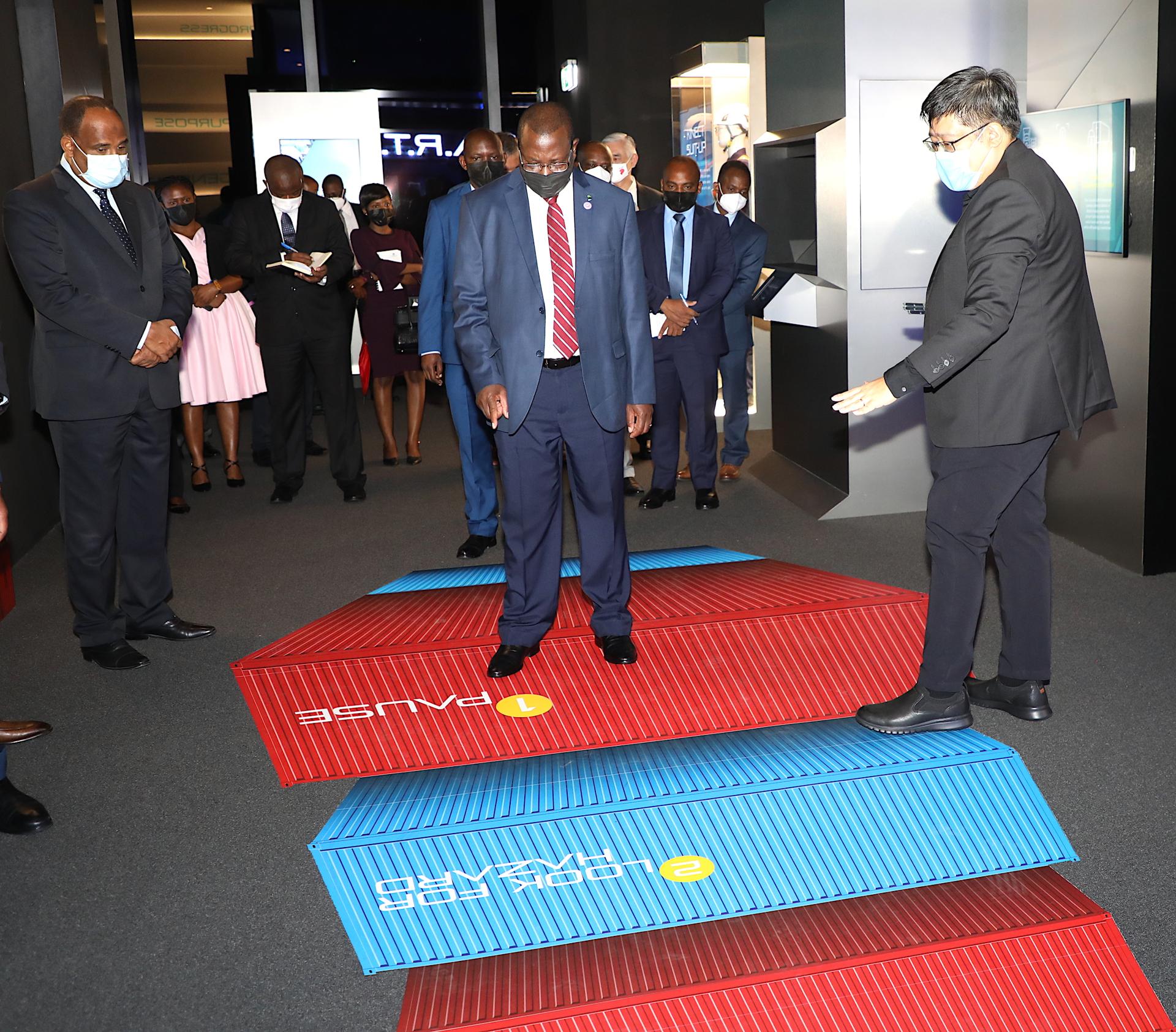
“I have requested them to send a team to come and tour our ports to look at the equipment and port management shortcomings we have, as well as where we are doing well and where urgent reforms are needed,” he said after a tour of the Port of Singapore.
The vice-president is in Singapore for the Bloomberg New Economy Forum, which focuses on themes such as Covid-19’s disproportionate impact and unequal worldwide access to vaccines, as well as a new economic orientation following the pandemic’s consequences. Dr Mpango added that the Port of Singapore has agreed to visit to see how the two countries might collaborate to enhance ports’ efficiency.
“We have been planning for a long time to make our country a major trading hub, to transfer cargo not only within our country but also to neighbouring countries like Uganda, Rwanda, Burundi, Malawi, Zambia, and South Mozambique, “he said.
The government has been executing various projects in facilitating and strengthening the ports’ infrastructures of the country. According to Works and Transport Minister, Prof Makame Mbarawa, TPA manages 89 official ports, of which 12 are on the shores of the Indian Ocean, 24 are on Lake Victoria, 19 in Lake Tanganyika and 11 ports in Lake Nyasa.
According to the minister, there are other 23 ports under the TPA but have not been specified in the Ports Act of 2004, as procedures for their formalisation are underway.
For the case of Dar es Salaam Port, he said in 1961, the port’s docking site could accommodate ships with a length of 145 – 175 metres only and a water depth of seven metres but currently, the depth stands at 14.5 meters and the docking area can receive ships with a size not exceeding 234 meters.
As for the Tanga Port, he said because of a shallow depth at the port, ships were forced to anchor away (outer anchorage) from the berth to load and offload cargo, noting that the second upgrade work is underway to increase the port’s depth in the wake of reducing costs of handling large ships.
He noted that the government continues with the upgrading work of the Mtwara Port, whose operations began in 1954, whereby the new berth with a length of 300 metres and 13.5-metre depth (draft) to enable the terminal to accommodate mega cargo ships weighing 65,000 tonnes was completed in October 2020.
During his visit, Dr Mpango saw a variety of technologies in action at the port, including cargo loading and unloading, cargo inspection, and container tracking throughout the voyage.
Vice President, Port of Singapore Authority in Charge of Business Affairs, Mr Ong Seow Leong, said the port has invested in training and innovation, resulting in an increase in current technology in service delivery, such as the ability to effectively load 100,000 containers in a day.
He said that Singapore’s port is connected to other ports across the world, boosting the port’s operational efficiency. He said that the Port of Singapore has been concentrating on discovering new markets and undertaking research to boost the port’s user base.
Mr Leong also underlined the importance of long-term planning for the port’s operation, stating that Singapore was already building a modern port that would provide more efficient services in the coming years.
For More News And Analysis About Tanzania Follow Africa-Press