

Africa-Press – Tanzania. THE government has set up a liquid oxygen generating plant at Amana Regional Referral Hospital in Dar es Salaam in an effort to ensure adequate supply of the important product.
The development is part of the government’s efforts to improve the management of Covid-19 pandemic in the country.
The installation of other similar plants has been implemented in the other seven regional hospitals of Dar es Salaam, Mbeya, Ruvuma, Kilimanjaro, Geita, Mtwara and Lindi regions.
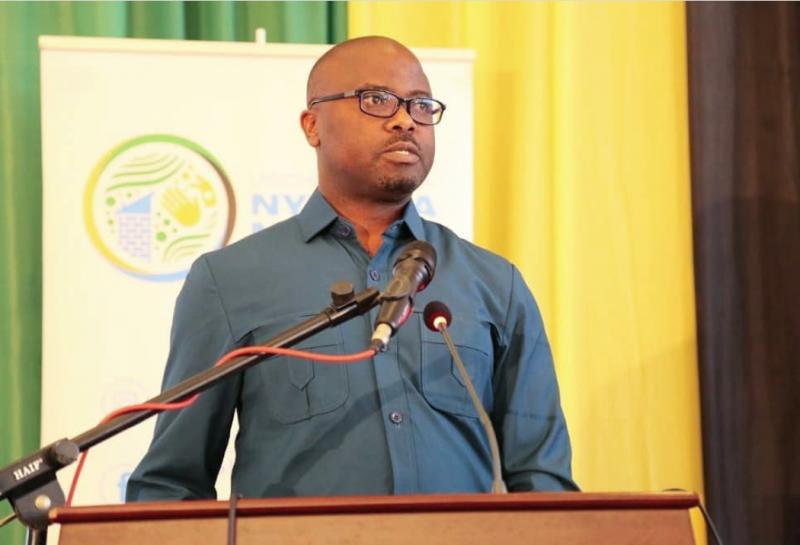
This was revealed yesterday by the Ministry of Health’s Director of Preventive Services, Dr Leonard Subi at the launch of the Covid-19 Response Partnership Project in Dar es Salaam. Dr Subi said that the plant at Amana Hospital can manufacture 200 cylinders per day, adding that the country will no longer have an oxygen shortage.
“At the same time that we are sensitising people to be vaccinated, we are also strengthening our health system and capacity to guarantee that we have the necessary skills and knowledge to combat the pandemic,” he said.
Dr Subi expressed his gratitude to the private sector for its assistance in the fight against the epidemic, noting that the newly launched project was part of an effort to strengthen public-private collaborations.
The Covid-19 Response Partnership Project is a multi-sector project funded by the European Union that is being implemented in Tanzania, Mozambique, Uganda, and Kenya by three Aga Khan Development Network (AKDN) agencies – the Aga Khan Foundation (AKF), the Aga Khan Health Services (AKHS), and the Aga Khan University (AKU) – in collaboration with a partner organisation, In Their Hands (ITH).
Its goal is to improve existing health responses and raise awareness of prevention techniques and support systems while reducing the socioeconomic burden on the young and vulnerable.
Speaking on behalf of the Minister for Health, Community Development, Gender, Elderly and Children, Dr Dorothy Gwajima, Dr Subi, thanked the EU and the AKDN for recognising the need and providing major funding of more than 4.5bn/- to address the challenges posed by Covid-19.
The project will be implemented for two years in Dar es Salaam, Lindi, Mtwara and Mwanza.
The EU Ambassador, Mr Manfredo Fanti said that the project will contribute to tackling two main consequences of the Covid-19 epidemic.
“The first is public health, and these new facilities will aid in the provision of better care to patients suffering from a variety of diseases. The project will work with local communities, particularly women and young people, to relieve the issues they encounter, as the second consequence,” he said.
The AKDN representative, Mr Amin Kurji underlined that in partnership with the government, AKHST will leverage its networks of clinicians and facilities to support health systems to respond effectively.
“The support include the renovation of health facilities, one being a state of the art High Dependency Unit (HDU) at Amana Hospital, as well as the provision of Personal Protective Equipment (PPE), testing kits and other medical equipment, and training health workers on Covid-19 response and management. AKHST will also develop and disseminate messaging on prevention and protection countrywide,” he said.
Dr Bryceson Kiwelu, Medical Officer in Charge at Amana Regional Referral Hospital, said the project enabled them to renovate Ward No. 4 which will be used as an HDU and dialysis unit.
“We are grateful for your support. Many of the hospital’s structures are dilapidated, having been built in 1954,” he noted.