

What You Need to Know
Tanzania’s capital markets are emerging as a vital source of financing for national development, as highlighted in the 2025 Capital Market Review Report. With a significant increase in investor participation and market value, the capital market is becoming a platform for collective progress, enabling citizens to actively engage in wealth creation and infrastructure development, essential for the D
Africa-Press – Tanzania. WHAT if the future of Tanzania’s development is not only in taxes, aid, or loans, but in the collective confidence of its own people?
The 2025 Capital Market Review Report issued recently by Vertex International Securities reveals that the country’s capital market has delivered more than just impressive numbers. It has delivered a message, clear, powerful and full of promise: The future of financing our national development can be homegrown, inclusive and sustainable.
For decades, Tanzania’s development financing model has largely depended on traditional sources, tax revenues, borrowing, Foreign Direct Investment (FDI) and Official Development Assistance (ODA).
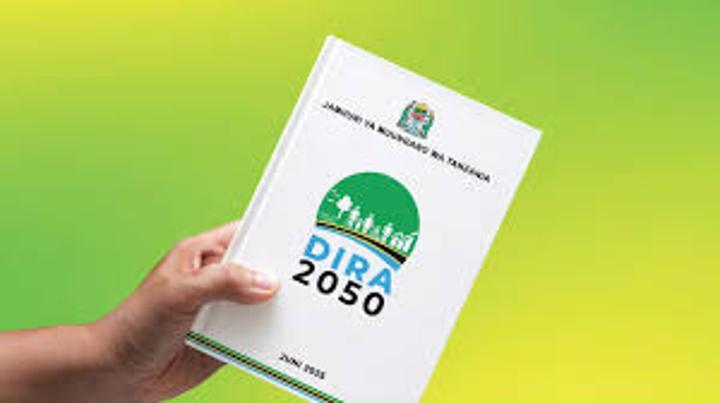
While these have played a critical role, they have also exposed the economy to vulnerabilities, including external shocks and rising debt pressures. Recognising this, the national vision under Dira 2050 Tanzania Development Vision charts a transformative path forward.
Pillar One of Dira 2050 envisions a Strong, Inclusive and Competitive Economy. At the heart of this ambition lies a bold call: To embrace innovative and diversified financing mechanisms. This includes leveraging financial markets, strengthening public-private partnerships (PPPs) and promoting alternative investment vehicles such as private equity, venture capital and philanthropy.
Encouragingly, what once seemed aspirational is now becoming reality. According to the 2025 Capital Market Review Report, the country’s capital markets have experienced remarkable growth, number of investors surged by an extraordinary 105.3 per cent, reaching 2,177,135 as of 31st December 2025, more than double the 1,060,509 recorded in 2024. This is not merely growth; it is a signal of increasing public trust and participation in financial markets.
Even more compelling is the growth in market value. Total investment in the capital markets rose by 33.7 per cent, reaching 63.066tri/-, up from 47.186tri/- in 2024. These figures reflect a market that is not only expanding but maturing, gaining depth, liquidity and relevance to the broader economy.
This performance is worth celebrating. But more importantly, it should be understood. Behind these numbers lies a powerful shift: Tanzanians are increasingly becoming active participants in wealth creation and national development. The capital market is no longer a distant concept reserved for a few; it is steadily becoming a platform for collective progress.
If this momentum is sustained, the implications are profound. A vibrant capital market has the potential to fundamentally reshape how the country finances its long-term development. By mobilising domestic savings and channelling them into productive investments, the country can reduce its reliance on external borrowing and create a more resilient financial ecosystem.
Imagine large-scale infrastructure projects, such as gas development, railway expansion and urban commercial hubs, being financed through long-term debt instruments issued in the capital markets. Picture transformative PPP projects, like modern trading complexes in Kariakoo, developed through structured investments that allow citizens themselves to co-own and benefit from these national assets.
This is not a distant dream. It is a practical pathway. Capital markets can also play a catalytic role in unlocking innovation. By supporting venture capital and private equity, they can provide much-needed financing to startups and growing enterprises, fuelling entrepreneurship, job creation and technological advancement.
However, sustaining this growth will require deliberate effort. Continued investor education, product innovation, regulatory strengthening and increased participation from both public and private sectors will be essential. Equally important is building trust, ensuring transparency, efficiency and accessibility within the market.
As we look ahead, one thing is becoming increasingly clear: The journey to Dira 2050 will not be financed by government alone. It will be powered by a collective ecosystem where citizens, institutions and markets come together to invest in the future they want to see.
The capital market is no longer just a financial platform; it is a national engine for transformation. And if 2025 is any indication, Tanzania is well on its way to turning ambition into reality.
However, one critical point must be emphasised: This ambition of leveraging the capital market to finance the Dira 2050 Tanzania Development Vision cannot be achieved if understanding of how it works remains low among public servants, stakeholders, policymakers and decision-makers.
This is why I strongly advocate for coordinated advocacy and structured dialogue to deepen awareness and drive collective action.
For decades, Tanzania’s development financing has relied heavily on traditional sources such as taxes, foreign aid, and loans. This model has exposed the economy to vulnerabilities, prompting the need for a shift towards more sustainable and inclusive financing mechanisms. The Dira 2050 Tanzania Development Vision aims to transform this approach by leveraging capital markets and fostering public-private partnerships.
The recent growth in Tanzania’s capital markets, with a surge in investor numbers and market value, signals a positive shift towards homegrown financing solutions. By mobilizing domestic savings and encouraging citizen participation, the capital market can play a crucial role,