

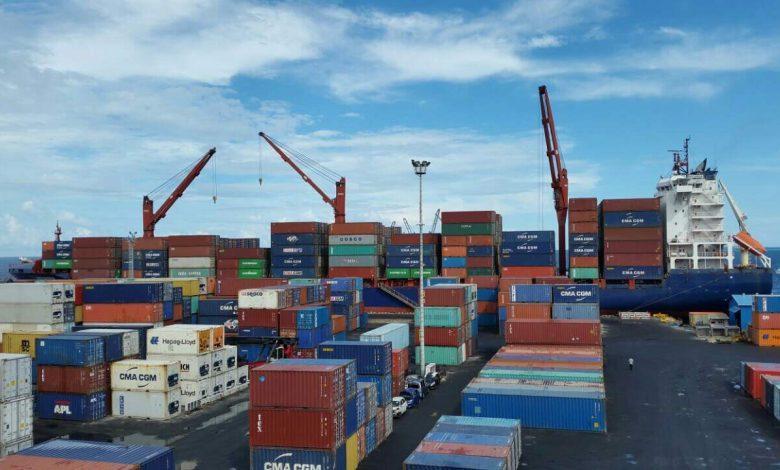
Africa-Press – Tanzania. Tanzania is among Iran’s top five export destinations over the past eight months, highlighting growing trade ties with East Africa and the region’s role in diversifying Iran’s exports.
Apart from Tanzania, the other key Iran export destinations namely Kenya, Ghana, South Africa and Somalia highlight the country’s strategic focus on expanding trade ties across East and West Africa, reflecting efforts to diversify its export markets.
According to Iran’s Trade Promotion Organization (TPO), exports to African countries reached 849 million US dollars in the first eight months of the current Iranian calendar year (March 21–November 21), marking a 77 per cent increase compared to the same period last year.
The Director-General of the Africa Office at the TPO, Mohammadreza Safari stated that the export figure for the first eight months of this year is equivalent to Iran’s total exports to the African continent throughout the entire previous year.
He expressed hope that by the end of the year, the country’s export to African nations would reach 1 billion US dollars.
He also noted that Iran’s imports from African countries during this period amounted to 45 million US dollars.
Safari further identified the main export products from Iran to African countries as iron ingots, steel, urea, bitumen, food products, motor oil and cement.
On December 17, the head of the Iran–Africa Joint Chamber of Commerce stated that Iran plans to support Iranian firms’ investments in Africa and boost exports to the continent, with export credit guarantees and development financing expected to drive trade growth.
ALSO READ: Insurance sectors seen as key economic driver
Iran-Africa Joint Chamber of Commerce head Masoud Berahman said the Export Guarantee Fund of Iran (EGFI) would back up to 3.0 billion US dollars of Iranian investments across Africa as part of broader efforts to strengthen commercial ties and reduce risks for private-sector investors.
He added that the National Development Fund (NDF) would provide around 2.0 billion euros to support startup and entrepreneurial projects linked to trade development.
Berahman said Africa, with its large population and broad consumer base, offered significant opportunities for Iranian goods, technical and engineering services and investment, but warned that realising this potential would require stronger infrastructure, clearer policies and sustained government support.
He criticised the lack of a comprehensive trade roadmap, saying Iran’s export sector continues to face multiple challenges that make it difficult to systematically monitor markets and assess country-specific trade conditions.
Berahman said the Trade Promotion Organization (TPO) of Iran, the economic diplomacy department and the Iran Chamber of Commerce should work more closely with the private sector to strengthen digitalisation and develop an operational trade roadmap, warning that fragmented approaches risk reinforcing what he described as an “island economy.”
“A shared roadmap is needed to guide our move toward target markets such as Africa,” he said, noting that the continent, with a population of about 1.45 billion, represents a future growth market for both goods and technical services.
He said Iran’s regional trade experience showed that relying mainly on neighboring markets, including Iraq, would not be sufficient to achieve sustainable export growth, calling instead for clear strategies and stronger state backing to diversify trade destinations.
Berahman stressed the need to professionalize export capacity building and move away from short-term, reactive approaches, arguing that a well-designed export roadmap based on detailed market analysis would help Iranian firms enter global markets, particularly in Africa.
He also highlighted the role of commercial attaches in expanding trade ties, noting that Turkey maintains 44 trade counselors across Africa, compared with only three active Iranian counterparts and called for greater use of economic diplomacy tools.
“Iran must expand its trade with neighboring countries, Africa and other emerging markets,” Berahman said, adding that coordinated policies and long-term planning would be essential to achieving that goal.