
What You Need to Know
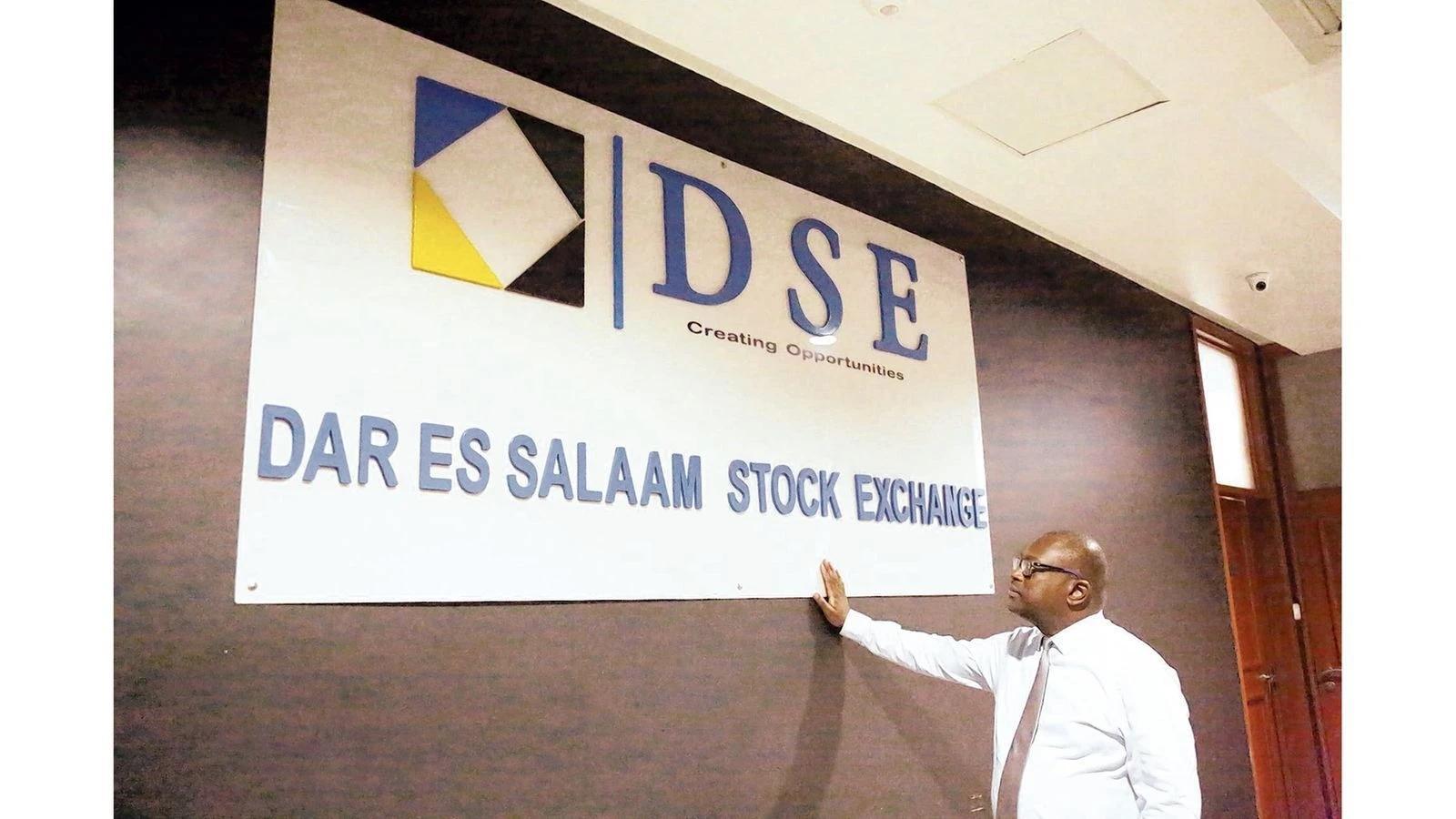
The Dar es Salaam Stock Exchange (DSE) reflects mixed fortunes this Easter, with a notable increase in turnover despite declining equity prices. Investor sentiment remains cautious, as trading activity is concentrated in a few high-value stocks, indicating selective investment strategies. The market’s overall performance shows underlying caution, with a decline in major indices and market capital.
Africa-Press – Tanzania. AS the Easter period ushers in reflection and cautious optimism, the capital market reflected a similarly mixed mood, with rising turnover contrasting against weakening equity prices and subdued investor sentiment.
The latest data from the Dar es Salaam Stock Exchange (DSE) shows market turnover increasing by nearly 11 per cent to 30.43bn/-, signalling improved trading activity compared to the previous week.
However, this came alongside an about 10 per cent decline in the volume of shares traded, indicating that activity was concentrated in fewer, high-value counters rather than spread across the market. Alpha Capital Chief Executive Gerase Kamugisha said yesterday the divergence highlights a selective approach by investors.
“The increase in turnover alongside a decline in traded volumes suggests that investors are focusing on a few large counters,” he said, adding: “This kind of activity typically points to cautious positioning rather than broad market confidence.”
Despite improved liquidity, equity performance weakened. The All-Share Index fell by 56.78 points to 3,840.34, while the Tanzania Share Index declined more sharply by 184.25 points to close at 8,455.82.
The downturn reflects price declines across several key counters. Market capitalisation also contracted, with total market capitalisation falling by 1.46 per cent to 33.36tri/-, while domestic market capitalisation dropped by 2.13 per cent to 22.88tri/-.
According to Mr Kamugisha, the overall trend points to underlying caution in the market. “Price movements across major stocks show that sentiment remains weak,” he said.
“Investors are still active, but they are not yet willing to push prices higher across the board.” Trading activity remained heavily concentrated in a few large-cap stocks.
CRDB Bank Plc accounted for 58 per cent of total turnover, followed by Tanzania Breweries Limited at 22 per cent and NMB Bank Plc at 7.0 per cent. CRDB alone posted a turnover of 17.53bn/- from over 6.4 million shares traded, despite a weekly price decline of 5.71 per cent.
“This level of concentration shows that liquidity is still narrow,” Mr Kamugisha said.
“The broader market will need wider participation to sustain any meaningful recovery.” Performance across counters was mixed. Kenya Airways led gainers with a 10 per cent rise, followed by Jubilee Holdings and Tanzania Tea Packers.
On the losing side, Mkombozi Commercial Bank, Mufindi Community Bank and Maendeleo Bank recorded the steepest declines, contributing to the overall drop in indices and market capitalisation.
Investor participation patterns further underscored the cautious tone. Domestic investors dominated the buy side, while foreign investors accounted for nearly all sales, resulting in a net foreign outflow of 11.55bn/-.
“Foreign investor outflows continue to weigh on the market,” Mr Kamugisha said.
“Their return will be important in restoring momentum, especially for price stability.” In the bond market, activity slowed, with turnover declining by 14.03 per cent to 93.85bn/-.
However, longterm government bonds continued to attract interest, offering yields in the range of 10 to 16 per cent. Macroeconomic fundamentals remain supportive.
Tanzania’s GDP growth stood at 6.4 per cent in the third quarter of 2025, inflation was contained at 3.2 per cent in March 2026, while private sector credit and money supply recorded strong growth.
“Liquidity conditions in the economy remain strong,” Mr Kamugisha said.
“The challenge now is translating that liquidity into stronger and more consistent equity market performance.”
Looking ahead, the market is expected to remain range-bound, with trading concentrated in a few dominant stocks as investors await clearer signals for a broader recovery.
The Dar es Salaam Stock Exchange has been a crucial component of Tanzania’s financial landscape since its establishment in 1998. It serves as a platform for companies to raise capital and for investors to trade shares, reflecting the country’s economic health. Over the years, the DSE has experienced fluctuations influenced by domestic and global economic conditions, investor confidence, and regulatory changes. Recent trends indicate a cautious approach among investors, particularly in light of external economic pressures and local market dynamics.