

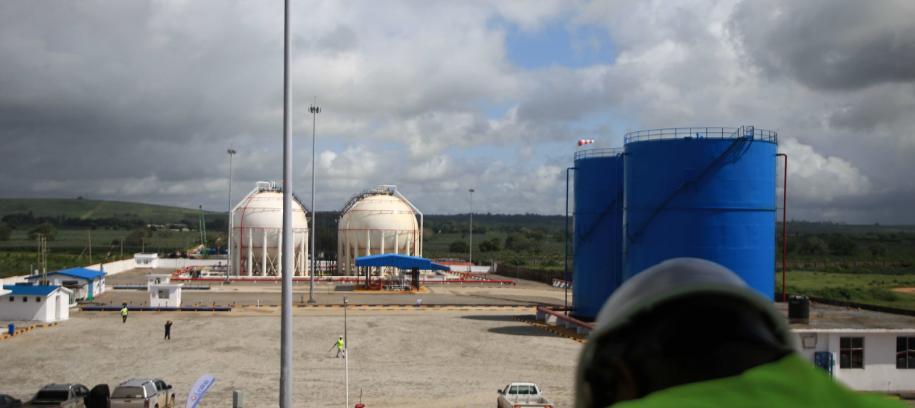
Africa-Press – Tanzania. TANZANIAN firm–Lake Gas targets to deliver at least 300,000 metric tonnes of cooking gas in the Kenyan market in a 12-month plan likely to shake up retail prices.
This follows a return to full operations after a victory at the Malindi Environment and Land Court upholding the validity of its Environmental Impact Assessment (EIA) licence, which had been challenged.
Lake Gas Limited’s EIA licence was revoked by the National Environment Tribunal on March 10, 2025, which had cited inadequate public consultation with the local community on its 22,000-tonne LPG import facility in Kilifi county.
The firm filed an appeal with the court, which ultimately upheld the validity of its EIA, meaning its LPG project in Kenya was fully compliant with the law.
In a Judgment issued on December 14, the Court said the orders cancelling the EIA license No. NEMA/EIA/PSL/8728 is set aside because the appeal before the tribunal was filed more than five years after the license was issued.
The court however, ordered that an audit be done to confirm that Lake Gas’s project operations align with the statements and predictions in the initial EIA study report.
“The order also requires confirming that the project proponents have taken all reasonable steps to mitigate unforeseen negative environmental impacts not identified in the initial EIA, if any,” the Judgement seen by the Star reads in part. The exercise shall be completed within three months and a report filed in court.
These developments have given a major reprieve to the firm, which now says operations at its Vipingo LPG Terminal will continue uninterrupted, guaranteeing a steady supply of LPG in the market.
“This ruling is important as it ensures that the Lake Gas Vipingo Terminal, which was commissioned in June 2025 and is fully licensed by the Energy and Petroleum Regulatory Authority (EPRA), remains operational and able to deliver affordable, safe and consistent LPG,” general manager, Morris Mutiso, said.
Since starting operations, the terminal has already received four LPG vessels and established a dependable import cycle of 10,000 metric tonnes every 10–15 days.
“This supply structure supports our 12-month plan to deliver 300,000 MT of LPG at highly competitive prices,” Mutiso noted.
The presence of Lake Gas in Kenya’s LPG import and storage market has been a major win for consumers, as it slowly ends monopoly.
Mombasa-based Kenyan business mogul Mohamed Jaffer, who founded AGOL and its subsidiary Proto Energy, has seen his firms dominate Kenya’s LPG import market by handling over 90 per cent of the gas, with a 10,000-tonne storage facility in Mombasa.
The market shake-up in addition to government’s initiatives such as the zero rating of the product in June 2023, has helped bring down cooking gas prices whose consumption increased by 15 per cent with 414,861 metric tonnes consumed in 2024, compared to 360,594 metric tonnes consumed in 2023.
“By boosting national and regional storage capacity and strengthening supply security, we have helped drive LPG prices down by more than 30 per cent, making clean cooking fuel more accessible to households, businesses and industries in Kenya and the region,” said Mutiso.
He said the firm welcomes the clarity brought by the judgment which underscores the need for legal reforms to ensure that strategic national projects, especially those that directly benefit consumers, are shielded from attempts to block competition.
Management said Lake Gas remains fully committed to environmental responsibility, regulatory compliance, openness in community engagement and set operational safety standards, as it continues supporting Kenya’s clean energy transition and delivering dependable, affordable LPG.
The government is banking on the private sector investments to help bring down cooking gas prices, as it seeks to enhance penetration from the current 24 per cent to 70 per cent by 2028.
In 2023, Treasury exempted cooking gas from Value Added Tax (VAT), the 3.5 per cent Import Declaration Fee (IDF) and the two per cent Railway Development Levy (RDL), to promote its use. This was part of a move to reduce reliance on charcoal and firewood, which have been linked to high rates of respiratory diseases in Kenya.
To further manage prices, the government plans to introduce bulk importation under a competitive Open Tender System (OTS).
Energy and Petroleum Regulatory Authority (EPRA) Director General, Daniel Kiptoo, said legal and regulatory framework are in place, and stakeholders (Oil Marketing Companies) are being consulted on the OTS system.
This is similar to what was previously used to import petroleum products before the government-to-government deal with the Gulf came into place. Alternatively, the government could also pursue a G-2-G for LPG.
According to EPRA, OTS will allow competitive bidding, with the lowest bidders awarded the contracts to ship products for sale to wholesalers and on-wards to retailers.