
What You Need to Know
The Tanzanian government has allocated approximately 2.87 trillion for transport infrastructure in the 2026/27 budget, representing 4.6% of the total budget. This investment aims to strengthen transport services nationwide, with ongoing projects like the Standard Gauge Railway and improvements in Air Tanzania and port services. Minister Prof. Makame Mbarawa emphasized accountability and the need a
Africa-Press – Tanzania. THE government has continued to priotize the transport sector allocating approximately 2.872 tri/= in the 2026/27 budget for development projects and activities under the Ministry of Transport and its Institutions.
The allocation accounts for 4.6 per cent of the proposed total government budget of 62.334tri/-the government’s commitment to strengthening transport infrastructure and services nationwide.
The announcement was made yesterday in Dodoma by Minister for Transport, Professor Makame Mbarawa, in a speech delivered on his behalf by Deputy Minister, Mr David Kihenzile during the opening of the Workers’ Council meeting.
Prof Mbarawa said that such investments must go hand in hand with accountability to ensure funds are used as intended.
“The meeting provides an important opportunity to review the implementation of the 2025/26 plan and budget, and to discuss the 2026/27 plan with active participation from employees,” he said.
He added that the government is reviewing the National Transport Policy of 2003, with the process expected to be completed this year to align with current sector demands.
Prof Mbarawa further noted that the government has strengthened the legal framework by amending various laws, including those governing land transport regulation, ports and transport licensing, to enhance efficiency, safety, and oversight of transport services.
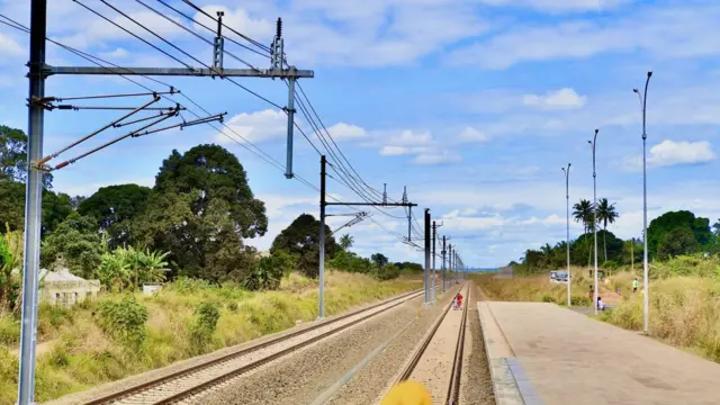
He highlighted ongoing strategic projects, including the Standard Gauge Railway (SGR), where passenger and cargo services between Dar es Salaam and Dodoma are operational. The government has also strengthened Air Tanzania Company Limited (ATCL), now operating a fleet of 16 aircraft, and improved port services in collaboration with the private sector, particularly at the Dar es Salaam Port.
Regarding maritime transport, he said the government has completed the construction of MV New Mwanza on Lake Victoria and MT Sangara on Lake Tanganyika, while rehabilitation of other vessels continues.
Speaking on achievements for the 2025/26 financial year, Prof Mbarawa said the Tanzania Railways Corporation (TRC) has begun becoming financially selfsustaining, reducing its reliance on government subsidies, a milestone he described as historic.
He urged officials to continue preparing implementation reports for development projects, noting that funds will continue to be allocated for monitoring and evaluation.
“During the mid-year budget review, we will identify departments, units, or institutions that have not fulfilled their responsibilities. This will help hold accountable those who fail to meet budget and work plan targets,” he said.
He encouraged transport sector employees to work diligently and professionally to ensure continued growth and contribution to national development.
Deputy Minister Kihenzile added that stakeholders should prepare to implement the budget effectively, noting that it is the first to guide the implementation of National Vision 2050. He also commended employees for their performance, urging innovation, mutual respect, and cooperation to enhance efficiency and professionalism.
Earlier, Chairperson of the Workers’ Council and Permanent Secretary in the Ministry of Transport, Godius Kahyarara, said that development projects under the ministry are progressing well and dependency on government subsidies continues to decline. He added that the meeting will review the implementation of the 2025/26 budget and discuss and endorse estimates for the 2026/27 financial year.
Tanzania has been focusing on enhancing its transport infrastructure to support economic growth and connectivity. The National Transport Policy, established in 2003, is currently under review to meet modern demands. Recent investments have targeted various transport sectors, including rail, air, and maritime, aiming to reduce dependency on government subsidies and improve service efficiency. The government’s commitment to infrastructure development is evident in its budget allocations and ongoing projects.