
Africa-Press – Tanzania. MEMBERS of Parliament have called for sweeping reforms to the 10 per cent interest-free loans for women, youth and people with disabilities in the country, citing limited access and poor repayment as key challenges.
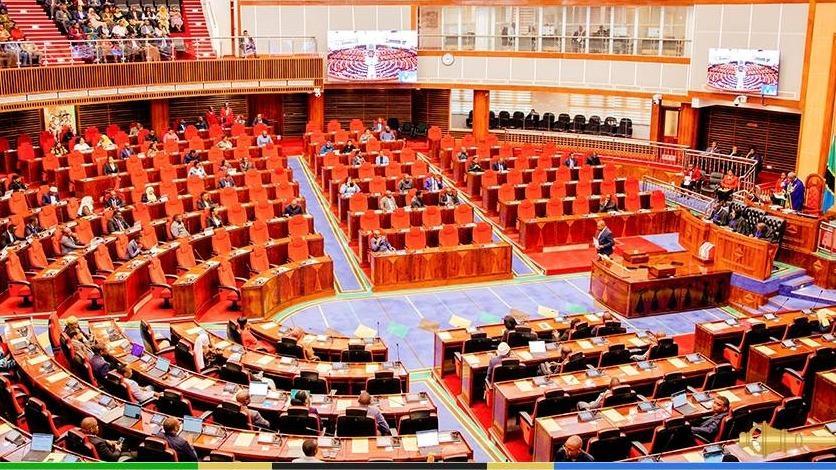
Contributing to the 2026/27 Prime Minister’s Office budget estimates in the National Assembly yesterday, legislators said while more than 130bn/- has been disbursed under the scheme, structural challenges continue to limit its effectiveness, particularly among rural beneficiaries and small entrepreneurs.
Prime Minister Dr Mwigulu Nchemba tabled the budget estimates for his ministry on April 1, 2026, and since then MPs have been contributing to the proposals.
The debate of the Prime Minister’s Office budget is expected to conclude on Wednesday.
The estimates cover the PMO, in stitutions under it and the Parliamentary Fund for the 2026/27 financial year.
Lupembe MP (CCM), Mr Edwin Swalle said one of the key weaknesses lies in the current model which prioritises group lending, arguing that it has contributed to poor repayment rates.
“One of the major reasons for failure to repay these loans is this system of issuing loans to groups only, which is not productive,” he said.
“If you lend to an individual entrepreneur, it becomes easier to manage and ensure repayment.”
He added: “I advise that the law governing these loans be brought to Parliament so that we can make amendments to allow individuals to benefit.”
Special Seats MP (CCM), Ms Rebecca Sanga said accessibility remains a major concern, particularly for rural women.
“The system of accessing these loans is still a challenge for many women, especially those in rural areas,” she said.
“They are required to prepare formal proposals, which limits their chances.”
She added that support systems are needed: “There is a need to use extension officers to guide applicants on how to access these loans.”
The concerns raised in the august house come amid ongoing government efforts to reform the scheme following longstanding challenges in its management and performance.
In 2023, the government suspended disbursement of the loans after an audit revealed widespread weaknesses, including poor recovery and mismanagement, before introducing reforms to improve accountability.
Under the new approach, a pilot programme is being implemented in selected councils where loans are issued through banks instead of local authorities, while other councils continue with an improved system supported by digital platforms and strengthened oversight structures.
Recent government data shows that while about 85 per cent of funds have continued to be disbursed through councils, only around 22 per cent has so far been channeled through banks in the pilot areas, reflecting ongoing adjustments in the new model.
As debate on the loan scheme continued, infrastructure, particularly roads, emerged as the second major concern.
Kikwajuni MP (CCM), Mr Ali Hassan King questioned the implementation of ringfenced funds, saying Parliament’s decisions on the matter are not being fully enforced.
“Parliament passed a law to establish ringfenced funds, but these decisions are not being respected,” he said.
He added: “We should have a law that compels the Commissioner General of Tanzania Revenue Authority (TRA) to ensure funds are directly remitted to the ring-fenced accounts.”
Tanganyika MP (CCM), Selemani Kakoso called for alternative financing mechanisms to address the growing backlog of road maintenance and rehabilitation across the country.
“If we introduce even a small levy of 100/- on airtime, we can generate up to 1tril/- which will significantly help in repairing our roads,” he said.
He added: “Regions like Kigoma and Katavi were cut off due to destruction of bridges, this issue must be addressed urgently.”
Tunduru South MP (CCM), Mr Fadhili Chilombe raised concerns over the gap between budget allocations and actual disbursements, saying it continues to undermine the implementation of road projects.
“The challenge is not planning but implementation, funds released are far less than what is budgeted,” he said.
He added: “We need a strategy to ensure every village gets at least five kilometres of tarmac roads annually.”
On governance, Korogwe Rural MP (CCM), Timothy Mzava called for strengthening decentralisation.
“This policy has brought many successes, but we must ask ourselves who is supervising the funds sent to local governments,” he said.
He added: “Councillors and village leaders must be empowered further, and there should be stronger accountability.”
Vwawa MP (CCM), Japhet Hasunga called for a comprehensive review of the decentralisation policy.
“We need to revisit the decentralisation policy to assess whether we are on the right track,” he said.
He also proposed a national youth forum involving both public and private sectors. Earlier, Kiteto MP, Mr Edward Ole Lekaita warned of growing frustration among young people.
“We have invested in building schools, but the challenge now is employment,” he said.
“Opportunities must be transparent and accessible to all youth.”