
By
Ezra Nnko
Africa-Press – Tanzania. “This is a landmark achievement for our country…For the first time, Tanzania is stepping onto the global uranium map with the capacity to supply a strategic mineral that is essential for safe and sustainable energy generation worldwide.” –Tanzania’s President, Dr. Samia Suluhu Hassan.
In October 2016, Tanzania signed a deal with the Russian State Nuclear Corporation (ROSATOM) on building a nuclear power research reactor with a goal of developing nuclear energy. In July 2025, a pilot uranium processing facility was launched; symbolizing the crucial importance of the project, the Tanzanian president, Dr. Samia Suluhu Hassan, attended the ceremony.
This project, referred to as the Mkuju River Uranium Project, is located at the Nyota deposit in the southern part of Tanzania at the Selous Game Reserve and is operated by ROSATOM subsidiary company Mantra Tanzania LTD. The project is designed to capacitate the production of 3,000 tonnes of uranium per year, making Tanzania the second uranium producer in Africa after Namibia, which produces 7,333 tonnes annually. Tanzania strategizes the project to provide clean energy solutions, opening new doors for foreign investment in the energy and industrial sectors and advancing its energy technological expertise.
Tanzania Uranium Reserve and the Deal
“For many years, the country has been told that generating electricity using uranium is dangerous, yet developing countries are already using this source to power their grids. There is a need for this project to commence so that Tanzanians can benefit.”
Tanzania’s President, Dr. Samia Suluhu Hassan.
According to the World Nuclear Association, Tanzania contributes to 1% of the global uranium reserves with 57,700 tonnes of U, making it the tenth global contributor and the fifth in Africa. From the Mkuju River Uranium project, whose investment is worth 1.2 billion USD for extraction and exploitation, the Tanzanian government is expected to hold 20% of the annual dividends projected to be approximately 4 million USD.
The construction of the main plant is scheduled to begin in the first quarter of 2026, while the commissioning is planned for 2029. The government also plans to build small nuclear energy reactors ranging from 600 to 1000 megawatts, feeding directly to the national grid, which at the moment has a capacity range between 2,842.96 and 3,091.71 megawatts. The project is expected to create up to 4,000 direct jobs and 100,000 indirect employment opportunities from infrastructure, logistics, and auxiliary industries.
Tanzania Vision 2050 places the energy sector as the critical enabler of the economic transformation, social development, industrialization, digital growth, and national competitiveness. The vision emphasizes affordable, clean, reliable, and sustainable energy for households, industries, public services, and special and strategic investments. It also promotes 100 percent electrical access for both urban and rural areas while emphasizing the strengthening of cross-border interconnections within the Eastern Africa Power Pool (EAPP) and the Southern Africa Power Pool (SAPP).
During the 2025 presidential campaign, President Samia Suluhu Hassan promised Tanzania to raise power generation to 8,000 megawatts by 2030 through a mix of renewable and conventional resources.
Nuclear Power in Africa: Prospect for Energy Security
“Our task is not simply to participate in uranium mining. We must create an entire system for the development of peaceful atomic energy in Niger.”
Russia’s Energy Minister, Sergei Tsivilev, during the signing of the MoU between Niger and the Russian State Atomic Energy Corporation, Rosatom.
According to the United Nations Sustainable Development Group, approximately 600 million people in Africa lack reliable access to electricity, thus representing 80% of the global electricity gap. Among the countries with low access to electricity are the major uranium reserve states such as Tanzania, Uganda, Niger, Chad, the Democratic Republic of Congo (DRC), and Angola.
Nuclear power generates 9% of the global electricity, according to the World Nuclear Association. South Africa is the only country within the continent that generates nuclear electricity, accounting for approximately 5% of the country’s total electricity production.
The two reactors located at Koeberg Nuclear Power Station generate 8.5 TWh, likely the same amount as the total energy sources production in Tanzania.
In July 2022, Russia’s Rosatom and Egypt began constructing the first nuclear power plant in El Dabaa City in Egypt. The plant worth 28 billion USD is financed by a Russian state loan at 85% and is expected to be completed in 2028.
The construction came after the signing of the Memorandum of Understanding in 2015 between the two countries for the construction of two 1200 MWe nuclear power plants. Upon completion, the project will produce 10% of the country’s energy requirements, thus becoming the most powerful nuclear power plant in Africa. Among the other benefits of the contract would be ensuring the nuclear energy knowledge transfer, carrying out maintenance work during the plant’s first 10 years of operation, supplying fuel for the entire planned operating life, building storage facilities, and supplying containers for storing used nuclear fuel.
In July 2025, the two counterparts signed the supplementary agreements related to the design work and supply of equipment and materials, construction, installation, and commissioning work for a physical protection system of the El Dabaa power plant.
According to the International Atomic Energy report entitled Energy, Electricity, and Nuclear Power Estimates for the Period up to 2050, it stated thatin Africa energy consumption is expected to increase by almost 60% by 2050 with an average annual rate of 1.7%. Electricity generated from nuclear energy is projected to more than triple by 2030 and increase more than tenfold by 2050 compared with 2023 capacity.
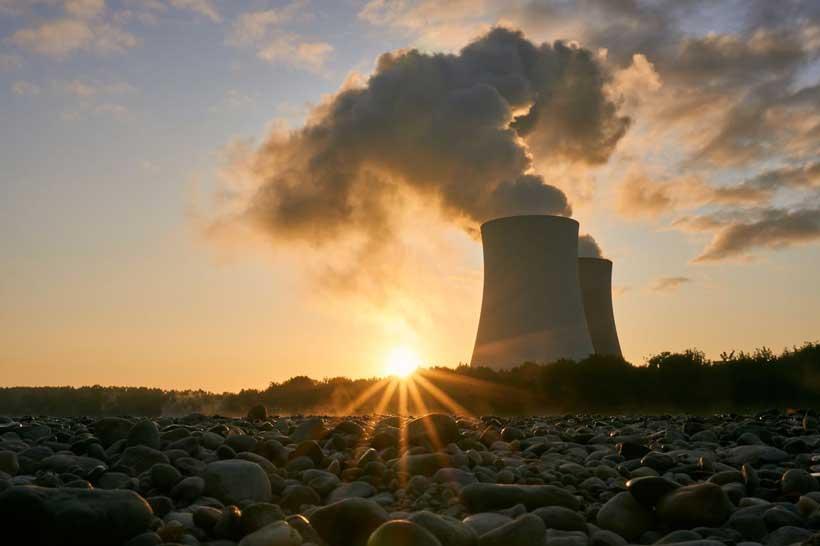
There is a wind blowing in Africa towards the embracing of nuclear energy as the alternative and strategic source of electrical energy. Countries like Tanzania, Ghana, Uganda, Morocco, Kenya, Algeria, Tunisia, and Botswana. Countries such as Ghana, Algeria, and Morocco are now operating their research reactors, while Mali and Sudan have expressed their ambitions of utilizing the nuclear energy by signing deals with China and Russia.
The new nuclear wind is blowing, and Africa should not follow it; it should lead it.
moderndiplomacy