
Africa-Press – Tanzania. THE National Assembly has unanimously passed a 12.5tri/- budget for the Prime Minister’s Office, its affiliated institutions and the Parliamentary Fund for the 2026/2027 fiscal year.
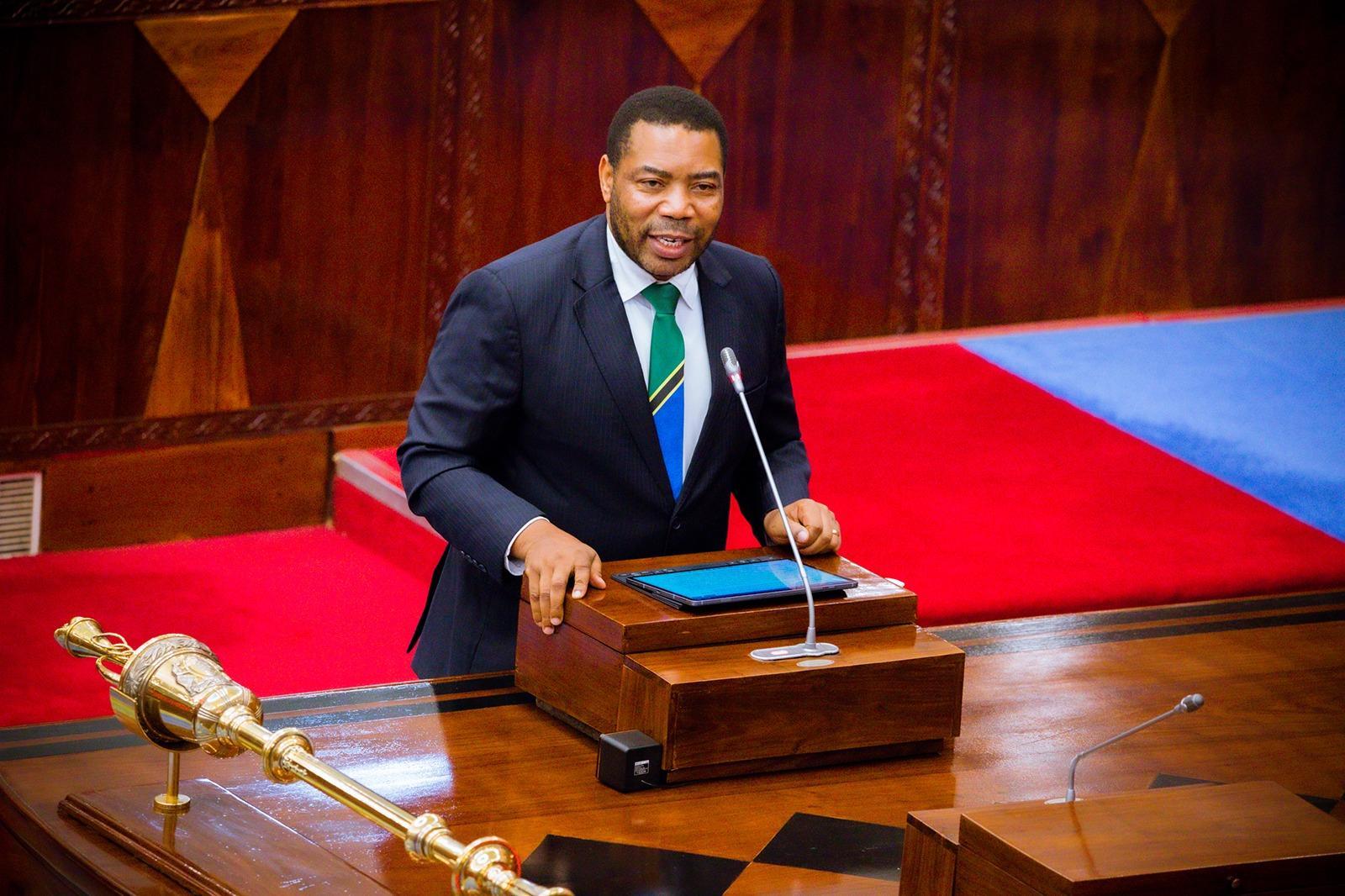
Winding up the debate on Wednesday evening, Prime Minister Mwigulu Nchemba defended the fiscal plan, characterising it as a blueprint for “historic milestones” under President Samia Suluhu Hassan’s ongoing reform agenda.
He said President Samia Suluhu Hassan’s reforms have delivered major milestones, including work on the National Development Vision 2050, expansion of social services and increased investment in productive sectors.
Winding up the debate in Parliament in Dodoma on Wednesday evening, Dr Nchemba said government achievements across key sectors demonstrate readiness to effectively implement the approved budget.
He said President Samia, through wide-ranging reforms, has set in motion historic milestones including preparation of the National Development Vision 2050, expansion of social services and increased investment in productive sectors.
In education, he cited expansion of vocational training institutions and construction of classrooms, which have helped eliminate double shifts in many schools.
On agriculture, Dr Nchemba said the sector’s budget had increased fivefold, from 270bn/- in 2020/2021 to 1.23tri/- in 2025/2026, improving access to inputs and fertiliser use among farmers.
He also highlighted progress in the energy sector, noting that completion of the Julius Nyerere Hydropower Project (JNHPP) has generated a surplus of more than 2,000 megawatts, alongside over 1.2tri/- invested in strengthening the national grid.
On infrastructure, he said funding has been secured for additional sections of the Standard Gauge Railway (SGR), advancing implementation of the flagship project. Meanwhile, sector ministers used the debate to respond to concerns raised by lawmakers.
Works Minister Abdallah Ulega said all issues relating to roads would be addressed within his ministry’s budget, assuring Parliament that no ongoing project would be abandoned.
He said the government had paid 166bn/- to local contractors between January and April 2026, stressing efforts to ensure funds circulate within the domestic economy.
“All signed projects will proceed and contractors will receive advance payments,” he said.
Water Minister Jumaa Aweso said the ministry had received 40bn/- to clear contractors’ arrears, noting that more than 1,000 water projects are currently under implementation nationwide.
He said the ministry is also investing in human resources, systems and private sector partnerships to improve efficiency, including plans to introduce prepaid water meters and reduce water losses.
Agriculture Minister Daniel Chongolo said the government will continue strengthening subsidies for farm inputs, while prioritising payment of outstanding subsidy arrears to suppliers.
He added that efforts are underway to expand access to quality inputs and seeds, including strengthening the Agricultural Seed Agency (ASA) and promoting contract farming to curb counterfeit seeds.
During the debate, lawmakers raised concerns over access to economic empowerment funds.
Special Seats MP (CCM) Janeth Mahawanga said although there are 73 empowerment programmes under the Prime Minister’s Office, many citizens are unaware of them.
She said women, youth and persons with disabilities are largely unaware of most funds, with many only familiar with the 10 per cent local government loan scheme, leading to congestion in that programme.
“There are many opportunities, but the real challenge is access to capital and information,” she said, calling for improved dissemination through local government authorities.