

Africa-Press – Tanzania. Tanzania is making strides in driving the digital economy, which requires technological advancement to effectively tap its potential. Tanzania, therefore, needs to be well prepared and be ahead with technological advances in order to harness the full potential in the digital economy and win the competitiveness of key economic sectors.
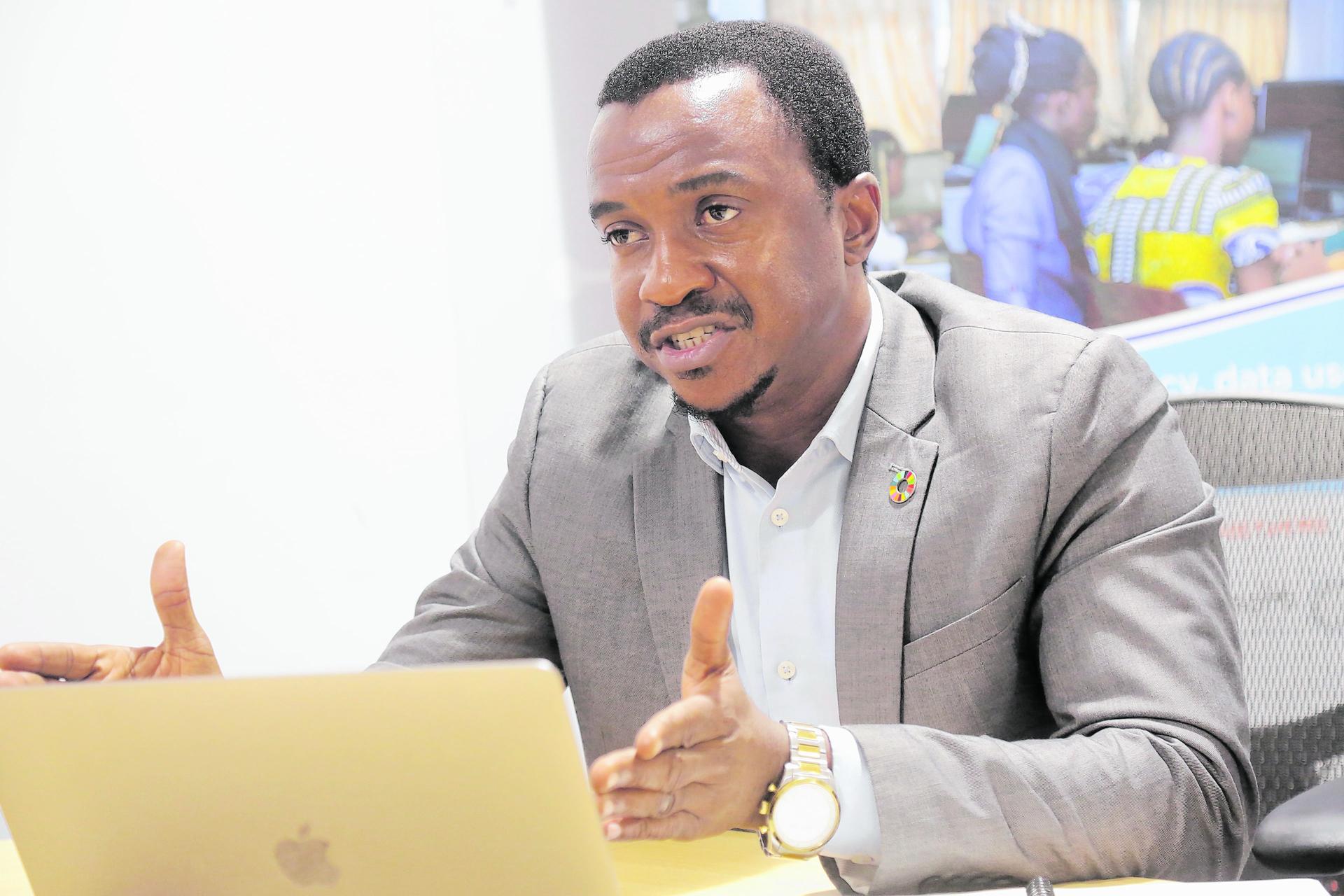
In this interview with The Citizen’s Reporter Josephine Christopher, the Tanzania Data Lab (dLab) co-founder and executive director, Mr Stephen Chacha, highlights the current digital environment in Tanzania: its regulatory frameworks, challenges and success – and the way forward…
QUESTION: The backbone of the digital economy is hyper connectivity, which means growing inter-connectedness of people, organisations, and machines that results from the Internet, mobile technology and the Internet of Things (IoT). Have we done enough as a country in supporting this?
ANSWER:
As a country, we have been gradually making investments in support of the digital economy. This is evident through a number of developments that we have seen in the country.
The degree of mobile penetration has been growing annually. This is a good indication of the enabling environment and government support that push for growth of usage and mobile technology.
When it comes to mobile money, Tanzania is leading in providing these services in the region, as it has been named in various reports.
The demand for digital services such as transport services like Uber, Airbnb is also high.
Hence, the formation of the new ICT ministry shows that the government has prioritised the sector to ensure that Tanzanians benefit from the digital economy.
The government has also adopted digitisation of operating systems such as the use of GePG payment systems. These are great strides made by the government, we commend them for that.
Q: What kind of efforts are needed to support development of the digital economy in Tanzania?
A:
When you talk about the digital economy, one of the main challenges right now is the digital divide – in the sense that many of our people do not have access to the digital platforms and services being built.
So, the first thing that needs to be addressed is digital equity, which means bridging the digital divide that can be influenced by a number of things such as the level of poverty, location (rural-urban dynamics), gender dynamics and also digital literacy.
On top of that, we need enabling policies and legal frameworks to support the digital economy – including data protection and privacy legislation.
It is also important for Tanzania to not only be at the receiving end of digital innovations, but also to lead the way by coming up with innovations and solutions that are in line with the digital economy.
Q: With the experience that dLab has in the industry: how do you assess the regulatory framework for the digital sector in Tanzania – and what can be done to improve the situation?
A:
The regulatory framework in the digital sector has to be approached cautiously because there is the risk of restricting growth if you over-regulate.
We agree that there is a need to regulate, but the regulations have to be approached strategically, in the sense that, it should be able to offer an enabling environment for growth of the sector – and, at the same time, be cautious enough to ensure that it does not over-regulate, thus restricting expansion and growth.
Q: dLab has executed data and innovation projects locally and regionally. What would you say is the situation when it comes to looking for funds for new innovations in Tanzania compared with other countries in the region?
A:
In terms of funding, innovation has been an area that attracted a lot of interest for funding. However, these funds are only directed at certain phases of the innovations timeline.
Most funders do not want to invest in the risky part of the timeline. Rather, they want to invest in proven innovations, meaning those which have already been tested and are ready to be scaled-up in the market.
So, most funders don’t want to be involved during the buildup stage of the product.
However, the funding space is opening up. There are venture capitalists interested in innovations here in Tanzania. There are also angel investors who are investing on local innovations.
But, indeed, some of the Tanzanian innovators have been able to obtain funds internationally.
Q: The world is all digital now. What mechanism can a third world country like Tanzania adopt in its education systems to empower young people so that they can effectively utilise the potentials of the digital economy?
A:
We need to upgrade our education systems to align with the 21st century. This entails preparing our graduates to be able to compete in the digital world by imparting them with the relevant knowledge and skills that are needed in the digital world.
In the world we are heading for, digital skills are going to be essential to such things as reading and writing. So, we need to invest and prepare the people through a curriculum that will include the right ICT equipment, tools and labs in schools.
It is going to be a gradual process. As we have seen government efforts in ensuring that every child that needs to be in school is actually in school, so is improving the education infrastructures.
Q: What are the plans for dLab in 2022 – and in the next five years – in promoting data solutions, building capacities and innovations?
A:
We are currently in the middle of implementing the five-year strategic plan for 2019-2023, and we are also reviewing the success of the past three years – and what we need to achieve in the remaining two years.
For the next two years, dLab will focus on coordinating data production and usage at the sector level.
This will be mainly in key sectors such as agriculture, education, health, water and sanitation, environment and climate change.
We will do so by delving into the sectors, engaging the actors and stakeholders; organising and coordinating the data production and usage in those sectors by ensuring that data standards, quality assurance frameworks and partnerships within the sectors enable data sharing to improve productivity and efficiency.
dLab will contribute to shaping data and innovation policy and legislation in Tanzania and Africa – as well as continue to support data science programmes and other initiatives at education institutions.
For More News And Analysis About Tanzania Follow Africa-Press