
What You Need to Know
The recent educational exhibition in Tanzania showcased Russia’s commitment to enhancing educational opportunities for Tanzanian youth. With 150 scholarships available, students can pursue various fields of study in Russia, fostering deeper ties between the two nations. This initiative aims to support Tanzania’s human capital development and create pathways for academic collaboration.
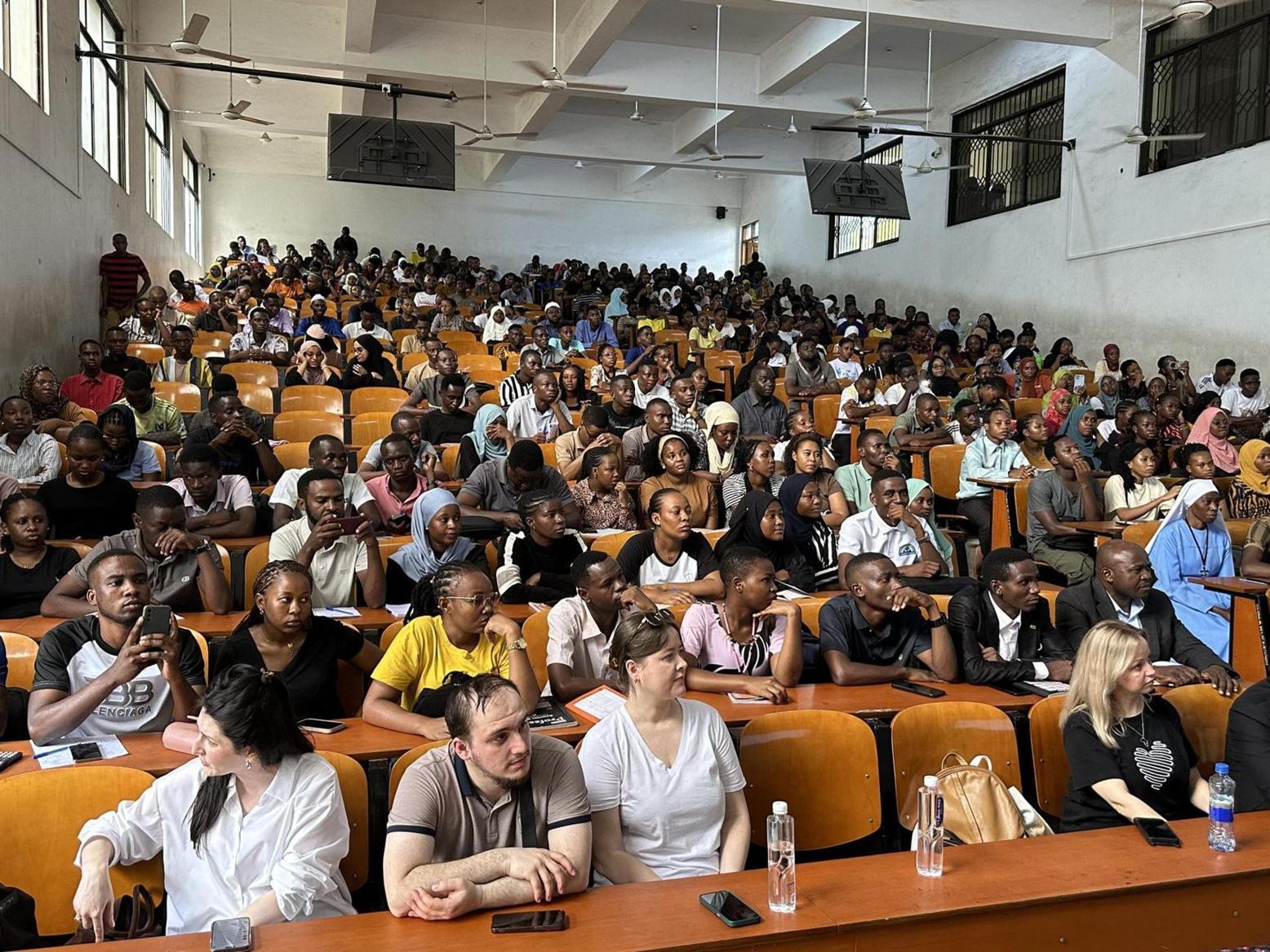
Africa-Press – Tanzania. The growing educational partnership between Russia and Tanzania recently took centre stage between 13 and 16 April 2026, as an educational exhibition titled “Russian Education – for Africa” was held at the Russian Science and Culture Center in Dar es Salaam and at selected partner institutions across the country.
In the course, the initiative brought together leading Russian universities, reaffirming a shared commitment to expanding academic cooperation and creating pathways for Tanzanian youth to access world-class education opportunities.
Among the participating institutions were the Patrice Lumumba Peoples’ Friendship University of Russia (RUDN University), Saint Petersburg State University, Saint Petersburg State University of Aerospace Instrumentation, and Sevastopol State University.
The exhibition reached both mainland Tanzania and Zanzibar, drawing a total of 850 participants across multiple institutions. These included 50 participants at the Russian Centre for Science and Culture in Dar es Salaam, 100 at Ardhi University, 350 at the Tanzania Institute of Accountancy, 200 at Tumekuja Secondary School in Zanzibar, and 150 at Lumumba Secondary School in Zanzibar.
Speaking during the event, Alexander Evstigneev, Director of the Russian Centre for Science and Culture in Dar es Salaam, underscored the strategic importance of educational cooperation between the two nations.
“In my view, this is the best thing we can do to strengthen humanitarian cooperation between our countries – to give Tanzanian youth the opportunity to study at Russian universities,” said Evstigneev. “Education is the foundation of a career, life, and personal happiness. We will become closer to each other.”
He further reinforced that studying in Russia provides more than academic knowledge, stating: “A foreign student who studies in Russia receives not only knowledge, competencies, and skills – they learn to understand us, their future Russian partners in business, political contacts, cultural and other fields,” he said. “They begin to share our values and our views both on everyday life and on the long-term fate of humanity.”
Evstigneev added that education plays a transformative role in shaping identity and lifelong connections.
“The student years are the time when an adult personality is formed, and this is the time we remember warmly for the rest of our lives,” he said, stressing that such exchanges build genuine friendships rather than transactional relationships.
Reinforcing this message, Andrey Avetisyan, Ambassador Extraordinary and Plenipotentiary of the Russian Federation to Tanzania, highlighted the availability of scholarships designed to support Tanzanian students.
“Russia provides Tanzanian youth with 150 scholarships so that they can receive the education of their dreams,” said Avetisyan in an interview with African Initiative news agency. “Whether it is the profession of a doctor, which is truly the most in-demand field, or a lawyer, artist, musician, or anyone else, Russian education makes it possible to obtain the profession of your dreams.”
The scholarship programme is positioned as a key instrument in widening access to higher education, particularly for students from developing economies seeking specialised training abroad.
From the Tanzanian side, Clement Sanga, Director of the Department of Higher Education at the Ministry of Education, Science and Technology, expressed appreciation for Russia’s continued contribution to human capital development.
“We appreciate Russia’s contribution to the development of human capital in Tanzania,” said Sanga. “The fields in which Tanzanians study in Russia correspond to Tanzania’s strategic development sectors and national development policy.”
He noted that the current allocation of 150 scholarships is already making an impact but stressed the need for expansion into priority sectors.
“At the moment, Tanzanian students are allocated 150 scholarships, but the ministry hopes to expand them in the future, especially in technological fields such as cybersecurity, engineering, and others,” he said.
Sanga also called for deeper institutional collaboration between universities in both countries.
“We look forward to deeper socio-cultural cooperation between Russian and Tanzanian universities,” he said. “We know that some partnership agreements between universities have already been signed in the past two or three years, but we want this cooperation to be strengthened.”
The exhibition reflects a broader diplomatic and educational strategy aimed at strengthening ties through knowledge exchange and capacity building. Organisers indicated that the programme is not a one-off initiative but part of a sustained engagement framework.
It was further announced that the next educational exhibition will be organised by the Rossotrudnichestvo Representative Office in Tanzania in autumn 2026. This will form part of the scholarship campaign for the 2027–28 academic year, expanding opportunities for more Tanzanian students to access Russian higher education institutions.
Beyond formal statistics and institutional participation, the underlying message of the exhibition was clear: education remains one of the most powerful tools for personal transformation and national development.
For Tanzanian youth, the message emerging from Dar es Salaam was one of urgency and opportunity. With structured scholarships, established university partnerships, and expanding academic pathways, the doors to international education are increasingly open.
As engagement between Russia and Tanzania deepens, education is emerging not only as a diplomatic bridge but also as a practical pathway for skills development, innovation, and long-term economic growth.
The partnership between Russia and Tanzania has evolved significantly since the Cold War era, when the Soviet Union supported various educational initiatives in Africa. Today, this collaboration continues to grow, focusing on providing Tanzanian students with access to quality education in Russia. The recent exhibition highlights the ongoing commitment to strengthening these ties through educational exchanges and scholarship programs, which are essential for Tanzania’s development goals.
As Tanzania seeks to enhance its human capital, partnerships with foreign institutions play a crucial role in equipping students with the skills needed for the country’s strategic sectors. The scholarships,