

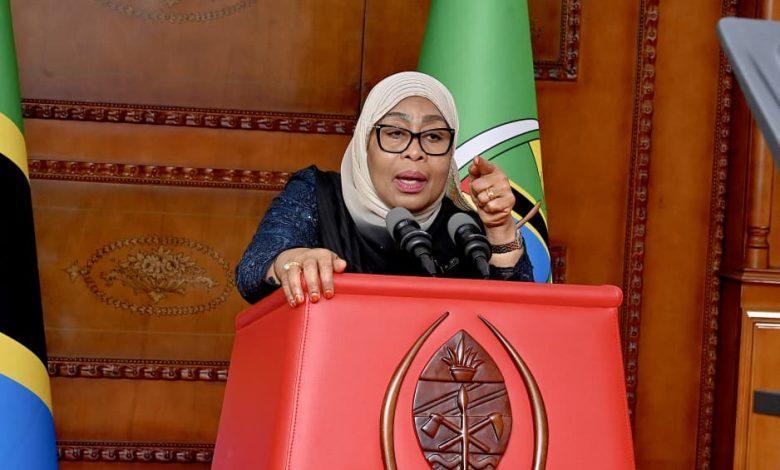
Africa-Press – Tanzania. WHEN President Samia Suluhu Hassan addressed Tanzanians on the final evening of 2025, the country was emerging from a year marked by both progress and strain. There had been economic recovery, but also drought, flooding and political tension.
For many families, the year’s end was less about celebration and more about quiet assessment, of what had been endured, and what might come next. It was in this context that Dr Samia’s message found its tone. Rather than dramatic promises or sweeping rhetoric, she spoke in the language of steadiness. Inflation, she noted, had been kept low. Economic growth had improved.
The national debt, often a distant concept for ordinary citizens, was described in practical terms: costly loans being paid down, repayment periods being stretched to ease pressure on public finances.
These are not slogans, but they are the kinds of decisions that shape whether prices remain manageable and public services continue to function.
The president also addressed a reality many Tanzanians felt directly: water. Months of drought had left taps dry in parts of Dar es Salaam and beyond, while later storms brought destruction elsewhere.
By acknowledging these hardships and pointing to long-term solutions—new dams, expanded water systems— Dr Samia framed governance as something that responds to lived experience, not just abstract policy goals. Her speech also recognised the emotional weight of the past year.
The reference to difficult moments in October was measured, but deliberate. Rather than revisiting confrontation, Samia thanked citizens and security institutions for restraint. The announcement that the government is moving towards establishing a national reconciliation commission carried particular significance.
It suggested a willingness to listen, to lower political tensions, and to accept that unity is not automatic, it must be built. This emphasis on unity ran through the address.
Samia acknowledged that disagreement is part of democracy, but warned against allowing political differences to erode social cohesion. It was a reminder of Tanzania’s long-standing political culture, one that values calm and collective purpose, even as the country navigates a more competitive political environment. Beyond Tanzania’s borders, the President spoke of continuity and reliability.
By reaffirming engagement with regional organisations and global institutions, and by promoting economic diplomacy, she positioned the country as open, predictable and ready to work with others. For a nation whose fortunes are closely tied to trade, tourism and investment, this message carries tangible weight. What made the speech resonate was not ambition alone, but restraint.
Samia did not claim that Tanzania’s challenges are over, nor that progress is guaranteed. Instead, she presented leadership as careful stewardship, protecting stability while gradually widening opportunity.
As Tanzania steps into 2026 and begins implementing its long-term Vision 2050, that approach may not excite everyone. But in a world where politics often rewards noise over nuance, the quiet confidence of steady leadership can be powerful. And for many Tanzanians listening that night, the message was simple: the country is moving forward, and it is doing so without losing itself along the way.