
What You Need to Know
Prime Minister Dr. Mwigulu Nchemba has introduced Tanzania’s National Supply Chain Management Policy (2025), aiming to unify and enhance the efficiency of supply chain operations across public and private sectors. The policy seeks to stimulate economic growth, create jobs, and promote local participation while integrating environmental sustainability into supply chain processes.
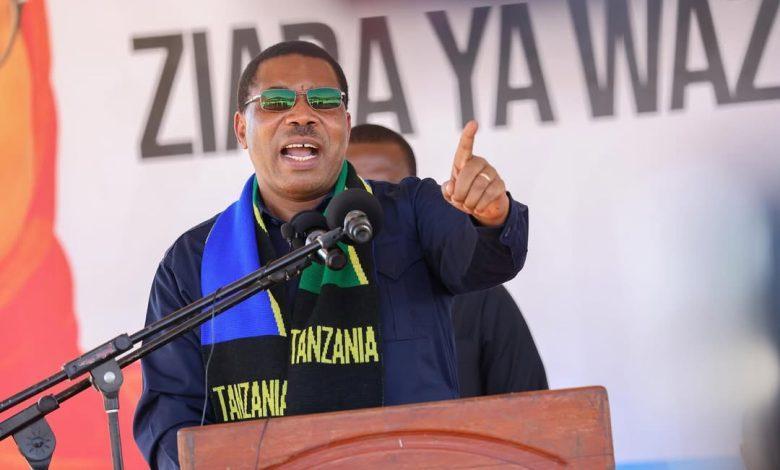
Africa-Press – Tanzania. PRIME Minister Dr Mwigulu Nchemba has directed public and private sector actors to align with a new unified supply chain system, as he unveiled Tanzania’s National Supply Chain Management Policy (2025), a major reform aimed at improving efficiency, accountability and economic growth.
Launched in Dodoma on Wednesday on behalf of President Samia Suluhu Hassan, the policy establishes, for the first time, a single framework governing all supply chain functions across government operations.
The new system brings together procurement, receiving, storage, distribution, utilisation and disposal of public assets under one coordinated structure, replacing a regime previously managed through fragmented laws and regulations.
“Today we mark a historic milestone in the management of national assets and resources. Tanzania now has a unified policy that covers every stage of the supply chain,” Dr Nchemba said.
He said the policy is designed to stimulate economic activity, create jobs, raise household incomes and build a competitive, inclusive economy anchored on local participation.
The Premier said that the government will expand the use of Information and Communication Technology (ICT) to minimise leakages of public resources, strengthen accountability and improve service delivery.
He added that the reforms will enhance Tanzania’s position in regional and global markets. The policy places strong emphasis on local content, prioritising domestic raw materials, local expertise and home-grown industries, while strengthening technological capacity.
It also integrates environmental protection and climate resilience into supply chain processes to support sustainable development.
“By doing so, the supply chain becomes a strategic tool for boosting production, strengthening distribution systems and enhancing Tanzania’s competitiveness in regional and international markets,” he said.
Dr Nchemba cited audit reports from the Controller and Auditor General (CAG) and the Public Procurement Regulatory Authority (PPRA), saying persistent weaknesses in procurement are largely driven by the conduct and mindset of responsible officials.
“For the most part, procurement challenges arise from the behaviour and attitudes of professionals, not from policy or legal deficiencies,” he said.
He directed authorities to ensure the policy expands participation of local producers, small and medium enterprises and special groups to promote inclusivity and equitable access to opportunities.
The Prime Minister further instructed ministries, agencies, regional administrations and local government authorities, alongside private sector stakeholders, to implement the policy with professionalism, transparency and accountability.
“The success of this policy will depend on the commitment, mindset, transparency and accountability of all stakeholders at every level,” he emphasised.
He also tasked the Ministry of Finance with strengthening coordination, monitoring and evaluation of implementation.
Earlier, Minister for Finance, Ambassador Khamis Mussa Omar, said the absence of a unified policy has contributed to coordination challenges, high costs, quality concerns and weak oversight in supply chain operations.
He said that nearly 50 per cent of government expenditure flows through procurement systems, underscoring the importance of strong governance.
“This is about ensuring equal access to opportunities, fighting corruption and achieving value for money, while strengthening accountability in public finance,” he said.
Despite reforms, he said public funds continue to be lost through weaknesses such as favouritism in procurement, inflated project costs and corruption.
“If well managed, the limited resources we have can go a long way in serving citizens and advancing national development,” he said.
Ambassador Omar added that effective implementation of the policy will reduce reliance on imports, promote local innovation and boost production of competitive goods for domestic and export markets, in line with the Tanzania Development Vision 2050.
Tanzania has faced challenges in supply chain management due to fragmented laws and regulations. The introduction of a unified supply chain policy marks a significant reform aimed at improving efficiency and accountability. This policy is expected to enhance local production and reduce reliance on imports, aligning with the country’s broader economic goals and development vision for 2050. The emphasis on local content and technological capacity is intended to strengthen Tanzania’s competitiveness in both regional and global markets.