
Africa-Press – Tanzania. With its significant reserves of uranium ore, Tanzania is well positioned to become one of the new nuclear powers of the 21st century. But the possibilities of using nuclear technologies today are far from being confined to nuclear energy.
In recent decades they have increasingly penetrated into areas such as medicine and agriculture, which are fundamentally important for the sustainable development of African countries. Thanks to the strengthening cooperation with Russian specialists, Tanzanian scientists and students are actively expanding their competencies in nuclear technologies.
Educational activities occupy a special place in the joint projects of Russian nuclear scientists with their African partners. Despite the huge achievements of the nuclear industry, both in the energy sector and in other areas, nuclear technologies, even in highly developed countries, are often perceived by the public opinion as something unsafe and carrying environmental risks. It takes a lot of educational work to break down prejudice.
For this year, Rosatom, together with leading Russian universities, has planned a series of educational events that will take place in several African countries, including Tanzania, which Rosatom has been developing a partnership with for more than a decade. The University of Dar es Salaam, Dar es Salaam University of Technology, Loyola High School and Mbezi Beach High School will become venues for lectures on the current potential of nuclear technology.
This event will be a great opportunity for science and education in Tanzania to get information about the current state of the nuclear industry from Russian researchers who have been working in the field of peaceful nuclear energy for many years. The specialists from such universities as the National Research Nuclear University “MEPhI”, Tomsk Polytechnic University, Peoples’ Friendship University of Russia, the Moscow Energy Institute and the St. Petersburg Polytechnic University are expected to visit Tanzania.
The Humanitarian Mission
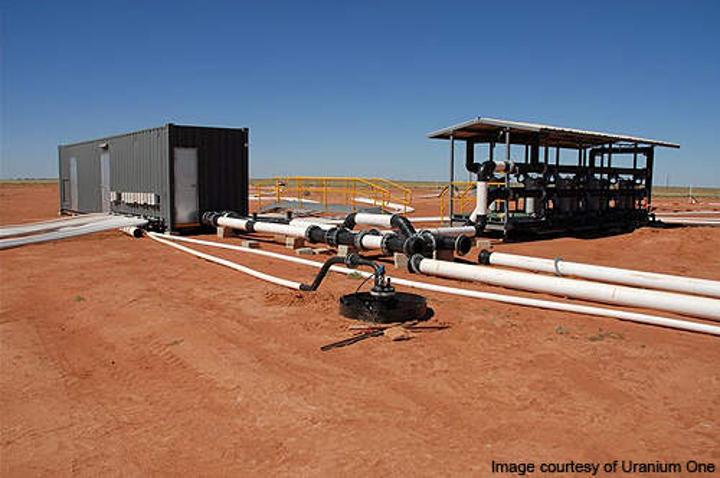
The cooperation between Russian nuclear scientists and Tanzania started in the early 2010s, when company Uranium One – the international mining division of the State Corporation Rosatom – began to carry out the uranium project Mkuju River. A number of humanitarian initiatives were simultaneously announced in the country.
Over the years, Mantra Tanzania, the subsidiary of Uranium One, has helped to electrify a school using solar panels, as well as to equip a school laboratory. Educational and fiction books were purchased for three school libraries. Secondary schools in the region of Ruvuma, where the Mkuju River project is located, received 500 desks from the Russian partners.
In 2015 Mantra Tanzania received the Presidential Corporate Social Responsibility and Empowerment award in the category “Best Mineral Exploration Company”. “The development of local communities and the support of initiatives aimed at improving health care and education, improving the quality of life of people, are one of the key areas of corporate social responsibility in the regions where our company operates. We strive for close cooperation and interaction with our Tanzanian colleagues in all areas,” says Vasily Konstantinov, President of the Uranium One Group.
The traditions of partnership with African countries, established in the Soviet period, also continue in the field of training African students in Russian universities. Receiving their education in Russia and becoming highly qualified specialists, they bring Russian-African relations to a qualitatively new level, said Tatiana Kortava, Vice-Rector of Moscow State University, during the Russian-Tanzanian online forum on business and humanitarian cooperation held last year.
Schoolchildren and students from Tanzania also learned about the education opportunities at the major universities of the State Corporation Rosatom within the framework of a series of lectures last autumn, with main partner of this course being the Embassy of Tanzania in Moscow. The online event was attended by students from 16 schools and 4 universities of the country, as well as by representatives of the Tanzania Atomic Energy Commission (TAEC).
Nuclear Technologies for the Human Capital Assets
The staff of Tomsk Polytechnic University (TPU) will talk about the potential for non-energy use of nuclear and radiation technologies for African countries during the upcoming series of lectures in Tanzania. This Russian university, located in Tomsk, a major scientific center of Siberia, has been developing nuclear medicine technologies since 1980.
Today the only research reactor unit in Russia is located at TPU, which allows to develop technologies for obtaining new radiopharmaceuticals and methods of neutron capture therapy for the diagnosis and treatment of cancer, heart diseases, lung diseases, a number of children’s diseases, etc. More than 200 neutron therapy procedures for breast, head and neck cancers have already been performed at the TPU research cyclotron. Now Tanzanian people can find out about these achievements can in detail.
“We are explaining that both the reactor and the cyclotron can be used for the production of radiopharmaceuticals for the treatment and diagnosis of cancer, and then to carry out the treatment of the already affected at these facilities,” says Vera Verkhotruova, Head of international nuclear educational programs at the TPU School of Nuclear Technology Engineering. “By doing this, we demonstrate to our African partners that modern nuclear and radiation technologies, in terms of non-energy applications, bring health to the country’s population and help fight one of the most terrible diseases of our day, which is cancer. They provide a real opportunity to treat people with forms of cancer that were previously considered fatal.”
According to the Russian University academic, the Tanzanian partners will also receive information about the potential of nuclear and radiation technologies for agriculture. We are talking primarily about the preservation of crops and pest control, which allows us to solve the problems of providing food to the population.
“Russian universities together with Rosatom, during a series of open online lectures, demonstrate to the academic and educational community of African countries that modern nuclear and radiation technologies bring peace, health and food security to the population with their overall environmental safety. Health and food are the two most important things for a resident of any country on our planet. For African countries, this is doubly important,” emphasized Verkhoturova.