

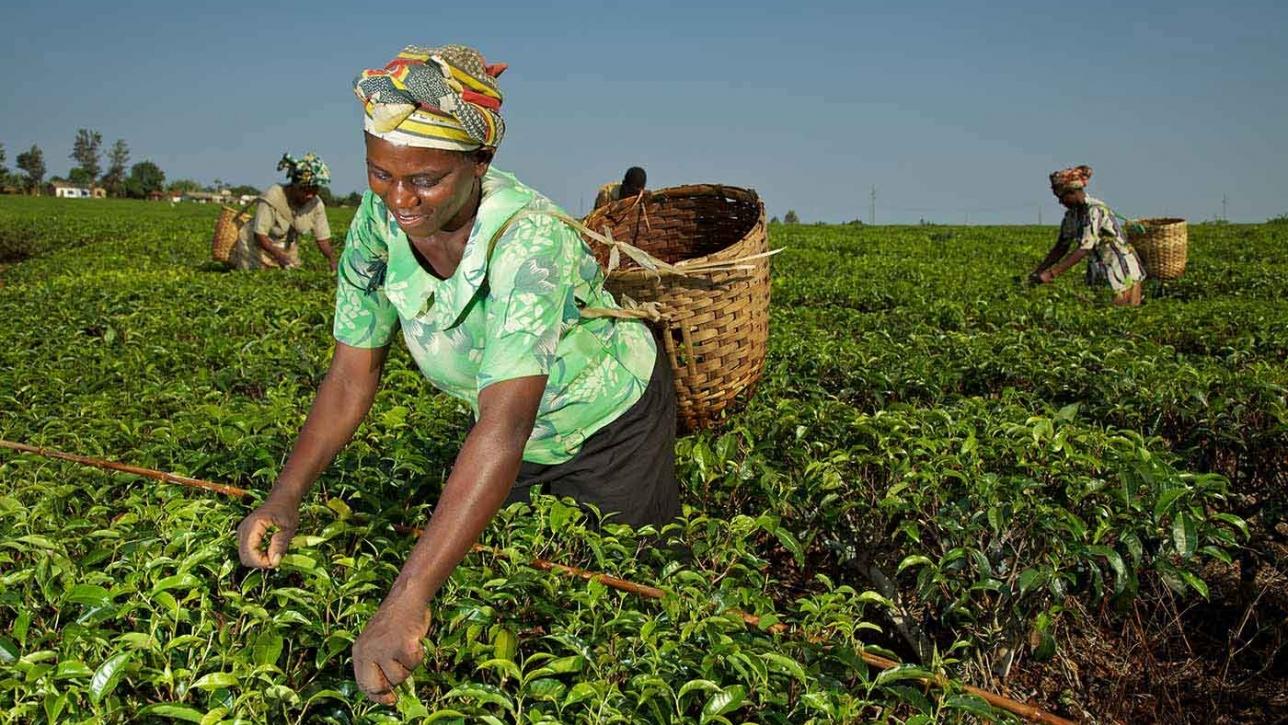
Africa-Press – Tanzania. THE government has expressed its determination to establish a stable market for local tea to bolster production of the cash crop.
The government was optimistic that having in place the needed infrastructures would increase productivity. Deputy Minister for Agriculture, Mr Hussein Bashe assured Parliament that the government will do everything possible in its power to engage and seek support from various development partners and other stakeholders to ensure that tea farming is improved.
Mr Bashe said the government will ensure continued efforts to develop the tea crop to increase productivity, including doing researches that may lead to developing proper seedling for high yields.
“We are up for quality tea seeds, we have the needed research funds and we’re determined to ensure that our farmers get reliable markets for the crop,”. “We’ll supervise to ensure that our farmers benefit from the crop,” he said.
He said the government’s plan also aims to boost tea production to 40,000 tonnes from the current 34,000 tonnes, while equipping farmers with prerequisite skills and knowledge on better farming methods to increase production and income.
He acknowledged that for many years, farmers have been complaining over getting low profit from the crop due to low prices and unreliable market.
Mr Bashe said in 2021/22 financial year, the government plans to spend 400m/- for the production of quality seedling, provide training for small scale farmers and develop four big plantations managed by the Korogwe and Lushoto Smallholder Tea Farmers Agency (TSHTDA).
The Deputy Minister was reacting to a question from Mr Enosy Swalle, (Lupembe-CCM) on what measures were in place to increase tea production in the country. He added that through the AGRICONECT, which aims to increase productivity and value addition, more than 5.560 million euros has been allocated towards that.
Mr Bashe said the project will also promote value chain in Rungwe, Busokelo, Mufindi and Njombe in the next four years ending 2023/24. The project will be implemented jointly by IDH, TRITI and TSHTDA companies.
Mr Bashe added that in the 2021/22 financial year, 290.7m/- has been set aside for the production of 750,000 quality tea seedlings. Moreover, he told Parliament that the ministry will provide training to farmers on the principles of good farming practices and quality tea products; strengthening 34 Cooperative Societies as well as strengthening extension services.
Furthermore, he said the Agri Connect in collaboration with the Tanzania Private Sector Foundation (TPSF) under coordination of the ministry established the tea auction to start operation in December this year, which will ensure farmers’ tea gets good prices and a reliable market.
“We are in a good move to make that happen, we have all structures in place. We are now starting to register tea brokers from Kenya and Sri Lanka, which means our tea auction will have international status,” he tipped.
However, Bashe said the country’s tea production may not meet demand of the auction, so the ministry is in contact with Rwanda and Burundi to bring their tea to the auction.
Bashe told Parliament that they were also finalizing the Ten Year Tea Industry Strategy (2021/22 – 2029/30) with specific objectives of increasing productivity, quality of tea, developing research, increasing institutional capacity, efficiency in providing extension services as well as creating an enabling environment to attract investors.
The strategy aims to increase production from 33,000 tons of dry tea to 90,000 tons by 2029/2030 by increasing the use of modern technology in the whole chain and strengthening the marketing system.
The tea crop earns the nation foreign exchange amounting to US dollars 60 million a year and provides direct employment to more than 50,000 people in the tea processing industries.
The crop is grown in 12 districts and 6 regions, which are Mbeya, Njombe, Iringa, Tanga, Kagera and Mara where about 32,000 smallholder farmers are engaged in cultivation of the crop
For More News And Analysis About Tanzania Follow Africa-Press