
Africa-Press – Tanzania. THE decision by Tanzania to withdraw from the Declaration, allowing individuals and Non-Government Organizations (NGOs) to file cases directly to the African Court for Human and Peoples’ Rights (AfCHPR), was not made out of political considerations or expediency.
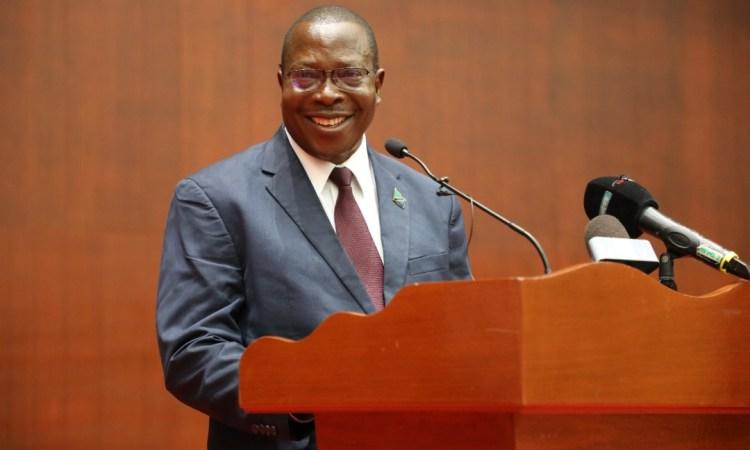
This was revealed in Dar es Salaam on Thursday by the Vice-President, Dr Philip Mpango, when opening the 15th African Judicial Dialogue that has brought together several Chief Justices, Presidents of Supreme and Constitutional Courts from across the continent, among others.
“Tanzania’s decision to withdraw from the Declaration made under Article 34 (6) of the Protocol establishing the African Court was arrived at after thorough consultation and considerations within the entire government system, respecting the sovereignty of the United Republic of Tanzania,” he said.
Dr Mpango used the occasion to correct the wrong impression that Tanzania has withdrawn from the African Court.
“That is not true at all,” he told the participants of the Judicial Dialogue.
He explained that Tanzania has withdrawn from the Declaration made under Article 34 (6) of the Protocol on African Charter for the establishment of the Court, which permits individuals and Non-Government Organizations (NGOs) to have direct access to the African Court.
The VP stressed that Tanzania remains a party to the protocol and is allied to the mandate and spirit of the court and the access to the court remains as stipulated under Article 5 (1) of the protocol for the establishment of an African Court on Human and Peoples’ Rights.
Dr Mpango pointed out also that he was aware that some other African Union member states have withdrawn from the Declaration and believed such countries have their own reasons for doing so.
“In this regard, I wish to suggest that in order for the court to regain the confidence of member states, it should strive to create an African Human Right Jurisprudence applicable to all Africa. The court should also set realistic standards in consideration of the capacity of the African State,” he said.
Dr Mpango strongly believed that trust is the cornerstone in the dispensation of justice; thus, when justice is properly administered, it guarantees the stability and security for any society.
He therefore called upon all participants to the dialogue to draw from their long experience in the judiciary and deliberation on major bottlenecks that erode public trust in African Judiciary, as he believed some of the bottlenecks may be dealt with within the Judiciary.
The vice-president assured the participants that the government of Tanzania would spare no efforts in contributing to building of confidence both at the national and international level.
Dr Mpango explained that when African Union member states decided to ratify and subject themselves to the jurisdiction of regional courts like the African Charter on Human and Peoples’ Rights they expected the court to complement and not to subordinate national courts on the agreed mandated jurisdiction.
He said that Tanzania has subjected herself to this African Court established under the Treaty of the Establishment of the East African Community as well as the African Court, as founded under the protocol on the African Charter on Human and People’s Rights.
“Tanzania actively and passionately worked for the establishment of the court cognizant of the fact that Africa needs her own regional court to provide for Africans problems and challenges,” he further said.
It was his position that Tanzania would continue to maintain a good working relation with both courts, who have their headquarters in Arusha, Tanzania.
Dr Mpango expressed gratitude on behalf of the government and the people of Tanzania to the African Union and Court’s Administration for their decision to have the seat of the court in Tanzania.
He reiterated the commitment of the government of Tanzania to continue undertaking its obligations under the host agreement and in strengthening the cooperation with the African Union.
It was his hope that the outcome of the Judicial Dialogue would provide guidelines and clarity on how to tackle obstacles relating to building the confidence in the justice system in the continent.
Speaking at the same occasion, Judge of the High Court of Tanzania, Dr Deo Nangela, who represented the Chief Justice, Prof Ibrahim Juma, told the participants that trust and confidence in the judiciary sounds as an emblem that expressed the society’s respect for justice and rule of law.
Dr Nangela pointed out that the trust of the judiciary is always the symbol of sustainable peace, unity, stability and social economic development in any country.
It was his view, therefore, that the strength of the team of the Judicial Dialogue signified the deep commitment of the Court in promoting a better future for the people and their economies.
For More News And Analysis About Tanzania Follow Africa-Press