
Africa-Press – Tanzania. AS 2021 winds down as a remarkable year for Tanzania after the mineral-rich East African country succeeded to up its stake in diamond mining. For years, the Tanzanian government’s stake in the largest diamond mine in Mwadui, Shinyanga under Williamson Diamonds, was only 25 per cent with the remaining 75 per cent owned by Petra Diamonds.
However, after changes in agreements which occurred this year, the government’s shares in the 70-year-old mine and one of the oldest open pit diamond mines in the world, increased to 37 per cent while Petra retains 63 per cent.
This follows a Framework Agreement announced by the government recently, which provides for a capital restructuring of the mine entity. The agreement was reached with the view to establishing a sustainable future for the Joint Venture (JV) between Petra and the government, held through Tanzanian company Williamson Diamonds.
According to Petra’s Chief Executive Officer Richard Duffy, the Framework Agreement was the culmination of many months of negotiations, which were at times impacted and restricted by the Covid-19 pandemic.
“We are therefore delighted to have put this agreement in place, which marks a new era of the joint venture parties’ relationship and sets the foundation for sustainable operations at the Williamson mine,” Mr Duffy said in a statement issued by Petra Diamonds recently.
The agreement in principle has been documented in the Framework Agreement, which would bind each of Petra, Williamson and the Petra Group entity that currently directly holds shares in the capital of Williamson Diamonds Ltd, Willcroft Company, as well as the government.
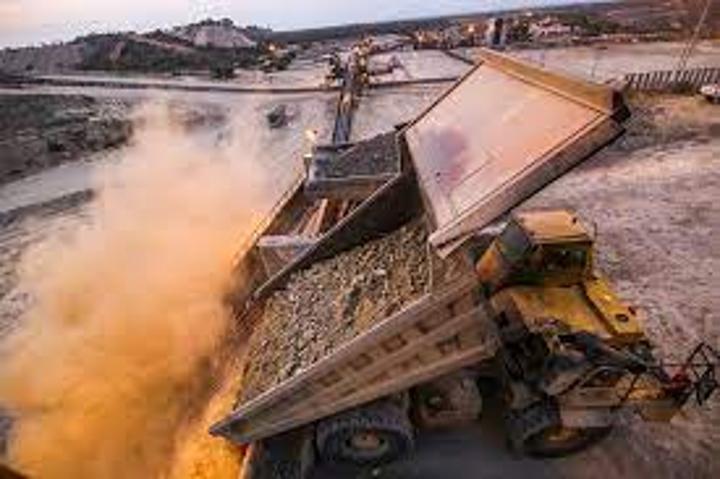
The current mine plan for Williamson is for 18 years, though the potential life of the mine, which is spread over a surface area of 146 hectares, is more than 50 years.
ontinues from page 1 The mine is named after Dr John Williamson, a Canadian geologist who discovered it in 1940 as an economically exploitable primary diamond deposit. Dr Williamson managed the mine until his death in 1958. In 1958, De Beers and the colonial government of Tanganyika bought the mine in equal partnership and the mine was operated by De Beers until 1973.
The Tanzanian State Mining Organisation (STAMICO) then operated the mine for 19 years. In 1993 De Beers once again became the operator of the mine with 75 per cent ownership. In November 2008 De Beers decided to sell its interest in the mine to Petra Diamonds.
The acquisition of Williamson by Petra Diamonds was completed in February 2009.
The capital restructuring will also include an overall economic benefit sharing ratio between the government and Petra in relation to their future economic benefits from the activities of the Williamson Mine. The agreed economic benefit sharing ratio is 55:45 in the favour of the government.
The economic benefits are intended to capture the parties’ entitlements as shareholders as well as, with respect to the government, the revenue it collects from the mine arising from taxes, royalties, duties, fees, and other fiscal levies. The Williamson Mine holds.
valid and unencumbered special mining licence number 216/2005 since May 2005. The special mining licence places exclusive right to mine for diamonds in relation to the licence areas until 2030. Currently, the mine’s workforce—both employees and contractors—comprises 98.3 per cent Tanzanian nationals and 1.7 per cent expatriates.
However, the shareholding structure of Williamson may change further if the authorities agree with Petra and Caspian Limited sale agreement plan. The plan is to sell half of Petra’s stake in Williamson to a local firm—Caspian—at 15 million US dollars (35bn/-).
The agreement, if sailed through, will turn the ownership table upside down letting the government become a majority shareholder holding 37 per cent while Caspian and Petra each owned 31.5 per cent stake.
The Treasury Registrar Mgonya Benedicto said the government was aware of the agreement and worked on the proposal before issuing its final go-ahead.
The acquisition, however, is subject to the parties obtaining all necessary governmental, regulatory and lender approvals, including approvals from the Tanzanian Mining Commission, the Fair Competition Commission (FCC) and The Bank of Tanzania (BoT), and a binding ruling from the Tanzania Revenue Authority (TRA) on the tax treatment of the transaction.
For More News And Analysis About Tanzania Follow Africa-Press